
Delivery Speeds Keep Improving, but Further Gains Face Headwinds
New data from project44 shows average delivery times fell to four days in April, the fastest in years. However, experts warn that cost mitigation, shifting consumer preferences, and the risks of regional fulfillment models could slow further improvements.
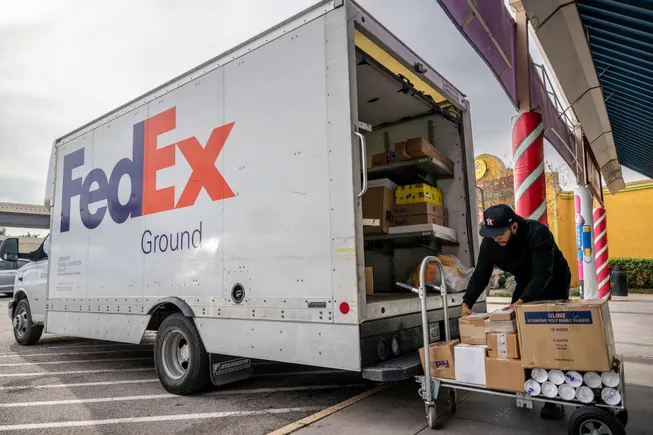
Delivery speeds continue to improve across the last-mile market, but industry observers caution that realizing further gains will be challenging amid shifting consumer preferences and shippers' cost-containment efforts.
In April, the average time between a customer placing an order and final delivery fell to four days, according to project44's "State of Last Mile" report released last month, down from 5.6 days in April 2022. The company's supply chain visibility platform tracks more than 1 billion shipments annually.
Delivery speeds continue to improve
"Looking farther back on historical delivery times, 2023 is seeing the quickest delivery times that the Last Mile market has seen in years," the report said.
Carson Krieg, project44's head of industry growth and last mile solutions, told Supply Chain Dive that a "healthy average" for end-to-end fulfillment is between four to six days. That raises the question of how much more delivery times can shrink.
"I think there's going to be some mediation to the norm," Krieg said.
What's fueling faster deliveries?
Krieg attributes the improvement in delivery speeds to multiple factors.
On the transportation side, parcel carriers no longer face the capacity constraints that hampered service levels during the early pandemic. Shippers have diversified their carrier mix, tapping into speed advantages that newer delivery providers may offer on certain lanes.
"A two day point for UPS going from Southern California to Northern California may be a next day point for OnTrac," Krieg said.
On the fulfillment side, companies have moved inventory closer to end consumers, most notably Amazon and its shift to a regional network model. Retailers have been pushing for years to better compete with the delivery speeds enabled by Amazon's massive warehouse network, said Martin Dresner, professor and chair of the University of Maryland's logistics, business and public policy department. The pandemic accelerated those efforts, particularly for ship-from-store initiatives.
Other major retailers have also bolstered their fulfillment investments. Walmart's store-fulfilled delivery sales nearly tripled over a two-year period, with the company seeing more than $1 billion a month in that category. Meanwhile, Target announced a $100-million investment earlier this year to leverage its store footprint for next-day deliveries, building upon its stores-as-hubs strategy.

It's not just retail giants like Amazon and Walmart speeding up deliveries. American Eagle and Nordstrom have reported quicker timeframes to reach customers on recent earnings calls.
"We are delivering better service to our customers through faster delivery, with overall delivery speed up 9% from last year," Nordstrom CEO Erik Nordstrom said last week.
Cost mitigation, consumer wants could slow deliveries
A confluence of factors will likely limit delivery speeds from going much faster, if not slow them down outright.
Retailers have been cautious in recent months about leveraging higher-cost shipping services in an inflationary environment that's biting into their bottom line. In turn, demand for express deliveries using air cargo networks has waned, with many shippers instead calling for more economical ground transportation.
"We can be in that three to five day click-to-deliver timeline," said Laura Ritchey, COO at e-commerce fulfillment provider Radial. "It gets really expensive to go faster than that."
Companies shifting to more regional fulfillment models like Amazon could lower transit times and shipping costs. But it's a risky venture for companies lacking the robust infrastructure and forecasting capabilities that Amazon has. If demand shifts, inventory may be stationed in areas where it isn't as economical or fast to ship out of, said Vijay Ramachandran, Pitney Bowes' vice president of go-to-market enablement and experience.
"The more you segregate your inventory across the country, the more you have to be really buttoned up with demand planning and have a good idea of where your demand is going to surface geographically," Ramachandran said.
Poor forecasting makes it harder to deliver on time, which is likely to lead to unhappy shoppers, even if transit times are still relatively fast. Sixty-two percent of consumers say an accurate estimated delivery date is more important than fast shipping, according to Pitney Bowes BOXpoll market survey data.
But many retailers haven't slowed down their delivery promises to improve accuracy. On-time performance dropped from 83.9% to 80.4% year over year in April, per project44, which attributed much of this decline in its May report to "the aggressive timeframe that some companies promise to deliver within."
Retailers will need to strike a balance between cost mitigation and meeting consumers' expectations in order to improve their delivery offerings for the long run, experts say.
"We're in a post-COVID environment, but it is not the same as where we were pre-COVID," Ramachandran said. "That shift requires some new assumptions around what's important to consumers."