
Amazon Shipping Relaunch Poised to Reshape Parcel Delivery Landscape
Amazon has officially relaunched its Amazon Shipping service, a ground delivery offering for Amazon.com sellers fulfilling orders placed on non-Amazon channels. The service promises delivery in two to five business days across the contiguous U.S., with straightforward pricing and expedited claims resolution. Industry experts see potential benefits for small businesses but note significant challenges in attracting large enterprise shippers, given concerns about capacity prioritization, volume discounts, and reliance on USPS for full coverage. Amazon's vast logistics network—1,285 active U.S. facilities as of Q1 2023—positions it as a credible long-term threat to FedEx and UPS, though near-term disruption may be limited to smaller e-commerce carriers.
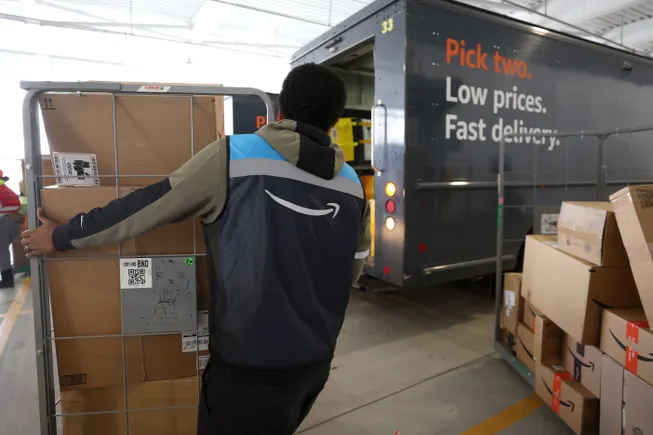
Amazon is finally moving toward direct competition with FedEx and UPS through the relaunch of its Amazon Shipping service, a ground delivery offering that experts say brings both opportunities and risks for shippers evaluating alternatives to traditional carriers.
The long-anticipated move into last-mile delivery outside of Amazon.com orders is not yet a comprehensive solution for competing with established delivery giants. The service, available to Amazon.com sellers, provides delivery in two to five business days within the contiguous U.S. for orders placed on non-Amazon channels, according to its website.
Parcel industry observers note that Amazon Shipping's promise of straightforward rates without hidden fees, along with a speedy claims resolution process, could make it an appealing option for small businesses.
“We’re always working to develop new, innovative ways to support Amazon’s selling partners, and Amazon Shipping is another option for shipping packages to customers quickly and cost-effectively,” spokesperson Olivia Connors said in an emailed statement. “We’ve been providing this service for a while with positive feedback so we’re now making it available to more selling partners.”
Amazon previously offered the service in select cities before pausing it in 2020. The relaunch marks a new chapter in the company's foray into parcel shipping, which could prove far more disruptive for established delivery providers.
“This is not a test, it's not a trial, it's not a 'dip your toe in,'” said Nathan Hughes, president of Shipware. “It is a strategic, scaled rollout of this service in the marketplace.”
How Amazon Differs from Other FedEx, UPS Challengers
With pandemic-era capacity constraints now in the past, relaunching Amazon Shipping will help the company extract additional profit from its expensive and expansive network.
“Every single package they bring on board is going to drive revenue that will help to subsidize the cost of their own operation,” said Marc Wulfraat, president and founder of MWPVL International, a consulting firm that tracks Amazon's logistics footprint.
This massive fulfillment operation is a key reason experts believe the emerging shipping service could pose a legitimate threat to FedEx and UPS. The two companies' current dominance in parcel delivery is driven by their expansive network infrastructure—warehouses, trucks, planes, and personnel—creating a barrier to entry that few companies can even consider matching, Hughes said.
Amazon is one of the select few that could. The e-commerce giant is already a formidable player in delivery activity, handling 4.8 billion deliveries last year, surpassing FedEx, according to the Pitney Bowes Parcel Shipping Index. In 2019, it handled less than half that amount.
Amazon has surged past FedEx in annual delivery volume
“It's now a major juggernaut that is different than what it was pre-COVID,” said Caleb Nelson, chief growth officer and co-founder at logistics software provider Sifted.
Amazon Shipping's Possible Pros and Cons
Amazon has released few details about Amazon Shipping beyond what's on its website, but industry observers say the service appears to be targeting small- and medium-sized businesses in the near term.
The service touts “simple rates,” which would be particularly attractive to smaller merchants that often lack the in-house expertise to understand nuanced parcel shipping contracts with FedEx or UPS.
If rates are as straightforward as Amazon claims, some shippers may be able to accept transit times of up to five days and shift some of their FedEx and UPS volume, Nelson said. The lack of a residential delivery surcharge is also a significant benefit, he added.
“For an e-commerce business, that's a home run and will substantially reduce the cost,” Nelson said.
However, Amazon Shipping could struggle to attract large-scale, enterprise shippers for several reasons, experts say. Potential concerns they flagged include:
- Losing volume-based discounts from other carriers if they shift packages to Amazon Shipping
- How Amazon prioritizes Amazon Shipping deliveries versus Amazon.com orders during periods of tight capacity, such as holidays or Prime Day events
- The service cannot reach the entire U.S. population by itself; Amazon says it will use the U.S. Postal Service to cover all Amazon Shipping delivery destinations
- Fears of Amazon rolling back the service if interest isn't high enough
Amazon's service could also threaten to siphon volume from UPS at a time when it still relies heavily on the carrier for some deliveries, though it has reduced its reliance on the carrier in recent years.
“They've got to walk a little bit gingerly right now, because they still ship a fair amount of volume through UPS,” Wulfraat of MWPVL said.
In the short term, Amazon Shipping is unlikely to be a legitimate competitor to FedEx and UPS due to obstacles attracting enterprise shippers, said Ninaad Acharya, co-founder and CEO of Fulfillment IQ. Instead, the company could grab market share from smaller, e-commerce-focused delivery providers like Pitney Bowes and DHL eCommerce as it builds the foundation to compete against the established giants in the long term.
“I would never, ever discount anything that Amazon does,” Acharya said. “I think a lot of people have learned that the hard way.”
Editor's note: This story was first published in our Logistics Weekly newsletter. Sign up here.