
Trump's Tariff Toolkit: Legal Avenues Beyond IEEPA Face Supreme Court Test
President Donald Trump's aggressive use of the International Emergency Economic Powers Act (IEEPA) to impose country-specific tariffs faces Supreme Court scrutiny next month. Two federal courts have ruled such actions illegal, prompting appeals. This article explores alternative legal tools—Sections 232, 301, 338, 201, and 122 of various trade acts—that Trump could deploy regardless of the Court's decision, with insights from trade attorneys on their viability and procedural requirements.
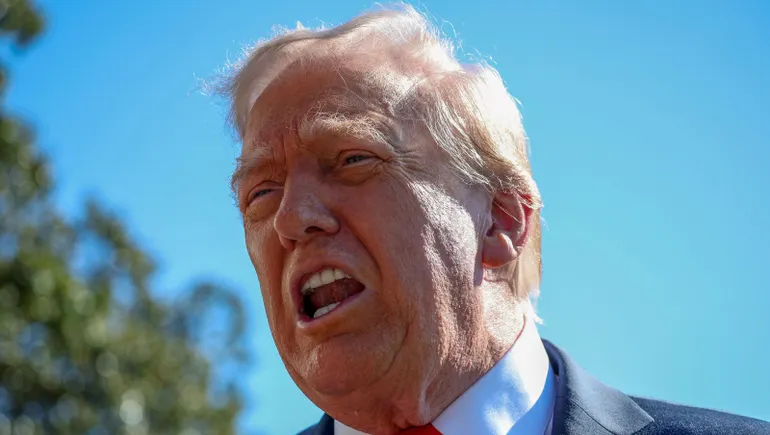
President Donald Trump’s aggressive implementation of country-specific tariffs will face Supreme Court scrutiny next month. At stake is the administration’s broad invocation of the International Emergency Economic Powers Act (IEEPA) to enact sweeping levies. Two federal courts have already ruled such actions unlawful, prompting the Trump administration to file appeals, including a request for the Supreme Court to hear the cases. The high court is scheduled to hear arguments in November.
The administration has argued that its use of IEEPA is justified by national emergencies Trump declared concerning trade deficits and fentanyl trafficking. More broadly, it contends that because Congress passed IEEPA, oversight authority rests with the legislature, not the judiciary.
Through this interpretation, the administration has imposed tariffs on a wide range of U.S. trading partners without additional bureaucratic procedures. It has also cited IEEPA to raise previously enacted duties, such as combined tariffs of 50% on India imports.
“I think part of the attraction of IEEPA was that there's no report,” said Alexander Schaefer, a partner in the international trade group at law firm Crowell & Moring. “There are no findings that have to be made. The president declares an emergency and then says, ‘Here's what we're going to do about it,’ and without any sort of procedural red tape to have to go through.”
The Trump administration has not relied solely on IEEPA to advance its tariff regime. Regardless of the Supreme Court’s decision, the president retains several other statutory tools to continue raising levies. Here’s a look at those mechanisms and how the administration could employ them.
Section 232 of the Trade Expansion Act of 1962
In parallel with its IEEPA tariffs, the administration has leaned heavily on Section 232 to enact duties and launch investigations in specific sectors. Through this authority, Trump has installed 50% levies on steel and aluminum imports, 25% duties on cars and auto parts, and, most recently, a range of tariffs on furniture and other wood products. These measures stem from Section 232 investigations, which must be completed before tariffs are applied. The administration is conducting several other probes, including on semiconductors, pharmaceuticals, and critical minerals.
“One of the reasons why it's launching so many [Section] 232 investigations is so that the backstop already is in play because Section 232 was upheld by both the Court of International Trade and the Court of Appeals for the Federal Circuit with regard to steel and aluminum tariffs in the first Trump administration,” said Greg Husisian, a partner with law firm Foley & Lardner.
According to Husisian, goods covered by current Section 232 investigations account for roughly 40% of U.S. trade, meaning the potential impact of tariffs based on such probes would be substantial even if the IEEPA use is struck down.
Section 301 of the Trade Act of 1974
Another tool Trump has used in both terms is Section 301, under which the Office of the U.S. Trade Representative conducts a 12-to-18-month review to determine whether tariffs or other remedies are needed to counter unfair trade practices by specific countries. Trump employed Section 301 to tariff Chinese imports during his first term. Former President Joe Biden later upheld and expanded those levies to include electric vehicles, batteries, and semiconductors.
Like Section 232, Section 301 tariffs have received judicial backing. The Court of Appeals for the Federal Circuit in September upheld Trump’s use of Section 301 during his first term. Given such precedent, the administration may pursue these avenues more aggressively for new tariffs.
“I think initially I would expect to see more heavy reliance on Section 232 and 301,” said Kelsey Christensen, an international trade attorney at Clark Hill.
Section 338 of the Tariff Act of 1930
Section 338 allows the president to impose tariffs of up to 50% via proclamation in response to discrimination by another country against U.S. commerce. The president can also revoke or amend such tariffs. However, this provision has not been used since the 1940s and could face World Trade Organization (WTO) challenges, according to Schaefer. Yet, due to the current lack of a WTO appellate body, the U.S. could appeal any panel decision “into oblivion,” he added.

Section 201 of the Trade Act of 1974
While Section 338 offers broad executive discretion, Section 201 is “a safeguard investigation,” according to Christensen. A Section 201 proceeding begins with a petition, including government-led ones. The tool requires a roughly six-month investigation by the U.S. International Trade Commission to determine if a “material injury” is being done to a specific domestic industry, per Schaefer.
“It's a little like a dumping case, except instead of proving, what has to be shown is, in an open case, that there's material injury,” Schaefer said.
President George W. Bush used this tool to impose steel tariffs during his presidency, according to Schaefer. Similarly, a Section 201 petition by Harley-Davidson in the 1980s led to 45% tariffs on motorcycles from Japan.
Section 122 of the Trade Act of 1974
Section 122 grants the president authority to quickly impose tariffs due to a trade deficit, similar to IEEPA usage. However, it has stricter guardrails: duties cannot exceed 15% and expire after 150 days unless Congress approves an extension, according to Schaefer.
“Fifteen percent isn't as high as some of the rates on some countries, but it actually is the rate for a lot of countries,” Schaefer said, referring to current country-specific levies. “And so you can imagine [Trump] using that to splice in place of what he's done now.”
Editor’s note: This story was first published in our Procurement Weekly newsletter. Sign up here.