
US-Canada Talks Collapse, Triggering 50% Tariffs on Canadian Imports
The U.S. and Canada failed to reach a deal on Friday, activating 50% tariffs on $20 billion of Canadian imports. Canada suspended negotiations and will impose matching tariffs from Sept. 8, escalating trade tensions between the two North American economies.
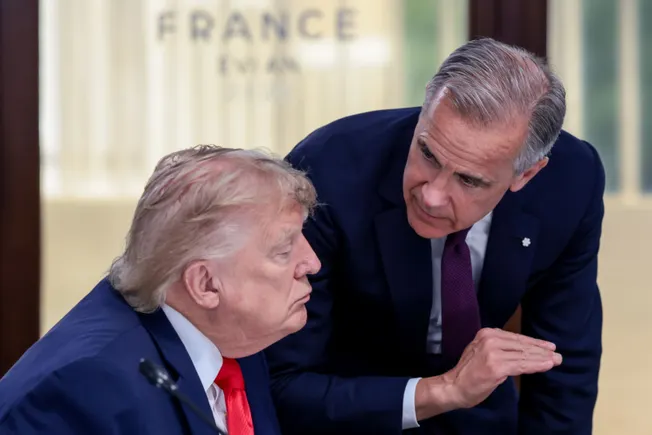
The United States and Canada failed to reach an agreement on Friday that would have prevented the 50% tariffs President Donald Trump announced last month, further straining trade relations between the two largest economies in North America.
The breakdown follows a month of negotiations between the trading partners, which began after Trump's order for 50% tariffs on $20 billion worth of Canadian imports. The affected goods include raw agricultural and natural materials, chemicals, textiles, consumer products, wood products, paper, machinery, and tools.
Canadian Prime Minister Mark Carney announced the suspension of talks in a statement on Friday, citing last-minute changes proposed by the U.S. that he described as "unfair, uneconomic, and called into question the reliability of any deal." He said, "In recent weeks, we made important progress toward improving Canada's position as having the best deal in the world with the U.S. However, that progress has not been enough to meet our objectives for Canadians. As a result, this evening, I have decided to suspend trade negotiations with the U.S. and have directed Canada's negotiators to return to Ottawa."
The U.S. blamed Canada for the impasse. The Office of the U.S. Trade Representative said in a statement on X that "despite the U.S. offer to Canada to receive the best treatment of any major exporter to our market, new demands and walk backs of other commitments by Canada have upended the careful balance reached in the past days." The USTR also noted that the U.S. had offered "significant tariff reductions" for steel, aluminum, automobile, and lumber imports.
With both sides returning to their respective positions, the 50% tariffs that Trump ordered last month and later temporarily delayed have now taken effect. Carney said Friday that Canada would "match those tariffs dollar for dollar" and introduce additional measures in the coming days.
In a speech on Saturday, Carney said the retaliatory tariffs would go into effect on Sept. 8. While he did not specify exact duty rates, he indicated the levies would target sectors such as steel, dairy, appliances, agricultural equipment, pulp and paper, and electronics. Canada has previously imposed retaliatory tariffs on a range of U.S. goods, including steel, aluminum, and cars.
This latest development adds further complexity to the future of the U.S.-Canada trade relationship. The two countries, along with Mexico, have entered into an up-to-10-year annual review process for the United States-Mexico-Canada Agreement (USMCA) after the U.S. declined to extend the trilateral free trade agreement last month.
Mexico and the U.S. have already held formal bilateral discussions, both before and after last month's decision. However, Canada and the U.S. have made less progress, and Friday's news adds another obstacle to negotiations over the pact's future.
Pete Mento, managing director of global trade advisory services at Baker Tilly, commented in a LinkedIn post: "I still expect the United States and Canada to reach an agreement. Their economies are simply too integrated for prolonged escalation to be attractive to either side. But the real question isn't whether these particular tariffs survive. It is whether the eventual settlement restores confidence in the rules governing North American trade."
Editor's note: This story has been updated with details from a Saturday speech by Canada Prime Minister Mark Carney.