
Amazon Logistics Resumes Ground Delivery Service, Potentially Reshaping the Parcel Delivery Industry
Amazon has officially restarted its Amazon Shipping service, offering ground delivery for non-Amazon channel orders to platform sellers, with delivery times of 2-5 business days. Industry experts point out that the service may attract small and medium-sized enterprises due to its transparent pricing and efficient claims handling, but limited by the difficulty of expanding corporate clients, it is unlikely to shake the dominance of FedEx and UPS in the short term.
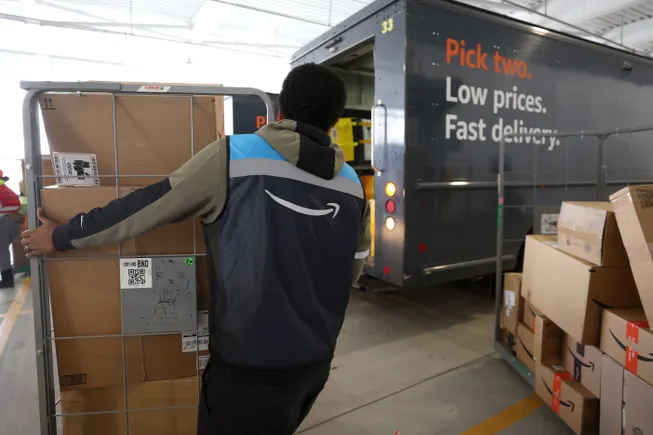
Amazon is gradually advancing its direct competition with FedEx and UPS, and itsAmazon Shippingservice has been relaunched, offering ground delivery to platform sellers. Industry experts believe this move presents both opportunities and potential risks for shippers.
This long-planned service is a significant step for Amazon in expanding into last-mile delivery beyond Amazon website orders, but it is not yet sufficient to fully challenge traditional express delivery giants. According to its official website, Amazon Shipping provides Amazon sellers with ground delivery services covering the contiguous 48 states in the U.S. within 2 to 5 business days, applicable to orders generated outside Amazon channels.
Package industry observers point out that Amazon Shipping's promised transparent rates (with no additional fees) and fast claims processing could make it an ideal choice for small businesses.
Amazon spokesperson Olivia Connors said in an email statement: "We are always committed to developing innovative ways to support selling partners, and Amazon Shipping is another option for fast and cost-effective package delivery. This service has been running for some time and received positive feedback, so we are expanding it to more selling partners."
Amazon previously offered this service in some cities before suspending it in 2020. This relaunch marks a new phase in Amazon's foray into package delivery and could pose a greater challenge to existing delivery service providers.
Nathan Hughes, president of Shipware, commented: "This is not a test, not a pilot, and not a half-hearted effort. This is a strategic, scaled rollout of the service in the market."
Differences between Amazon and challengers to FedEx and UPS
With pandemic-era capacity constraints now a thing of the past, relaunching Amazon Shipping helps Amazon extract additional profit from its vast and costly logistics network.
Marc Wulfraat, president and founder of MWPVL International, said: "Every package they take on will bring in revenue and help subsidize their own operating costs." The company is a consulting firm that tracks Amazon's logistics footprint.
Data at a glance
- 1,285: Number of active facilities in Amazon's U.S. delivery network as of Q1 2023 (according to MWPVL International data).
- 231: Number of additional facilities Amazon plans to add in the U.S., according to MWPVL International.
- 23%: Amazon's share of U.S. parcel volume in 2022, ranking third behind USPS and UPS (according to the Pitney Bowes Parcel Shipping Index).
- >410 million: Number of items sold by U.S. Amazon sellers in 2022 (according to company data).
This massive fulfillment operation is the key reason experts believe Amazon's emerging delivery service could pose a real threat to FedEx and UPS. Hughes noted that FedEx and UPS's current dominance in parcel delivery stems from their extensive network infrastructure—warehouses, trucks, planes, and delivery personnel across the U.S. and worldwide—which creates an entry barrier that few can match.
Amazon is one of the few companies capable of matching this scale. The e-commerce giant is already a strong player in delivery activities, handling 4.8 billion packages last year, surpassing FedEx, according to the Pitney Bowes Parcel Shipping Index. In 2019, that number was less than half.
Caleb Nelson, chief growth officer and co-founder of logistics software provider Sifted, said: "Amazon is now a giant vastly different from what it was before the pandemic."
Potential advantages and shortcomings of Amazon Shipping
Amazon has disclosed limited details about Amazon Shipping, with information only visible on its official website. Industry observers believe the service is primarily targeting small and medium-sized enterprises in the short term.
The service emphasizes "simple rates," which is especially attractive to small merchants, who often lack the in-house expertise to understand the complex parcel shipping contracts of FedEx or UPS.
Nelson said that if rates are indeed as transparent as Amazon claims, some shippers may be willing to accept transit times of up to 5 days and shift some volume from FedEx and UPS. He also noted that the absence of residential delivery surcharges is a major advantage.
"For e-commerce businesses, this is a home run and will significantly reduce costs," Nelson said.
However, experts believe Amazon Shipping may face difficulties in attracting large enterprise customers, for the following reasons:
- Shifting packages to Amazon Shipping could result in losing volume-based discounts from other carriers.
- During periods of tight capacity (such as the holiday season or Prime Day), how Amazon prioritizes Amazon Shipping orders versus Amazon website orders.
- The service cannot independently cover the entire U.S. population; Amazon says it will use the U.S. Postal Service to reach all delivery destinations.
- Concerns that Amazon might scale back the service if demand is insufficient.
Amazon's service could also divert volume from UPS, although UPS still handles some of Amazon's deliveries, but Amazon has reduced its reliance on UPS in recent years.
Wulfraat of MWPVL said: "Amazon now has to be careful because they still ship a significant number of packages through UPS."
Ninaad Acharya, co-founder and CEO of Fulfillment IQ, believes that in the short term, due to barriers to attracting enterprise customers, Amazon Shipping is unlikely to become a true competitor to FedEx and UPS. Instead, it may take market share from smaller, e-commerce-focused delivery services like Pitney Bowes and DHL eCommerce, while laying the groundwork for long-term competition with express delivery giants.
"I would never underestimate any move by Amazon," Acharya said, "and I think many people have learned that lesson the hard way."