
Supply Chain 'Hot Labor Summer': The Deep Reasons Behind Freight Turmoil
Recently, ongoing labor disputes in the transportation industry have brought uncertainty to the supply chain, prompting shippers to strengthen contingency plans. From disruptions at West Coast ports in the U.S. and Canada to conflicts between UPS and Yellow and the Teamsters union, labor disputes have become a recurring threat to the stable flow of goods. Workers demand higher wages and benefits to compensate for their efforts during the pandemic and to cope with inflationary pressures. This article analyzes the causes, impacts, and shippers' responses to this round of 'hot labor summer'.
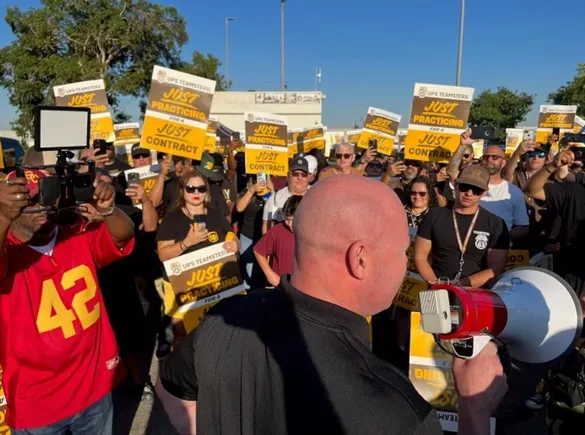
A prolonged period of labor disputes has cast uncertainty over various modes of transportation, further prompting shippers to strengthen their supply chain contingency plans.
From operational disruptions at West Coast ports in the United States and Canada to friction between UPS and Yellow Corp. and the International Brotherhood of Teamsters, disputes between unions and employers have become a recurring factor threatening the smooth flow of goods in recent months. These disputes have triggeredcontainer backlogs、carrier mix adjustments, and calls from the industry toresolve demands quickly。
Labor disputes are not a new obstacle for supply chains; each employer-union conflict is intertwined with its own unique history and demands. But one specific factor has had a strong impact on recent conflicts: workers expect more generous pay, benefits, and security in new agreements, which they see as fair compensation for their sacrifices during the pandemic and current inflationary pressures.
Strike threats and other labor actions are impacting supply chains at a time when workers across industries are gaining strength in a wave dubbed "Hot Labor Summer." Unionized film and TV writers, hotel and restaurant workers, auto workers, and others are pushing employers for better pay, security, and working conditions.
"The question is, is this a movement or a moment?" said Mark Gaston Pearce, executive director of the Workers Rights Institute at Georgetown University Law Center and former chair of the National Labor Relations Board.
Pandemic tail effects and economic growth strengthen union power
Brandy Harris, a part-time UPS employee in Seattle, recalled that when freight volumes surged early in the pandemic, they worked nearly around the clock to keep packages moving. While other businesses shut down, UPS workers helped delivervaccinesandprotective equipmentto combat the spread of COVID-19.
Three years after the pandemic began, the Teamsters union, representing about 330,000 UPS employees, won a "historic”tentative national contract agreementwith UPS. Harris, a member of the union committee for UPS contract negotiations, supported the deal reached just days before the existing five-year contract was set to expire.
"This is something we've been fighting for for a long time," Harris said of the tentative agreement that averted a potential strike. "After the pandemic, we really wanted to see the company show some respect."
Since 2022, as a large number of existing agreements have approached expiration, other employer-union contract disputes have also emerged. These negotiations involveU.S. West Coast dockworkers、rail workers、FedEx Express pilots、TForce Freightworkers,Sysco drivers, Boeing supplierSpirit AeroSystems, and rail equipment manufacturerWabtecworkers.

Todd Vachon, assistant professor at Rutgers University's School of Management and Labor Relations, noted that in terms of timing, these negotiations are generally favorable to unions. Despite inflation challenges, the U.S. economy has shown resilience,unemployment remains low,and consumer spending continues。
"If you enter negotiations during a period of strong labor market, low unemployment, and steady economic growth, you are always in a better position as a union," Vachon said.
While workers in established unions seek new contracts, other employee groups in the transportation sector are also organizing.
In April, more than 1,100 DHL Express workers at Cincinnati/Northern Kentucky International Airportvoted to join the Teamsters. That same month, drivers and dispatchers at Amazon delivery contractor Battle-Tested Strategies organized to join the union andratified a union contract. But Amazon subsequently terminated its relationship with Battle-Tested Strategies, and the newly organized workers have beenon strikesince June, demanding that Amazon reinstate their positions and recognize the contract. The strike continues to this day.
The Teamsters union is still seeking to organize other employees in the logistics giant's network. Randy Korgan, director of the union's Amazon division, believes now is the right time.
"They realize their value today is much higher than before the pandemic," Korgan said of logistics and transportation workers. "I think that's one of the effects of the pandemic: it made people re-recognize the importance of moving goods. I think they understand that now. But do they all know what they can do with it?"
How shippers can mitigate labor disruption impacts
The tug-of-war between employers and a growing labor movement has had, and may continue to have, disruptive effects on supply chains.
In June, labor issues led tobrief terminal operational restrictionsat multiple West Coast ports in the U.S., as the Pacific Maritime Association and the International Longshore and Warehouse Union were engaged incontract negotiations. In July, workers at major ports in Vancouver and Prince Rupert, Canada,strike activityled to a surge in dwell times for imported goods and caused container backlogs, according to project44 data.
Even the mere threat of a strike can accelerate a company's decline.
Yellow Corp. this monthfiled for bankruptcydue to astrike threat over pension payment issues, further prompting shippers to continuediverting freightfrom its network. The third-largest less-than-truckload carrier in the U.S. had previouslysued the Teamsters。
in June over delays in its proposed network restructuring.While shippersneed to adapt
to the fall of a major transportation provider, many have gained experience dealing with supply chain disruptions since the pandemic.Diverting cargo to East Coast portsduring West Coast port contract negotiations last year was a notable strategy adopted by companies. Many shippers have also, since the capacity constraints of 2020 and 2021, utilizedmore diversified carrier mixes, reducing their exposure to disruptions from a single carrier.
"I think the era of single-source sourcing, while not disappearing, will certainly come under more scrutiny," said Spencer Shute, principal consultant at Proxima.
Investing indigital twinsand other technologies to analyze specific scenarios, as well as maintaining safety stock to avoid inventory shortages, can also help shippers mitigate disruption impacts, said Brad Hulbert, director of procurement and supply chain consulting at Grant Thornton. However, these approaches require a certain level of investment and time, and companies may not realize their value until the next shock—whether a strike, labor shortage, or other event—occurs.
"It's not nice to say, but sometimes it takes that," Hulbert said. "Someone has to get hit hard to really understand this is a priority, even if it doesn't look like it on the surface."