
EU New Regulations Reshape Fashion Supply Chain: American Brands Face Compliance Pressure
The EU is about to implement a series of stringent supply chain regulations, requiring companies to disclose environmental and labor data and assume corresponding responsibilities. American fashion brands with operations in the EU market will find it difficult to avoid the changes brought by these new rules.
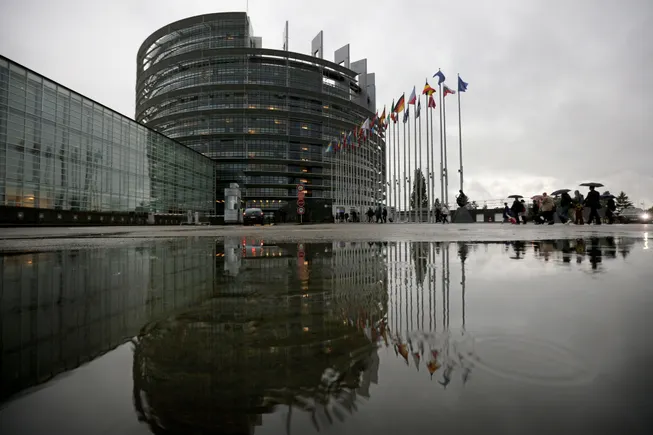
Supply chain practices in the fashion industry both exacerbate climate change and foster poor working conditions. However, stringent regulations set to be introduced in Europe will change this, and American companies will not be able to stay out of it.
In the United States, the Uyghur Forced Labor Prevention Act was passed in recent years, prohibiting the import of products from China's Xinjiang region, where China is accused of detaining over one million Uyghurs. U.S. lawmakers have also questioned whether brands like Shein use forced Uyghur labor in their supply chains. In January 2022, California's Garment Worker Protection Act took effect, prohibiting factories in the state from paying workers by the piece and holding brands, including out-of-state brands, accountable for wage violations at their sourcing factories.
But such regulations are about to become even stricter. As early as January 2024, a series of EU regulations will require companies to make specific changes to their supply chains, which will affect American fashion brands with significant business in the EU market. U.S. regulation may also move in the same direction: a proposed New York bill is targeting fashion brands' climate and labor issues with a similar strategy.
Maxine Bédat, director of the New York-based nonprofit New Standard Institute, said such regulations are not a passing trend. She said, "This is going to happen. You can take a leadership position and address it early, and you will end up on the right side—not only morally, but also in the market." She encourages companies to "dive in."
Making opaque supply chains transparent
In December 2022, the EU adopted the Corporate Sustainability Reporting Directive, requiring all large EU companies, whether listed or not, to disclose data on the impacts of their activities on people and the planet, as well as any sustainability risks they face, audited by third parties. According to press releases, by 2025, the directive will apply to non-EU companies with annual sales revenue exceeding 150 million euros (about $163 million). Additionally, small and medium-sized non-EU enterprises listed on European stock exchanges can defer reporting and compliance requirements until 2028. According to a report provided to The Wall Street Journal by financial data company Refinitiv, the CSRD could apply to more than 3,000 U.S. companies.
Draft standards are now open for public comment and cover a wide range of topics, including ocean impacts, climate change, fair wages for supply chain workers, and "affected communities." The standards require companies to demonstrate how their greenhouse gas emissions in operations align with the goal of limiting global temperature rise to 1.5 degrees Celsius under the 2015 international climate treaty. Companies must also demonstrate that they have considered workers' perspectives when making decisions related to the well-being of supply chain workers.
Justine Nolan, a professor at the Faculty of Law at the University of New South Wales in Sydney and director of the Australian Human Rights Institute, said reporting requirements are a necessary first step toward change. She said, "Most companies have no visibility into their supply chains." They may know their first-tier suppliers, but "modern slavery and forced labor are most common at lower levels of the supply chain."
A second piece of EU legislation will affect more foreign companies, applying to any business with revenue exceeding 40 million euros in Europe. This legislation raises the bar, moving from monitoring to sanctions. The Due Diligence Directive will take effect within three to four years, requiring companies to monitor and "prevent, end, or mitigate" issues such as pollution, biodiversity loss, slavery, and labor exploitation. This will affect companies themselves and apply across the entire value chain, including "not only suppliers, but also sales, distribution, transportation, storage, waste management, and other areas." Sanctions include removing products from the market and fines of at least 5% of global revenue.
Nolan said the Due Diligence Directive will force brands to consider labor issues more comprehensively, rather than focusing only on the most serious violators, such as Uyghur forced labor. She cited the 2013 collapse of the Rana Plaza factory in Bangladesh, which killed more than 1,100 people. "That was less a tragedy of forced labor than a tragedy of no one caring about the condition of the building, with basic occupational health and safety ignored by brands and factories for years."
Such regulations will require brands to rethink the common model of spending heavily on marketing and distribution while cutting costs on labor. Nolan said brands may want to play innocent, but low-priced contracts with first-tier suppliers mean workers further down the supply chain are shortchanged. "Too many brands tend to skip over (the business plan) and say, 'Oh, that's terrible,' but in reality, the problem starts with them."
Changing from within
There is also European legislation targeting environmental supply chain issues that any fashion brand, even smaller ones, will find hard to avoid. The Ecodesign for Sustainable Products Regulation was adopted on July 12 and could take effect within two to three years, applying to all products sold in Europe. The European Commission will set environmental and sustainability standards "to make products fit for climate neutrality, resource efficiency, and a circular economy." The regulation also mandates "product passports," enabling consumers to easily understand and compare the environmental impact of products based on life-cycle assessments.
Philipp Meister, global head of fashion and sporting goods at consulting firm Quantis, said being able to document and change supply chains "requires a radical overhaul of the fashion model." Currently, sustainability and business issues within companies "are still managed by two separate worlds." The two should be integrated to change how products are sourced, "which will certainly change how companies operate."
Bédat believes brands must also engage more deeply with supply chain practices. The current landscape is shaped by demand for cheap manufacturing and raw materials, so cleaning up supply chains cannot be achieved simply by switching suppliers. "I think the overall shift is from treating suppliers as purely transactional relationships to true long-term partnerships, because this requires co-investment in sustainability upgrades." In ensuring workers are treated fairly, Bédat said, "the responsibility lies not only with suppliers, but also with the brands themselves," as affirmed by the Garment Worker Protection Act.
Lina Hilwani, head of sustainability and human rights at international audit firm KPMG, agrees. She wrote in an email to Fashion Dive: "From a sustainability perspective, the last resort is exiting due to a supplier's lack of sustainability action. Leverage is key—if an organization exits the relationship, it loses the opportunity to make positive change. This is especially true when there are issues threatening human rights."
"Fashion brands need to start now"
Meanwhile, in the United States, New York is considering the New York Fashion Act. Similar to European regulations, the bill would require companies with global revenue exceeding $100 million to disclose supply chain practices and be held accountable, considering environmental and human rights issues. The bill proposes fines of up to 2% of annual revenue, with fines going to affected workers or used for environmental projects. The bill is currently in committee and will be discussed during the legislative session beginning in January 2024. At the federal level, this month Senator Kirsten Gillibrand (D-N.Y.) formally reintroduced the Fashion Accountability and Building Real Institutional Change Act to the U.S. Senate. Among other changes, the bill, like California's Garment Worker Protection Act, would make brands and factories jointly liable for wage violations.
Given the current situation, even if some new rules will not take effect for several years, "fashion brands need to start now if they want to be compliant," Meister said. Like any major change, such as digitalization, this transition may require initial investment, but costs may level off in the long term. He added that smaller companies may benefit because they are more agile in the transition, and transparency and closer cooperation with suppliers may also bring unexpected opportunities for innovation and efficiency.
Bédat, who helped draft the New York Fashion Act, believes broad legislation creates a level playing field. Regulations such as EU laws or the New York Fashion Act correct a "market failure." This means that, until now, some companies have benefited by not paying the additional costs associated with sustainable practices. "Currently, companies doing the right thing are at a competitive disadvantage," she said. "That needs to change."
A new way of doing business
In manufacturing countries, there is a lack of legislation protecting workers. This is because, until now, "producing countries have put themselves at a global competitive disadvantage by passing environmental and labor laws," Bédat later wrote in an email to Fashion Dive. "Suppose Bangladesh significantly raises its minimum wage, and production costs increase accordingly. Then, if there are no laws in the selling countries, fashion brands will choose a different production location. That is the global dynamic we are in."
A rare example is the International Accord, created after the Rana Plaza tragedy. The accord is an agreement between more than 200 brands and factories in Bangladesh to improve labor practices directly and is being extended to Pakistan. Meanwhile, unions in Bangladesh are still fighting for fairer wages.
In Europe, more regulations are on the way. For example, the EU's Strategy for Sustainable and Circular Textiles, adopted this year, declares the region's commitment to legislation "to ensure that by 2030, textile products placed on the EU market are long-lived and recyclable, made as much as possible from recycled fibers, free of hazardous substances, and respect social rights and the environment."
Meister said he expects EU reporting and due diligence laws to also influence decision-making in other countries. As a large number of companies change their practices, this could "create healthy peer pressure on brands not directly bound by the legislation." "This will be, and should be, the only way to do business, period," Meister said.