
Five Paths for Fashion Brands to Reshape Supply Chain Strategy
Supply chain disruptions have become the norm in the fashion industry, and how companies address labor issues, extreme weather, and trade disputes will determine success or failure over the next decade. Experts recommend building a more resilient supply chain system by enhancing flexibility, early delivery, deploying digital twins, advancing nearshoring, and implementing a comprehensive reset.
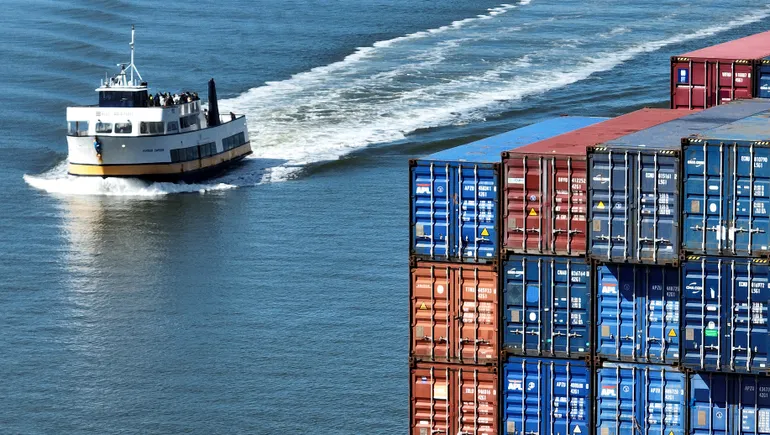
Supply chain disruptions have always been a lingering challenge in the fashion industry. However, how companies respond to the evolving landscape of labor issues, extreme weather, and trade disputes may determine who comes out on top in the next decade—because the likelihood of disruptions and the resulting unmet demand will only intensify.
This summer, a series of port shutdowns and strike threats brought shipping and land transport labor negotiations to the brink of collapse, highlighting the urgent need for fashion companies to develop more thorough contingency plans.
"Even if strikes don't happen, the history of the past three years tells us that new shipping crises can emerge at any time," said Inna Kuznetsova, CEO of ToolsGroup, a Boston-based supply chain planning and optimization software company. "No one can predict the future; we can only bet on the fact that something will always happen and threaten operations again. We need to use this as an opportunity to rethink our overall strategy."
After the COVID-19 outbreak in 2020, labor issues followed in succession, and the combination of both forced companies to revisit their contingency plans due to major supply chain disruptions.
Last year in particular, West Coast ports experienced multiple disruptions due to stalled labor negotiations between the International Longshore and Warehouse Union (ILWU) and the Pacific Maritime Association (PMA). Tensions persisted for months until the U.S. Secretary of Labor intervened, ultimately leading to a tentative agreement in June. On August 31, the agreement was ratified, with 75% of ILWU members voting in favor of the new six-year contract.
Meanwhile, negotiations between UPS and its union representing 340,000 workers also teetered on the brink of collapse until an agreement was reached in late July. Ratification of the UPS agreement was completed on August 22.
However, labor disputes and supply chain disruptions are nothing new in the fashion industry. Long-time observers attribute industry delivery problems to outdated systems.
"Over the past 40 years, certain aspects of fashion production have barely changed," said Nick Vyas, Executive Director of the USC Marshall Global Supply Chain Management Center. "We are still dealing with long lead times, from design to delivery cycles, from planning, sourcing, and manufacturing, from first mile to last mile—it remains an outdated approach."
As highlighted in McKinsey's 2022 State of Fashion report, "Supply chains remain affected by COVID-19 and urgently need investment in faster, geographically closer manufacturing systems." The report added that while digital direct-to-consumer channels remain a top priority, fashion industry leaders must diversify their strategies if they want to "maintain efficiency and market relevance."
Solving a decades-old problem may seem daunting, but for many fashion companies, sticking to old methods is no longer an effective way to build and maintain a successful brand.
Here are five expert recommendations on how to strengthen supply chain resilience in the fashion industry.
1. Flexibility
For brands importing from Asia, flexibility can be challenging because product design, sourcing, and delivery involve many steps, noted Kuznetsova. Any minor disruption to normal supply routes can disrupt the entire chain.
"Handling everything in real time is crucial for making the right decisions," said Kuznetsova. Flexibility can buy companies time, "allowing you to postpone the decision to delay shipments until the last minute. You might have an order that can't be fulfilled due to a strike, but you can source from another store, warehouse, or a different supplier."
"Products that hit the shelves months later highlight the importance of planning in the retail supply chain," said Jess Dinkert, Vice President of Supply Chain at the Retail Industry Leaders Association. It also underscores "how far in advance they must review these contingency plans and make decisions now to mitigate future disruptions."
2. Advance Delivery Planning
Christopher Tang, Professor at UCLA Anderson School of Management, suggests that brands can purchase and warehouse goods in advance to stay ahead in a fragile supply chain. Although costly, having no products to sell when customers need them is equally an expensive mistake.
"When potential strikes are anticipated, companies may need to bring delivery plans forward appropriately," said Tang. "They can move goods to warehouses in advance just in case, thereby having more available inventory."
Another way to avoid delivery issues is that some fashion brands have significantly reduced production of trendy styles and ship directly to U.S. stores and consumers. Fast fashion companies like Shein and Temu ship weekly, and if a single shipment's value does not exceed $800, they can avoid paying import duties, although lawmakers are investigating these practices.
3. Creating Digital Twins
Automation has been slow to advance in the fashion industry, with many companies still using outdated systems for design, manufacturing, and go-to-market. To reduce supply chain disruption risks, brands are advised to adopt digital solutions to plan for inevitable unexpected failures.
The ability to view every step of the manufacturing process in real time enables companies to make last-minute decisions on when to ship, which delivery system to use, or whether to postpone delivery. Kuznetsova stated that this can be achieved through digital twins—software that mirrors real-world operations with real-time data and simulations. Applied to the fashion industry, digital twins can help track clothing inventory in warehouses and stores, optimizing operations and decision-making.
Kuznetsova noted that large retailers like Amazon have already deployed such digital twin systems, gaining real-time visibility into supply chain dynamics. "This gives them a competitive advantage," she said. "The key is having comprehensive inventory visibility, including in-transit goods, to make fulfillment decisions."
4. Nearshoring
Moving apparel and footwear production from places like China to smaller, less restrictive Asian countries, or Mexico and Central America, is increasingly popular as fashion companies seek to avoid disruptions and shorten production journeys.
Although China has been a manufacturing haven for U.S. brands due to labor costs and relatively convenient West Coast shipping, uncertainties primarily triggered by trade wars are prompting more North American fashion brands to shift production elsewhere.
Some companies are moving production from China to countries like Vietnam, Thailand, Malaysia, Indonesia, India, and Bangladesh, or nearshoring to Mexico and Central America due to their proximity to the United States.
"Companies are eager to rewire because they are tired of not being in control of their own destiny," said Balika Sonthalia, Senior Partner at Kearney. "They want more control, and that starts with moving sourcing closer to the point of consumption."
Sonthalia noted that due to higher labor costs, it remains difficult to produce mid-priced apparel domestically in the U.S., but manufacturing in neighboring countries like Mexico is growing because products can reach domestic points of sale faster by land rather than relying on sea freight as with Asia.
5. Full Reset
Sonthalia stated that the pandemic has forced companies to become more proactive and change supply chain management in more meaningful ways.
"Now, every time we talk about supply chains, we mention 'full reset,'" she said. "We've experienced massive shocks on both the supply and demand sides, and for the past two to three years we've been trying to survive to meet customer demand and ensure products come in. That's been the theme for the past two and a half years, including raising safety stock levels and storing more products just in case. All of this is costly, and fixing things in a piecemeal way is never sustainable. If your roof is leaking, sometimes you need to replace the roof rather than just do quick patches. That's exactly what we're seeing now."