
Baltimore Port Reopens After Bridge Collapse, How Much Can Cargo Volume Recover?
Eleven weeks after the collapse of the Francis Scott Key Bridge, the Port of Baltimore fully reopened on Wednesday. Although port executive director Jonathan Daniels expects vessel numbers to return to previous levels only by 2025, bookings are rising, and labor, trucking, and supply chain executives say most clients plan to return. The port has also added cargo data-sharing projects and vehicle storage capacity to enhance resilience.
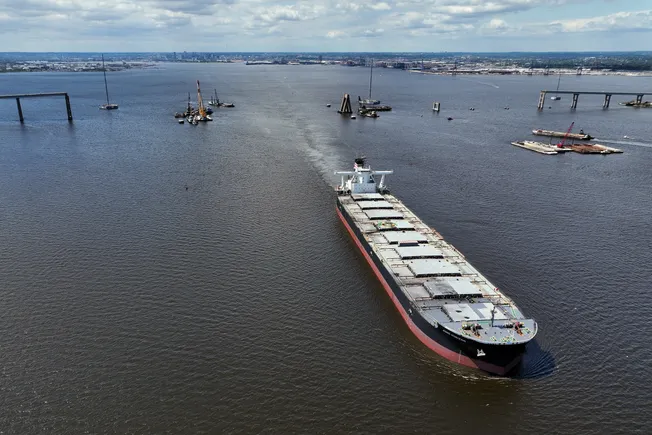
After the Francis Scott Key Bridge collapse in March, many shippers and carriers asked Maryland Port Administration Executive Director Jonathan Daniels a common question: What can we do to help?
"Our answer was simple," Daniels told Supply Chain Dive in an interview Tuesday. "You can come back when the channel is open."
The Port of Baltimore leader's response revealed the biggest concern on his mind and that of many Marylanders in the wake of the tragedy: cargo permanently diverted to other ports could escalate the deadly disaster into a threat to the long-term viability of the state's key economic engine.
On March 26, the cargo ship Dali lost power and struck the bridge, killing six construction workers. The bridge collapse cut off the port's shipping channel, forcing cargo to be diverted to Virginia, Georgia, and other locations.
Eleven weeks later, after millions of dollars in lost wages and revenue, the port fully reopened at a ceremony Wednesday. "The Fort McHenry Channel is fully cleared, and the Port of Baltimore is open for business," Maryland Governor Wes Moore announced at the ceremony.
Daniels said he expects vessel numbers will not return to previous levels until 2025. But according to Baltimore port, labor, trucking, and other supply chain executives, the port is poised for a rebound as bookings resume.
"Looking at the current schedule — it keeps getting stronger — they have kept their promise," Daniels said.
Shippers 'have either come back or plan to come back'
The port's executive director told Supply Chain Dive that no shipping lines or other Port of Baltimore customers plan significant long-term supply chain changes due to the bridge collapse.
"It's more a matter of when they come back, not if they come back," Daniels said.
Importers in particular have been waiting for ocean carriers to offer Baltimore bills of lading, said Lee Connor, chairman of John S. Connor, Inc., a Baltimore-area customs brokerage and logistics firm.
"Shipping lines weren't going to come here until they were sure vessels could get in and out smoothly," Connor said.
But the chairman of the century-old firm said most customers shipping through the Port of Baltimore do so "for good reason."
"It works for their business," Connor said. "They have either come back or plan to come back."
Labor ready to return to work
Thousands of Baltimore dockworkers are eager to return to the piers. Members of the International Longshoremen's Association Local 333 have been pressing union leaders, asking when they can get more hours.
"They're obviously looking for more work because the return has been a little slow," Scott Cowan, president of ILA Local 333, said in an interview. "They just want to get back to work."
Cowan expressed excitement about the emergency teams' swift removal of the twisted bridge wreckage from the channel and was surprised by how quickly cargo volumes have returned.
"The return has been stronger than I expected," Cowan said. "We're heading in the right direction."
 On June 11, salvage crews completed clearing debris from the Francis Scott Key Bridge collapse in the Patapsco River in Baltimore.
Kevin Dietsch/Getty Images via Getty Images
On June 11, salvage crews completed clearing debris from the Francis Scott Key Bridge collapse in the Patapsco River in Baltimore.
Kevin Dietsch/Getty Images via Getty Images
Despite the port's reopening, Baltimore port truckers are still using a federal regulatory exemption extension (valid until later this month) to operate to other East Coast ports, said Louis Campion, president and CEO of the Maryland Motor Truck Association.
The state trucking association president noted that shipping lines typically book delivery locations four to six weeks in advance.
"It's too early to expect dramatic changes in the next few days," he said. "I'd probably compare it more to a trickle effect until some of the major ocean carriers fully rebook Baltimore."
Baltimore adds cargo visibility and capacity
The nation's busiest port for automobiles, light trucks, and other roll-on/roll-off cargo has reopened after its closure, offering shippers enhanced visibility and capacity.
Ports America Chesapeake, which operates Baltimore's container terminal under a long-term agreement, joined the federal Freight Logistics Optimization Works (FLOW) data-sharing program after the collapse, Transportation Secretary Pete Buttigieg announced at the ceremony.
"This comes at a welcome and important time," Buttigieg said. "As the Port of Baltimore reopens, this transparency is crucial for preparing for the next phase."
Baltimore also has more space for vehicle shipping. The port's only unaffected terminal — Tradepoint Atlantic, at the former Bethlehem Steel site in Sparrows Point — received an $8 million federal grant to pave parking lots, doubling its vehicle capacity.
"We're seeing a significant recovery in roll-on/roll-off cargo (the port's backbone)," Daniels said. "We're finally seeing container ships truly return."