
Red Sea Crisis Drives Up Shipping Prices: Analysis of Causes and Response Strategies
The Red Sea crisis has persisted for months, with vessel diversions leading to capacity constraints and significant increases in freight rates on Asia-to-US routes. This article explores the driving factors behind the rate increases and provides recommendations for cargo owners.
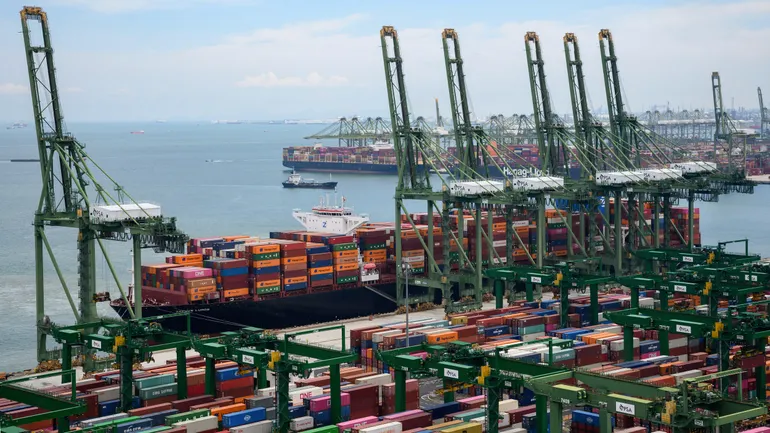
The Red Sea crisis is pushing the ocean shipping market into chaos and imposing high costs on shippers.
Months have passed since the first attacks on ships along the Red Sea coast, and these attacks have led multiple shipping companies to choose rerouting. Rerouting extends voyage times, which in turn triggers port congestion globally. Under the dual effects of high demand and reduced capacity, port congestion further intensifies pressure on the ocean shipping market.
Shippers are feeling the impact of this sustained imbalance through higher freight rates. According to updated data released by Freightos on July 2, rates from Asia to the U.S. West Coast reached $7,052 per forty-foot equivalent unit (FEU) this week, while rates from Asia to the U.S. East Coast reached $8,253 per FEU.
Although current rates have not yet reached the levels of over $10,000 per FEU seen during the pandemic, the high prices are reminiscent of that period. Experts point out that multiple maritime issues have combined to drive rates higher; here is the detailed analysis.
Ocean freight rates have more than doubled since January
Extended voyage times push up freight costs
The Suez Canal is typically a fast and reliable route between Asia and Europe, but ongoing threats of ship attacks in the Red Sea have forced several shipping companies to reroute to other paths.
"Services have been rerouted around the Cape of Good Hope in South Africa, adding two to three weeks of sailing time in each direction depending on whether the destination is Europe or Asia," Goetz Alebrand, head of ocean freight for the Americas at DHL Global Forwarding, said in an email to Supply Chain Dive.
Longer voyage times mean shipping companies bear more fuel and operational costs, which are ultimately passed on to shippers through higher rates and surcharges. Shortly after the Red Sea ship attacks began, shipping companies announced a series of surcharges. As the crisis persists, these costs are also layered on top of typical peak-season rate increases, supply-demand dynamics, and other factors.
"Today, all vessels that can sail, and those that were previously underutilized in other parts of the world, are being redeployed to fill capacity gaps," A.P. Moller-Maersk CEO Vincent Clerc said in a market update on July 2.
However, the CEO warned that redeploying vessels, while alleviating some problems, is not a complete solution for the industry. Due to high demand and reduced available capacity, Maersk expects to use vessels of different sizes over the next month, which will lower its ability to carry expected demand.
The World Shipping Council acknowledged in a statement provided to Supply Chain Dive that the Red Sea crisis has increased voyage times and costs by millions of dollars. The industry association also said that spot rates are influenced by many other factors, such as Panama Canal transit capacity and global energy policies.
"Specifically regarding spot market rates, it is worth noting that the majority of global container transport is typically conducted at rates negotiated under long-term contracts," the council said in the statement.
Voyage times have surged since the Red Sea crisis

How port congestion affects rates
Multiple sources indicate that supply-demand imbalances are causing congestion at some ports in Southeast Asia and the Mediterranean.
"In Asia, waiting times of up to seven days have been observed at Singapore, the world's largest transshipment port, and over three days in Manila," Marcus Reimann, senior vice president of ocean logistics for the Americas and Asia-Pacific at Kuehne+Nagel, said in a July email.
He added that in the Mediterranean, vessel berthing waiting times at the Port of Barcelona have exceeded three days, and over two days in Casablanca.
Transshipment ports around the world play a critical role in the ocean supply chain—providing hubs for shipping companies to reconfigure cargo between vessels for optimal utilization. If a vessel misses its estimated time of arrival, it can trigger a chain of delays for other vessels due to missing or unavailable equipment.
Dwell times rise at Singapore and other Asian ports

These delays then have ripple effects on the global market: Reimann told Supply Chain Dive in May that when equipment is insufficient in Asia, this imbalance directly impacts transpacific routes.
"We estimate that 5% to 10% of capacity is absorbed by longer voyage times—including vessel capacity and equipment capacity—which naturally has an impact on other aspects," Reimann said at the time.
According to several maritime data analysts, some shipping companies have recently increased the use of blank sailings—skipping a port or canceling a route—in an attempt to cope with the effects of congestion and vessel delays.
"With virtually no idle vessels and spot rates rising sharply in recent weeks, the increase in blank sailings is driven by the Red Sea crisis," Sea-Intelligence said in a May press release. "Congestion at key hub ports in Asia and Europe is worsening. As clearly seen during the pandemic, port congestion absorbs capacity and can lead to potential capacity shortages."
According to an analysis by Drewry Supply Chain Advisors on June 28, cancellations in the coming weeks are concentrated on a few trade routes. Of the 53 canceled sailings tracked across major east-west routes, more than half occurred in transpacific eastbound services.
The increase in blank sailings indicates that shipping companies are facing tight capacity conditions. As the U.S. peak season approaches, demand for space from shippers exceeds available supply, thereby pushing rates higher.
"As long as strong demand is not supported by sufficient capacity, rates will remain high, and depending on supply-demand relationships, rates on specific routes are expected to rise further," Alebrand said.
How shippers are responding
Despite the difficult market, experts emphasize that shippers still have some tools and resources to mitigate the impact of high costs.
Alebrand said shippers need to improve visibility and forecasting capabilities to plan volumes and costs accordingly.
"Budgeting for volatility and preparing for short-term cost increases when cargo must be shipped is prudent," Alebrand added.
Reimann added that maintaining predictability is equally critical. If shippers can, they should try to obtain forecasts for the coming months, as the unstable market may persist beyond the peak season. Most importantly, shippers should avoid shipping beyond their weekly allocation, as this is likely to lead to higher rates, he said.
Meanwhile, Brian Bourke, global chief commercial officer at Seko Logistics, said shippers should communicate container forecasts early and often, and make bold decisions immediately.
"We expect capacity conditions will not improve before the end of 2024, and possibly even later due to multiple factors," he said in an email. "This situation can be compared to trying to call an Uber during rush hour or holidays—when demand is high, passengers experience price surges."
Edwin Lopez contributed to this article.