
Potential Strike by Canadian Railway Workers Impacts Supply Chains: Industry Contingency Preparedness and Response Strategies
Negotiations between the Teamsters Canada Rail Conference and two major railway companies (Canadian National Railway and Canadian Pacific Kansas City) have reached an impasse, with nearly 10,000 workers potentially able to legally strike as early as after August 9. Should a strike occur, goods worth CAD 1 billion daily would face transport disruptions, impacting ports, trucking, and cross-border supply chains. Logistics firms such as C.H. Robinson, Maersk, and ITS Logistics have developed contingency plans, recommending that shippers prioritize critical cargo and consider switching to trucking or adjusting port entry points.
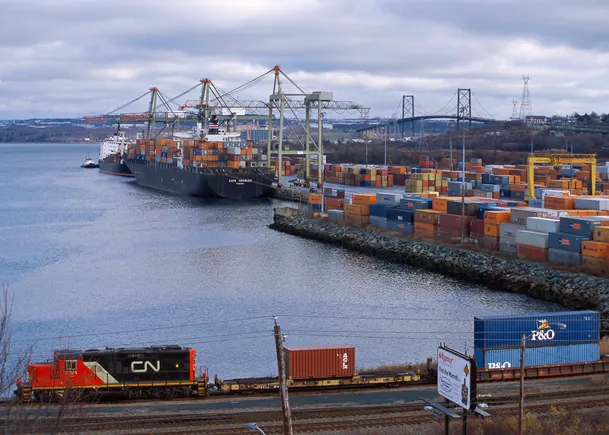
For Scott Shannon, vice president of North American transportation at C.H. Robinson Worldwide, preparing for potential service disruptions is part of his job. He manages the company's operations in Canada, handling over 650,000 cross-border shipments annually.
So when Shannon learned in May that Canadian rail workers had authorized a strike, he realized it could have a serious impact on freight and immediately began developing contingency plans. The plan was not put into action at the time—the Canadian government halted the strike to assess its impact on the public—but Shannon kept the contingency plan in place in case the disruption eventually occurred.
Although a strike is not imminent, the prospect of nearly 10,000 Canadian rail union workers walking off the job has weighed on logistics managers like Shannon for months. On July 12, the Canadian government announced it would decide by August 9 whether a work stoppage by the Teamsters Canada Rail Conference would affect the health and safety of residents. If no safety risk to citizens is determined, union workers could legally strike 72 hours after the government's decision.
The union (Teamsters Canada Rail Conference) says it is prepared to strike unless a new labor agreement replaces the contract that expired on December 31, 2023. Here is the potential impact of such a strike on supply chains, according to analysis by multiple logistics experts.
How would a Canadian rail strike affect supply chains?
Experts say every day of a strike could trigger further supply chain disruptions, as rail is a critical link for ocean shipping, trucking, and cross-border freight.
According to data from the Railway Association of Canada, Canadian railways transport over 900,000 metric tons of goods daily. In the event of a work stoppage, shipments worth CAD 1 billion would be halted each day.
Lawrence Gross, president of Gross Transportation Consulting, said Canada's western ports would be hit first, as a large volume of containers arriving in Vancouver and Prince Rupert must be moved inland by rail.
Gross noted that if a strike lasts more than a day or two, Canada's rail network could take weeks to recover.
Similarly, Shannon said cross-border freight between the U.S. and Canada, which relies heavily on rail, could be quickly affected.
The historic nature of the negotiations complicates the situation: the Teamsters union is negotiating separately with Canada's two major railways—Canadian National Railway and Canadian Pacific Kansas City—for the first time, but talks are happening simultaneously.
Shannon pointed out that in previous years, if one railway struck, freight could be diverted to the other. But if both strike simultaneously, ports could be paralyzed and trucking rates could surge, as a large volume of goods would need alternative transport.
The ripple effects of a strike would impact industries that rely on rail to transport raw materials, minerals, agricultural products, and food. The Railway Association of Canada reported that in 2022, the total value of goods transported by Canadian railways reached CAD 380 billion.
Marc Brazeau, president and CEO of the Railway Association of Canada, said in a May website post to members that the impact of a strike would be widespread.
"Not only would Canada's two Class I railways shut down, but trucking, transloading, warehousing, and port operations would also be profoundly affected," he wrote.
How can shippers mitigate the impact of service disruptions?
Experts say preparation is the best way to avoid problems caused by a Canadian rail worker strike. Many brokerage and logistics companies have developed contingency plans in recent weeks.
Logistics giant Maersk has been reviewing contingency actions, which, according to a May customer notice, include exploring trucking options to move goods within Canada and across the border in the event of a work stoppage.
Paul Brashier, vice president of global supply chain at ITS Logistics, said the industry continued to prepare for transportation delays even after the initial strike was postponed.
Brashier said in ITS Logistics' May port rail ramp index that a Canadian rail strike would negatively impact ramps in the U.S. Midwest and Toronto, as most of these containers enter North America through Canadian ports.
"The best operational plan to avoid these challenges is to terminate imports at the port of entry and use drayage, transloading, and one-way trucking to move goods into the distribution center network," he said.

Brashier said that if a strike occurs, a key strategy is to divert cargo to other North American entry points.
ITS Logistics has plans to dray cargo from the ports of Prince Rupert, Vancouver, and Montreal, then cross-dock and use domestic one-way trucks to move goods to final destinations across North America. He also said many shippers are choosing to book cargo to U.S. West Coast ports to avoid Canada.
"This is a very fluid situation, and we are monitoring it daily until a resolution is reached," Brashier said.
Shannon said shippers have been seeking trucking options in recent weeks. A typical freight train has the capacity of 300 trucks, so trucks would fill up quickly.
Shannon noted this could cause trucking spot market rates to surge. Shippers must recognize that if Canadian rail workers strike, they need to be prepared to pay a premium.
"So, as a rule of thumb, we know that moving from intermodal to truck, from truck to expedited, or from expedited to air typically requires paying a 10-20% premium," Shannon said. "If a strike occurs, we advise customers to ship only the most critical goods while holding off on less urgent shipments until conditions improve."