
How Will Supply Chains Change If the De Minimis Exemption Ends?
Since its establishment in 1938, the U.S. de minimis rule has undergone multiple adjustments, becoming a key pillar of cross-border e-commerce after being raised to $800 in 2016. However, amid growing concerns over Chinese influence and the smuggling of prohibited goods, the U.S. Congress and enforcement agencies are considering reforms. This article analyzes the rule's current status, stakeholder positions, and potential impacts, noting that supply chain adjustments will depend on consumer behavior and the form of policy implementation.
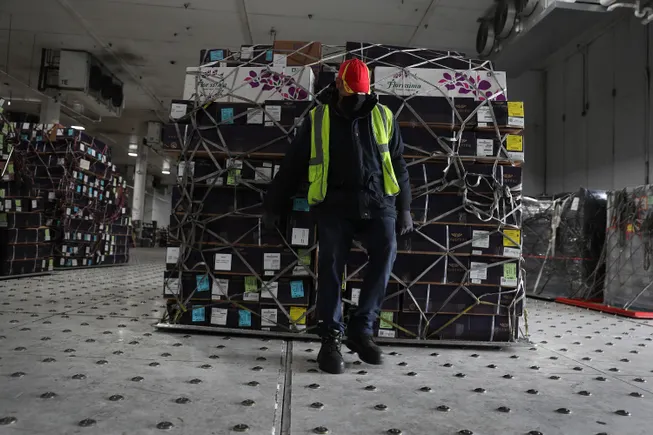
The "de minimis" provision, written into U.S. trade law nearly a century ago, has become a key link in the cross-border e-commerce supply chain. However, how much longer this provision can survive in its current form remains uncertain.
Currently, this provision allows businesses to import goods valued under $800 without paying tariffs and taxes. Leveraging this exemption, rapidly rising e-commerce platforms like Temu and Shein have been able to sell products at ultra-low prices. Experts point out that this provision also helps businesses respond quickly to consumer trends, flexibly manage a large number of SKUs, and mitigate the risk of inventory buildup.
For this reason, businesses across industries from apparel and consumer goods to health and beauty widely use the de minimis rule, said Brian Bourke, global chief commercial officer at Seko Logistics. Consumers also benefit because they can purchase a variety of products at very low cost.
However, as U.S. lawmakers and officials seek to curb Chinese influence and crack down on contraband entering the United States through low-value parcels, the de minimis rule may face adjustments. Although this could complicate cross-border e-commerce operations, industry observers believe consumer behavior will ultimately determine the extent of supply chain adjustments.
"These regulations will continue to change," Bourke said, "but what remains constant is the demand for international postal shipping."

De minimis rule evolves with e-commerce rise
Section 321 of the Tariff Act of 1930, the de minimis exemption, allows goods with a retail value below a certain amount to be imported duty- and tax-free. The provision was originally introduced as an amendment in 1938, allowing individuals to bring goods valued at no more than $5 into the country for personal use without paying taxes.
"For many years, this provision mainly targeted individuals traveling on cruise ships or flying to Europe, who brought back souvenirs or fine Italian leather bags and belts," said Lenny Feldman, general counsel and customs advisor for the National Customs Brokers & Forwarders Association of America.
Lawmakers raised the $5 threshold over the years, until 2016 when it was increased from $200 to $800 under the Trade Facilitation and Trade Enforcement Act. The new law expanded the duty-free scope at a time when Americans had become more accustomed to ordering goods from around the world. The COVID-19 pandemic further solidified these consumption habits.
Today, businesses often use the de minimis exemption to ship direct-to-consumer parcels by air to control costs and meet ongoing e-commerce demand. Feldman said this could save large retailers and e-commerce platforms millions of dollars.
Temu and Shein have become typical companies relying on de minimis supply chains, growing increasingly popular among U.S. consumers. According to a 2023 report by the House Select Committee on the Chinese Communist Party, these two companies may account for more than 30% of daily de minimis parcels in the United States.
Amazon has also taken note of the direct-to-consumer model. The Information reported in June that the e-commerce giant plans to launch a discount section on its website, shipping directly to customers from warehouses in China.
Many other brands also benefit from the de minimis exemption, said Izzy Rosenzweig, founder of e-commerce fulfillment company Portless. Portless helps shippers adopt a model similar to Shein or Temu, providing direct air freight flights from China to last-mile fulfillment centers in the United States.
"Fundamentally, this model relies on the efficiency of inventory management."

Izzy Rosenzweig
Founder of Portless
Rosenzweig said the advantage of this model is not just avoiding additional costs—businesses can also respond quickly to consumer trends and maintain lean inventory by shipping directly from factories to end customers. Shein is a prime example. According to its website, Shein produces new items in small batches of 100 to 200 pieces to minimize supply-demand gaps, then ramps up production for high-demand products.
The extent to which the supply chain has embraced the low-cost, lean de minimis model can be seen in CBP data. The agency processed 1 billion such parcels in 2023, more than six times the number in 2015, CBP said in March.
"Fundamentally, this model relies on the efficiency of inventory management," Rosenzweig said. "Shein has grown into a $30 billion business not because of any magic in its clothing, but because they operate one of the most efficient supply chains in the world."
Surge in low-value parcels entering the U.S.
Political pressure rises around de minimis enforcement
Multiple groups have voiced opposition to the wave of parcels using the de minimis exemption.
U.S. CBP officials are cracking down on de minimis parcels declared with vague, inaccurate data to prevent illegal substances, counterfeit goods, and products made with forced labor from entering the country. This enforcement action led the agency in May to suspend several customs brokers from a key import program for de minimis parcels.
While CBP's crackdown may slow cross-border flows for affected brokers, it is necessary for an agency lacking experience in monitoring lightweight e-commerce parcels, said Cindy Allen, CEO and managing director of international trade consulting firm Trade Force Multiplier. Thorough inspections of de minimis parcels will, in the long run, help the agency more precisely target illegal shipments.
"This is a necessary step, though it may be painful, because it allows CBP to gain intelligence and an understanding of the environment to more effectively carry out its duties," said Allen, a former vice president of regulatory affairs and compliance at FedEx Logistics.

Homeland Security Secretary Alejandro Mayorkas said officials have found a "stunning" amount of narcotics, controlled substances, and other contraband in de minimis parcels at airports and mail facilities. He said at a July event that his department "wants a legislative fix" to gain more power to address de minimis-related abuse.
The secretary's wish may soon come true. Lawmakers concerned about Chinese influence and its impact on the U.S. economy have introduced bills in Congress aimed at reducing the current flow of de minimis parcels.
The Import Security and Fairness Act, proposed in July 2023, would end de minimis treatment for imports from China and Russia while strengthening customs screening; the End Chinese De Minimis Abuse Act would block more than 60% of Chinese goods from using the exemption. In August, a bipartisan group of senators unveiled another proposal to crack down on de minimis shipments.
These bills have made limited progress so far, but House Speaker Mike Johnson said last month that the House plans to restrict de minimis privileges for products subject to Section 301 tariffs.
A coalition of 25 domestic manufacturers, nonprofits, unions, and law enforcement agencies supports congressional reform through the "Coalition to Close the De Minimis Loophole," launched in March. Members say the exemption harms the competitiveness of U.S. businesses while allowing illegal drugs like fentanyl to slip in.
However, not all U.S. groups support these potential changes. Six organizations, including the National Association of Manufacturers and the U.S. Chamber of Commerce, have opposed potentially eliminating the provision. In a letter to Biden administration officials, these groups warned that eliminating the provision could lead to additional processing and brokerage fees, more than doubling the price of de minimis parcels.
"Eliminating de minimis is equivalent to a tax increase that would disproportionately affect small business owners and low-income consumers who rely on buying affordable goods online," these groups said.
Changes could trigger supply chain adjustments and longer transit times
Experts told Supply Chain Dive they believe some change to the law is coming soon, but the exact form and timing remain uncertain.
A direct path Congress could take is lowering the U.S. $800 threshold, which is relatively high compared to other countries, according to data from the Global Express Association. For example, Canada's duty and tax relief is capped at 20 Canadian dollars (about $15), with some exceptions for U.S. and Mexican goods.
U.S. de minimis threshold is relatively high
Industry observers interviewed by Supply Chain Dive believe the United States could significantly lower the threshold before most businesses feel the impact, since the average value of a de minimis parcel is $54. They added that if the new threshold falls below this value or is eliminated entirely, the additional costs may not be enough to significantly curb import activity.
However, consumers could face higher prices as taxes and fees are passed on.
Shippers relying on de minimis may respond by increasing production in countries not targeted by bills like the End Chinese De Minimis Abuse Act. After all, shipping directly from manufacturing plants to end consumers does not necessarily involve China—the same applies to countries like India, Mexico, and Canada.
Audrey Ross, import/export compliance manager at Orchard Custom Beauty, said during a Home Delivery World 2024 panel in June that some products still manufactured in China could be assembled elsewhere before entering the United States to avoid potential de minimis scrutiny.
"If the supply chain is to become what I call a 'compliance chain,' the entire supply chain needs to be accountable."
Lenny Feldman
General counsel and customs advisor for the National Customs Brokers & Forwarders Association of America
Another legislative possibility is strengthening CBP's ability to screen parcels. The Biden administration is proposing legislation that would grant the agency the right to require additional documentation for de minimis parcels and impose user fees on these parcels to better identify those from drug traffickers.
If stricter customs procedures cause long delays for parcels, it could undermine the value of the direct-to-consumer model, said John Lash, group vice president of product strategy at supply chain software provider e2open. Although Temu and Shein are not known for fast delivery, further testing consumer patience is risky because other retailers are continuously improving domestic delivery speeds.
"The model would collapse because, as a consumer, you might say, 'Maybe buying from China saves 20%, but it's not worth the wait,'" Lash said.
Regardless of whether the Biden administration's proposal becomes law, Feldman said all parties in the supply chain—not just the brokers submitting information—should provide accurate and complete shipment data. This will help them maintain the trust of customs officials while ensuring de minimis parcels flow smoothly.
"If the supply chain is to become what I call a 'compliance chain,' the entire supply chain needs to be accountable," Feldman said. "You know the old saying: a supply chain is only as strong as its weakest link."
Edwin Lopez, Phil Neuffer, and Kelly Stroh contributed to this report.