
Can Postal Consolidators Seize Opportunities Amid Market 'Chaos'?
The United States Postal Service announced two major reforms in 2024, involving consolidators' use of the postal network and lightweight parcel pricing, raising industry concerns about service levels and costs. Now, leading consolidators such as DHL eCommerce, OSM Worldwide, and ACI Logistix have adapted to the new rules and are seeking growth in 2025, including testing other carriers and expanding heavier parcel operations. Market 'chaos' is seen as an opportunity, but the reliability of the postal network remains a concern.
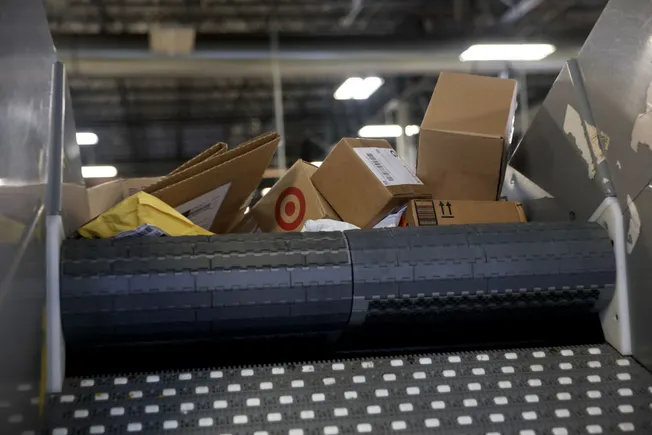
This year has been both turbulent and opportunistic for shipping companies that work closely with the U.S. Postal Service.
In 2024, the Postal Service notified consolidators—companies that sort and deliver shippers' parcels to postal facilities for final-mile delivery—that it would advance two sweeping reforms to implement Postmaster General Louis DeJoy's "Delivering for America" plan. Parcel delivery experts warned that these initiatives, targeting consolidators' use of the postal network and lightweight parcel pricing, could challenge service levels and drive up costs.
As the dust settles, executives from top consolidators—DHL eCommerce, OSM Worldwide, and ACI Logistix—told Supply Chain Dive this month how they have adapted and are seeking growth in 2025. Adjustments include testing partnerships with other carriers and expanding into heavier parcel business, adding more changes to a parcel industry segment that has already weathered a turbulent year.
"The market is a bit chaotic right now, and chaos creates opportunity, which is what we look forward to," said Lee Spratt, CEO of DHL eCommerce Americas.
Consolidators move volume upstream in the network
One Postal Service reform could bring efficiency gains for consolidators, but the industry is closely watching whether it will affect on-time delivery reliability.
The Postal Service officially eliminated contract rate discounts on January 1 for consolidators that directly deliver parcels to delivery units—the post offices closest to destination addresses—a process that began last year. The Postal Service has long allowed delivery unit injection to avoid incurring additional parcel handling and sorting costs. But under DeJoy's leadership, the Postal Service wants consolidators' volume to enter its network earlier to maximize flow and improve utilization across the network.
"It is difficult for us to justify contracts that encourage bypassing our transportation and processing network while making us responsible for managing the last mile, which is often the most resource-intensive part of delivery," DeJoy said in a September announcement.
Consolidator executives told Supply Chain Dive they had already shifted some volume upstream from delivery units to locations such as sectional center facilities. The Postal Service's move simply accelerated this activity, reducing the number of delivery points consolidators need to cover.
"In a sense, it hasn't changed much for us," said Kevin Collins, president of ACI Logistix. "Instead of 20,000 USPS delivery points, it's just a few hundred we need to cover."

Fewer delivery points open up room for operational efficiencies and transportation cost savings, noted DHL eCommerce's Spratt. The company now ships full truckloads of parcels rather than "handing postal sacks to regional carriers."
Consolidator executives told Supply Chain Dive that peak season service levels remained strong despite the recent changes in delivery points. However, industry stakeholders worry these changes increase the risk of delays due to ongoing issues in the postal network. Criticism of postal network reforms and their impact on service reliability continues to mount.
"This attempt to pull all volume into the network earlier and add more handling steps—what if they can't handle it?" said Tony Runyan, chief customer officer at Red Stag Fulfillment.
Experts note that alternative parcel carriers could benefit from this shift, as consolidators may seek additional delivery service providers to maintain service levels when the Postal Service underperforms. OSM co-founder and CEO Gaston Curk said that while the Postal Service will remain the company's primary last-mile carrier, it has been testing other delivery options to use when beneficial in terms of cost or service.
"We've already started testing, so it's just a matter of adaptation," Curk said. "When do we feel comfortable with them? How and where do we scale? These are all questions we'll discuss at each facility operational level, and then let it evolve naturally."
Lightweight parcel business may shift elsewhere
Another major Postal Service reform consolidators faced last year was the elimination of ounce-based rates for Parcel Select service, aimed at large shipping partners. This added pricing pressure to sub-pound parcel delivery while creating an advantage for the Postal Service's growing Ground Advantage product, which offers its own ounce-based rates.
Lightweight parcel shipping has long been a pillar of consolidators' service portfolios, using the Postal Service's ounce-based rates to help them remain competitive against other shipping providers.
"Unfortunately, I think to some extent, especially on very light parcels from 0 to 8 ounces, the price increases will be quite significant," Curk said.
So where will sub-pound parcels go? Spratt and Curk said the Postal Service's Ground Advantage product is hard to beat, and the Postal Service is pushing for more direct agreements with shippers.
"For parcels 8 ounces and under, Ground Advantage seems to have a slight edge, and that's what we tell our customers," Spratt said.

Other parcel delivery providers are seeking to compete with Ground Advantage, viewing the Postal Service's rate increases as an opportunity to attract price-sensitive shippers.
Veho announced its Premium Economy service last week, with CEO Itamar Zur touting competitive rates on sub-pound parcels. Similarly, Better Trucks sees lightweight parcels as a growth opportunity, in addition to its "bread and butter" of 5- to 10-pound parcels, said Josh Fredman, senior vice president at the company.
"Historically, we couldn't compete at those price levels," Fredman told Supply Chain Dive. "Now that the post office is rationalizing those prices, Better Trucks definitely has more opportunities."
Parcel shipping experts say if other carriers prove more reliable than the Postal Service in on-time delivery of lightweight parcels, they could gain market share.
"For anyone who tries Ground Advantage, if they get there and the post office has issues, they won't come back," said Mark Waverek, managing partner at PlaidMark Management and Consulting Services. "They'll look for alternatives."
Consolidators shift to heavier parcels
In response to the ounce-based rate changes, consolidators are seeking to make inroads in heavier parcel shipping.
Spratt said under DHL eCommerce's previous network model, "a five-pound box with a cowboy hat couldn't be handled," but the shift to transporting larger containers to fewer postal facilities has made this goal more achievable.
"We are working very hard to transition from a lightweight network to a network for parcels up to 10 pounds," Spratt said.
For OSM, Curk said the company was previously competitive on parcels under 7 pounds but is now seeking to "expand to the 10-pound threshold." He highlighted apparel items like hats and shoes as market segments worth targeting during the transition.
ACI Logistix's Collins declined to comment on the impact of the ounce-based rate changes on the company, but he noted the company is investing heavily in infrastructure and artificial intelligence technology.
"I think we'll continue to grow, continue to build out our network, larger facilities, more automation, more AI, all of which will drive revenue and profit growth," Collins said.
"We are working very hard to transition from a lightweight network to a network for parcels up to 10 pounds."

Lee Spratt
CEO of DHL eCommerce Americas
As consolidators seek to change or advance their strategies, they need to demonstrate their value relative to other delivery options, Waverek said. He noted that strong customer service and robust tracking capabilities could help them gain an edge as the market adapts to Postal Service changes.
"Everyone is trying to find that sweet spot where they can remain competitive," he said.