
Privatization of the U.S. Postal Service: How Will Prices, Coverage, and Services Change?
As the Trump administration explores reforming the financial woes of the U.S. Postal Service (USPS), the privatization issue has sparked widespread discussion. Industry experts told Supply Chain Dive that full privatization could lead the USPS to pursue more rate increases, reduce service frequency, and build an operational network more similar to FedEx and UPS. This move has faced opposition from postal employees and members of Congress, who worry about impacts on rural services, higher prices, and threats to jobs.
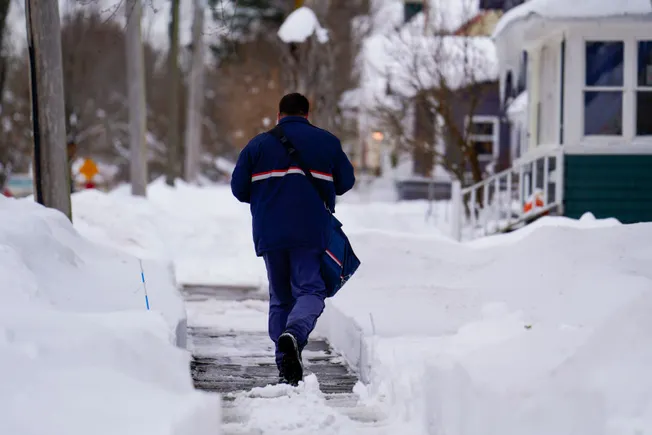
Industry experts told Supply Chain Dive that if the U.S. Postal Service (USPS) were fully privatized, its operating model would more closely resemble that of FedEx and UPS, characterized by more frequent rate increases, reduced service frequency, and a restructuring of its network.
As the White House evaluates options to reduce the agency's financial losses, President Donald Trump has floated the idea of privatizing the nearly 250-year-old institution. Elon Musk, CEO of Tesla and a prominent figure in the Trump administration, said at a Morgan Stanley conference last week that the Postal Service should be privatized, according to reports confirming this.
This possibility has sparked strong opposition from postal employees and members of Congress, who fear it would jeopardize service to rural communities, drive up prices, and put agency jobs at risk. Postmaster General Louis DeJoy said in a video message to employees on February 25 that the ultimate decision on whether changes to the agency's structure are needed rests with the President and Congress.
DeJoy said, "Postal leadership will be as involved as possible to ensure that national leaders understand how proposed changes in the future could affect our agency's ability to serve the American people."
Current State of the Agency
Under DeJoy's ten-year "Delivering for America" plan, the Postal Service has been striving to achieve financial sustainability, implementing a series of network adjustments to cut operating costs while attracting more package shippers to increase revenue. However, the path to achieving this goal is long.
The agency lost $9.5 billion in fiscal year 2024, with 80% of that attributed to factors beyond management's control, such as amortization of unfunded pension liabilities. DeJoy has pushed for administrative and legislative reforms, such as pension funding changes, to alleviate the agency's financial challenges.
Experts say that as the Trump administration and lawmakers debate the agency's future, they must determine whether a fully privatized, profit-driven, and unregulated enterprise would be beneficial for the country.
Despite current issues, according to a 2018 report from a task force established during Trump's first term to evaluate agency reform, the Postal Service's delivery network "is a critical part of the nation's infrastructure that cannot be replicated by private players."
Aaron Alpeter, founder of supply chain consulting firm Izba, said, "We really have to understand, what is the post office? Is it meant to compete with existing commercial interests, or to provide a safety net in areas where commercial interests are not interested?"

Services at Risk
Currently, the Postal Service has limitations in adjusting its operations to save costs. DeJoy said last June that more than half of its carrier routes are losing money, but the agency cannot simply cut these routes. Under its universal service obligation, it must provide delivery to all Americans across the country in a timely and reliable manner.
This includes covering areas with higher delivery network costs such as Hawaii, Alaska, and Puerto Rico, said Anthony Pisa, vice president of growth and innovation at parcel carrier SpeedX, which also operates deliveries in Hawaii. Pisa said, "There is a floor to the cost of getting items there."
The Postal Service does not receive tax funds to cover the extra costs of serving remote addresses. Any adjustment to the universal service obligation would require oversight from Congress and the Postal Regulatory Commission.
Privatization does not guarantee the end of the universal service obligation—for example, the privatized Royal Mail is required by regulators to deliver and collect letters six days a week at affordable prices across the UK.
Derek Lossing, founder of consulting firm Cirrus Global Advisors and former Amazon logistics executive, said, "If we are to maintain today's service standards, we have to be very realistic about what privatization can actually achieve. Look at Royal Mail; I don't think it has achieved what people expected."
Experts say that a Postal Service freed from regulatory constraints might tend to reduce the frequency of six-day delivery in less profitable rural areas, which would exacerbate the agency's existing efforts to limit operating costs in serving remote regions.
Lossing said the Postal Service could also pursue profits by significantly reducing its footprint of more than 33,000 post office locations. Instead, the agency could rely on less resource-intensive pickup and delivery methods, similar to how UPS uses local businesses as access points.
Lossing said, "Your footprint would look more like UPS or FedEx."
Rate Increases Likely
More aggressive rate increases could also occur. Wells Fargo analysts said in a February 27 research report that the Postal Service would need to raise package delivery prices by at least 30% to achieve reasonable returns and operate independently. They added that in the fourth quarter of 2024, the agency's pricing was 25% to 60% lower than FedEx and UPS, depending on the service type.
Helaine Rich, vice president of strategic sales and administration at ePost Global, said, "I don't know how they can sustain delivery under the current price structure."

While reducing services and adjusting prices could benefit the Postal Service's profits, it also carries risks. This is especially true for its package delivery services that compete with FedEx, UPS, and other private carriers.
Experts say that if USPS delivers too few days in certain areas, it would increase shippers' incentive to use alternatives. According to Lossing, maintaining reliable service in rural communities is somewhat an advantage for the agency, especially since e-commerce businesses do not want to be limited by restricted deliverable home addresses.
In terms of package pricing, the Wells Fargo report noted that aggressive rate increases by a private postal service would help FedEx and UPS by "raising the floor for delivery rates." Higher mail prices could accelerate the decline in mail volume by incentivizing other forms of communication.
The Road Ahead
The United States could also privatize only part of the Postal Service's operations to limit disruption to mail delivery. Several experts said the government might keep the mail business under its wing and maintain its universal service obligation, while spinning off the package delivery segment that competes with private companies.
Rich said of privatization, "Obviously, in terms of letter mail, I don't see that happening."
Mark Wawererek, managing partner at PlaidMark Management and Consulting Services, said that whatever form potential Postal Service privatization takes, it would likely require years of effort, similar to the process experienced by countries like Germany when reforming their postal systems.
He said, "You can't snap your fingers and have it happen tomorrow. It requires a thoughtful process, considering what to cut, what it means for the people on the service side, and what alternatives will be available. It takes time."