
Chipotle Adopts RFID Technology to Enhance Supply Chain Visibility
Chipotle Mexican Grill is leveraging RFID technology to improve visibility across its fully outsourced supply chain. After a successful pilot in Chicago, the company is rolling out RFID to all 3,500 restaurants by year-end. The technology aids in tracking inventory, improving traceability, and supporting limited-time offers like Chicken al Pastor. Additionally, Chipotle is enhancing its ERP system with Oracle and developing a supplier visibility project.
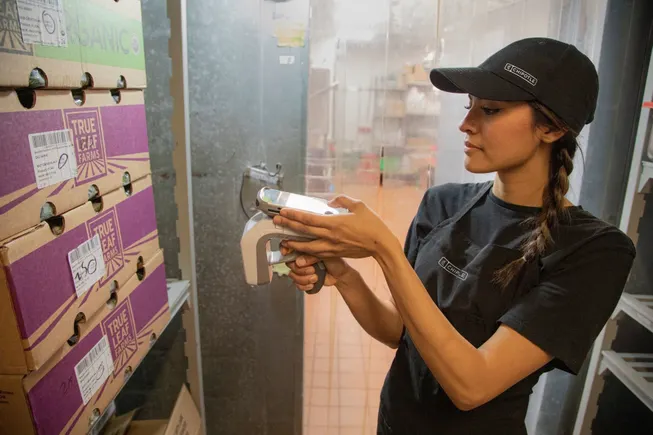
When supply chain operations are outsourced, visibility becomes a critical factor. This is a lesson that Carlos Londono, VP and Head of Supply Chain at Chipotle, knows well as he leads the company's extensive, third-party-reliant supply network.
“We are 100% third party outsourced meaning for all the factories that process our chicken, that process our cheese — whatever it might be — all of those are managed by third party partners of ours,” Londono said.
To address this, Chipotle has mandated that each of its suppliers tag products with radio frequency identification (RFID) tags—essentially smart barcodes that automatically identify and track inventory. While RFID is common in retail, Londono noted that Chipotle is the first restaurant chain to deploy it.
In an interview with Supply Chain Dive, Londono highlighted Chipotle’s efforts to roll out RFID nationally, the technology’s current impact on operations, and future plans for enhanced inventory visibility.

RFID Integration with Suppliers and National Rollout
Following a successful pilot in 200 restaurants in the Chicago area, Chipotle is now scaling RFID technology nationwide. Londono explained the phased approach: “What we did is right after the pilot, we started rolling everything out on the supplier level, so making sure all our suppliers have the necessary technology, the software, the printers, the infrastructure to be able to roll it out.”
Once supplier integration is complete, the company adopts a pragmatic method for introducing new technology into its restaurants—starting with a single location. After refining the process, Chipotle expands to a group of restaurants before covering an entire region.
Londono noted that RFID has recently been deployed in Southern California, where it is performing well. The company follows a schedule for transitioning to different regions, with completion expected by the end of the year. “Our plan is to have it [RFID] rolled out to all our 3,500 restaurants by the end of the year,” he said.
Applying RFID to Limited-Time Offers
For limited-time offers such as Chipotle’s Chicken al Pastor, the supply chain requires extensive preparation, often beginning a year before the item’s launch. The company must onboard additional suppliers to bring new menu items to life. Londono indicated that even when a limited-time offer is repeated annually, the number of suppliers increases each cycle.
“We have to do things like bring in new chicken suppliers, new sauce suppliers, and a variety of other things. So it takes quite a bit of effort,” he said.
During the launch of new items like Chicken al Pastor, information can be scarce, making careful inventory monitoring essential. RFID technology has helped bridge potential data gaps.

RFID has also improved traceability, allowing Chipotle to know exactly where an item traveled through its network—which distribution center it passed through and which transportation company handled it. Additionally, restaurant managers now receive inventory information faster once shipment data from distribution centers is transmitted.
Previously, managers had to manually scan each barcode, a time-consuming process. With RFID, a manager can simply stand near a case of product, and the scanner instantly captures the data. Londono emphasized, “Wherever we have the opportunity to use technology to either facilitate labor or improve the efficiency and the efficacy of the restaurant crews, we’re all for it.”
Next Up: New Tech and ERP Enhancements with Oracle
Chipotle’s tech-forward supply chain strategy extends beyond RFID. The company is currently developing a project called “supplier visibility” using Oracle’s platform. This initiative integrates multiple technologies to provide visibility into inventory, shipments, and supplier information all the way upstream. “We’re continuing to work on it and slowly adding in new suppliers to that project,” Londono said.
In parallel, Chipotle is enhancing its existing enterprise resource planning (ERP) system with Oracle. Londono explained that the company’s current master data management system has served its purpose but now requires a “next level generation” solution. “Every company, especially if you’re starting to have any meaningful scale, you have to have some kind of centralized enterprise resource planning systems,” he noted.
Working with his technology team, Londono is exploring additional modules and capabilities to further increase visibility across Chipotle’s supply chain.
This story was first published in our Operations Weekly newsletter. Sign up here.