
East and Gulf Coast Port Strike Preparedness: A Shipper's Operational Guide
As the International Longshoremen's Association (ILA) and United States Maritime Alliance (USMX) approach their Sept. 30 contract deadline, the threat of an Oct. 1 strike at East and Gulf Coast ports is intensifying. This guide consolidates expert advice on contingency planning, alternative gateways, airfreight viability, cargo-specific vulnerabilities, and the narrowing window for action.
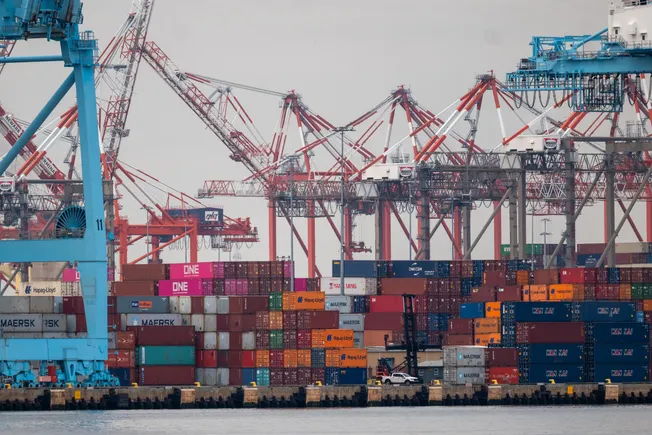
Shippers have less than two weeks to finalize contingency plans should workers strike at U.S. East Coast and Gulf Coast ports. The International Longshoremen's Association (ILA), representing 85,000 members, is approaching the Sept. 30 expiration of its master contract with the United States Maritime Alliance (USMX).
The union's chances of averting an Oct. 1 strike are diminishing as automation concerns and wage disagreements stall negotiations. ILA President Harold Daggett has been explicit about the union's intent to strike and shared a strike mobilization plan earlier this month.
A work stoppage would significantly disrupt operations and goods flow at multiple ports. The ILA-USMX contract covers ports in states including Texas, Maine, New York, New Jersey, and Florida, but a strike could trigger cascading disruptions for other regions and industries.
“Shippers with freight across Europe, Oceania, and Asia bound for the U.S. will especially feel the impact, which would cascade to disrupt the flow of freight across the U.S., Canada and Mexico,” C.H. Robinson Director of North American Ocean Mia Ginter said in a blog post in August.
Supply Chain Dive consulted shipping and logistics experts on actionable steps shippers can take to prepare for a potential strike, including cargo rerouting strategies and other key considerations.
How can shippers prepare for a strike?
Several options exist to minimize disruptions, starting with exploring alternative shipping routes. Importers and exporters can establish a multi-coastal transportation network in advance of a potential labor disruption, according to Michael Aldwell, EVP of Sea Logistics at Kuehne and Nagel, in an email.
“This can take the form of a transload capability or operation or an alternate coast gateway at smaller volumes that can be scaled in the event of a disruption,” Aldwell said.
Another familiar tactic, honed during years of port disruptions, is cargo diversion. Cargo can be shifted to ports along the U.S. West Coast, Canada, or Mexico, said Josh Jungwirth, EVP of Freight Forwarding for the Americas Region at Geodis.
Alternative ports for diverting East and Gulf Coast cargo
- U.S. West Coast: Los Angeles, Long Beach, or Oakland – Transload and full truckload or rail and drayage
- Canada: Vancouver, Prince Rupert, or Halifax – Transload and full truckload or rail and drayage
- Mexico: Lazaro Cardenas – Inbound rail option via CPKC to Houston and Kansas City
Source: Josh Jungwirth, Geodis EVP of Freight Forwarding in the Americas region
The choice of alternative ports depends on factors such as cargo origin and destination, shipping lanes, and available capacity, Jungwirth noted.
Is airfreight a viable alternative?
Airfreight offers a transportation option for time-sensitive shipments that would be disrupted by a strike, but it comes at a higher cost and with capacity constraints. The average air cargo spot rate spiked 24% year over year in August to $2.68 per kilogram, according to a Xeneta report from Sept. 5.
“Shippers considering air should keep in mind that passenger flights will be reduced between the current busy summer travel season and October. Right now, air capacity is already limited due to increased demand from e-commerce from Asia and Red Sea diversions,” C.H. Robinson’s Ginter said.
Giant e-commerce retailers Temu and Shein have driven this recent surge in air cargo demand. In July, the retailers each provided carriers with about 900,000 packages daily in the U.S., according to ShipMatrix data shared with Supply Chain Dive.
Heightened airfreight booking activity from Temu and Shein is exacerbating a capacity crunch throughout the market, said Kathy Liu, VP of Global Sales and Marketing at Dimerco Express Group, in an episode of The Freight Buyers' Club podcast. Only a few freighters are available on the open market, further tightening air cargo options for other shippers, she added.

What type of cargo will be affected?
All cargo types would be impacted if a strike occurred, but commodities relying on just-in-time inventory models—such as automotive parts—would face outsized effects.
“Considering the challenges that could arise on the export side, chemicals and agricultural goods would become the most impacted cargo in the short term,” Joshua Bowen, global ocean leader at CEVA Logistics, said in an email. “From an import perspective, any supply chain that is heavily reliant on cargo flows from the Middle East, Europe and Africa (MEA) would have challenges, so we would expect impacts in the industrial and automotive sector specifically.”
Even seasonal items may be affected, said Goetz Alebrand, SVP and head of ocean freight at DHL, in an email. This includes items for Black Friday or the holiday season, as well as temperature-controlled goods with limited shelf life.
Is it too late to take action?
Experts were divided on whether it’s too late to enact strike contingency plans, but most agreed that the longer companies wait, the more expensive adjustments become.
“The key challenge is, if you want to make contingency plans or re-routings until a disruption occurs, it will be very difficult and expensive to find the capacity and partners needed,” Aldwell said.
It could also be too late depending on cargo origin, according to Freightos Head of Research Judah Levine. In a Sept. 10 update, Levine said it’s “about past the deadline” to move containers from Asia to the East Coast before a strike, while Transatlantic shippers still have a little time left to move containers. This is because shipping from Asia takes much longer than from Europe to the U.S. East Coast.
Even moving cargo to alternate ports may not suffice to avoid major challenges if a strike occurs.
“While many shippers have already started to use these solutions, they are only ad-hoc solutions, because if there is a true slow down or stoppage, neither of these options are sufficient to handle the needed volumes,” CEVA Logistics’ Bowen said.
Lastly, even shippers rerouting to the West Coast face inland capacity issues. Without prior planning, diverted East and Gulf Coast cargo is far less likely to be prioritized for domestic intermodal truck or rail services, Ginter said.
“In addition to capacity and delay concerns, warehousing space may be necessary to store rerouted freight until inland capacity is available,” she added.