
Two US companies sue federal government over Section 301 tariffs, seeking revocation and refunds
Spice importer Burlap and Barrel and watch retailer Collective Horology have filed lawsuits with the U.S. Court of International Trade, challenging new tariffs imposed by the Trump administration on more than 60 trading partners under Section 301 of the Trade Act of 1974. The plaintiffs argue that the tariffs are designed to circumvent the IEEPA tariff framework previously struck down by the court, and that the investigation process was rushed and lacked targeted country-specific analysis. They are asking the court to revoke the tariffs and order refunds.
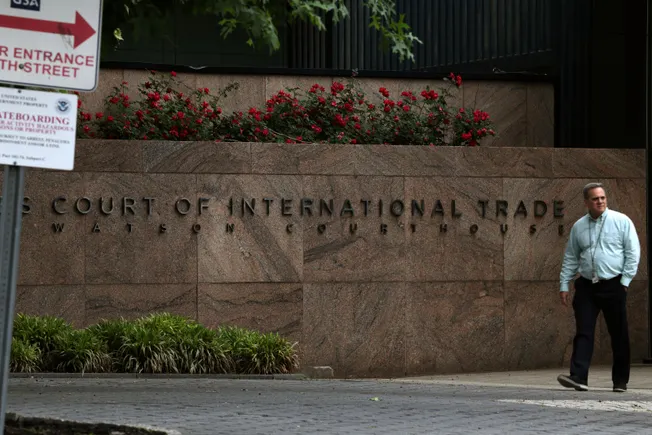
Two American companies have filed lawsuits against the federal government over the new round of Section 301 tariffs that took effect last week, adding more judicial review pressure to the Trump administration's tariff-centric trade policy.
According to a filing submitted to the U.S. Court of International Trade last Friday,the complaintnames spice importer Burlap and Barrel and watch retailer Collective Horology as the plaintiffs. The plaintiffs request the court to overturn the new tariffs and order the government to refund duties already collected.
The complaint argues that the tariffs, aimed at addressing forced labor laws in more than 60 trading partners, are "arbitrary and capricious" and effectively reinstate previously eliminated duties. The plaintiffs also contend that the Trump administration failed to properly follow or satisfy Section 301 procedural requirements before imposing the tariffs.
The Section 301 tariffs took effect last Friday, the same day the lawsuit was filed, and exactly 150 days after President Trump's temporary tariffs under Section 122 expired. Under that statute, tariffs imposed under Section 122 can last up to 150 days unless extended by an act of Congress. Trump turned to Section 122 tariffs after the Supreme Court ruled in February that his broad tariffs under the International Emergency Economic Powers Act (IEEPA) were invalid. The previously rejected tariffs included a 10% global baseline rate.
The complaint states: "The rates set by the Section 301 action closely mirror the rate structure imposed or negotiated under the previously invalidated IEEPA program, including its 10% baseline tariff and additional country-specific rates."
The complaint further alleges that the Trump administration determined the Section 301 tariff rates before concluding its investigation and pieced together supporting evidence afterward to justify its tariff decision.
Alexander Schaefer, a partner at Crowell & Moring, said in an email to Supply Chain Dive last week that the Trump administration must now convince the court "why proportional relief for each alleged harm from about 60 countries happens to fall exactly within a 10% to 12.5% range, and why those rates happen to be roughly the same as those previously imposed under Section 122." He added: "In my view, that will be a hard sell."
Beyond challenging the legitimacy of the investigation's findings, the complaint also argues that the investigation took too long to complete, breaking with historical precedent.
U.S. Trade Representative Jamieson Greer launched the forced labor investigation in March, while also initiating a separateinvestigationinto global manufacturing capacity. Less than three months later, he announced the conclusion of the forced labor investigation and proposed tariffs of 10% or 12.5% on 60 trading partners. The Office of the U.S. Trade Representative (USTR) then provided a comment period (which ended earlier this month), held a series of public hearings before imposing the tariffs last week, and adjusted some rates.
The complaint states: "The streamlined process, the scope of the action, and the resulting record indicate that USTR did not genuinely consider the specific economic problems its final action purports to address." The complaint notes that the Section 301 investigation into China's technology and intellectual property policies during Trump's first term took more than twice as long as this forced labor investigation.
In addition to questioning the speed of the investigation, the complaint also challenges tariffs as a proposed remedy for inadequately enforced forced labor laws. The plaintiffs argue that USTR neither conducted a meaningful country-by-country analysis of each nation's laws nor provided specific reasoning for how the new tariffs would effectively improve global forced labor bans.
The complaint states: "Section 301 does not allow USTR to substitute general assertions that 'forced labor is harmful, unfair, or economically distorting globally' for the statute's required findings regarding specific foreign acts, policies, or practices and the burden or restriction they impose on U.S. commerce."
This is not the first time the Trump administration has faced court challenges over its broad tariff regime. Before its IEEPA tariffs were struck down, related lawsuits were consolidated and ultimately reached the Supreme Court.
Similarly, more than 20 states and two companies, including Burlap and Barrel, sued the government over the now-expired Section 122 tariffs. The Court of International Trade ruled in May thatthese tariffs were illegal, though that ruling is currently under appeal.
Reporter Antone Gonsalves contributed to this article.