
Logistics Resilience Faces Multiple Shocks in 2026
During the online event 'Supply Chain Outlook: 2026 Trends and Risks' held on July 15, multiple logistics executives pointed out that in 2026, the logistics industry is facing multiple challenges including trade policy volatility, capacity tightening, cargo theft, and geopolitical conflicts. Although industry resilience has been tested, maintaining agility and flexibility remains crucial in the future.
Editor's Note: This article is part of the "Supply Chain Outlook" series, distilled from a joint online event hosted by Supply Chain Dive, Trucking Dive, Manufacturing Dive, and Packaging Dive. Event sponsors have no influence on editorial content or coverage.Click here to registerto watch the event replay.
In 2026, the logistics industry is facing a series of recurring challenges: trade policy volatility, persistently tight capacity, frequent cargo theft, geopolitical conflicts, and changing market conditions, putting immense pressure on everyone from shippers to carriers.
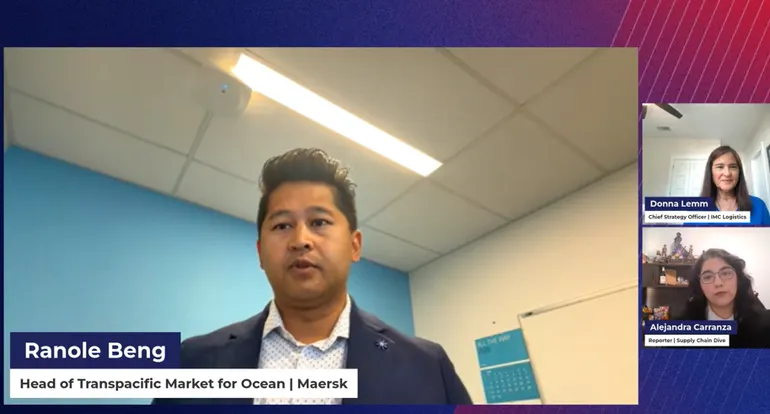
During the online event "Supply Chain Outlook: 2026 Trends and Risks" hosted by Supply Chain Dive on July 15, logistics panelists pointed out that these issues have become core concerns in the transportation sector, and further evolution—or even unexpected events—will inevitably require executives to remain agile and flexible.
"It is becoming increasingly difficult to accurately predict where the next disruption will come from," said Ranole Beng, Head of Transpacific Ocean Market at Maersk, during the event.
However, Beng added that despite the dramatic changes and unpredictability in global trade in recent years, its resilience has been remarkable, showing that supply chains have the ability to absorb shocks and respond to events.
Regulations and disruptions continue to pressure transportation services
Although the disruptions caused by the COVID-19 pandemic were once seen as the peak of shortages, given subsequent developments—such as military attacks leading to the closure of the Strait of Hormuz anddriving up fuel prices—shippers are reassessing that view, said Donna Lemm, Chief Strategy Officer at IMC Logistics.

"This is not just a ripple effect," Lemm said regarding the impact of diesel prices. "It's an immediate shock."
She added that federal regulations are also tightening driver capacity, from English proficiency enforcement to non-local commercial driver's license changes, all impacting capacity.
Lemm noted that cargo theft not only frequently affects high-value goods but also extends to everyday consumer items like food and beverages, posing an ongoing threat to supply chains.
Trade routes show resilience
Although transpacific routes have seen flat year-over-year revenue so far in 2026, showing some resilience, Beng believes that given these ongoing changes, the third quarter could further intensify transportation pressure. As supply chains enter the peak season for goods arriving in the U.S., challenges may concentrate in this quarter.
"During peak season," Beng said, "we see customers generally wanting to replenish seasonal inventory ahead of the fourth quarter."
The shipping peak season typically runs from June to October, and Maersk has not yet observed signs of slowing activity, Beng said.
Navigating the rest of 2026
Although logistics pressures may intensify further in the third quarter, companies can still adopt multiple strategies to cope.
Beng believes that diversified sourcing strategies, maintaining flexibility, improving visibility, and strengthening supply chain partnerships are effective ways for leaders to navigate future turbulence.
He emphasized that resilience is not about completely eliminating risk, but about being prepared to respond to it.