
Three Key Factors May Shape the Air Cargo Market in the Second Half of 2026
According to Xeneta's Air Cargo Outlook Update released in July, slowing global economic growth, continuously rising freight rates, and surging demand for AI hardware will profoundly impact the air cargo market over the next six months. This article outlines three key factors: slowing demand and capacity growth, upward revisions in freight rate expectations, and AI's continued role as the strongest growth engine.
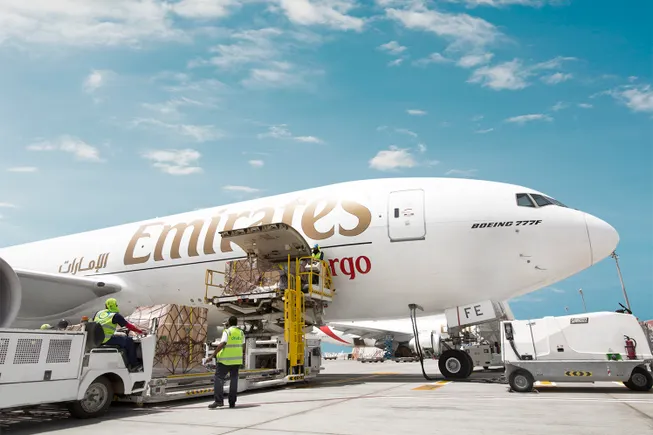
According to Xeneta's July releaseAir Cargo Outlook Update, a cooling global economy could dampen air cargo market growth over the next six months, while rates are expected to rise further.
At the start of the year, despite ongoing geopolitical conflicts and shifting U.S. trade policies, the air cargo industryremained broadly stable. However, the outbreak of war in Iran in February delivered a sudden shock to the industry. Although the impact on freight was regional in nature, according to Xeneta data, 12% of global capacity was removed "overnight." Market demand subsequently fluctuated, declining 3% in March before gradually recovering from April to June.
Meanwhile, the closure of the Strait of Hormuz—a critical waterway for global oil transport—heightened fuel price volatilityand transportation costs. However, according tothe International Air Transport Association (IATA)data, fuel prices have begun to ease but remain above normal levels.
As the Iran war continues,ocean freight reliability remains low, making it difficult for air cargo demand to shift back to ocean, while ocean shippers have begun stocking up in advance,driving up rates in that mode. However, Xeneta notes that early stockpiling has led tohigh inventory levels, reducing the volume of goods available for later transport, which could dampen air cargo demand during the fourth-quarter peak season.
Below is a mid-year outlook on three key factors impacting the air cargo market in the second half of 2026.
1. Global demand and capacity growth slowing
Although global air cargo demand grew 4% year-over-year at the end of June, higher than Xeneta's initial forecast of 2% to 3% growth, a slowing global economy could ultimately curb growth across different routes. Currently, Xeneta expects full-year demand growth to land near the upper end of its original forecast range.
On the capacity side, Xeneta expects growth to land at the lower end of the 2% to 3% range, a downward revision from its earlier forecast. As a result, demand growth could match or even exceed capacity growth.
"Shippers should—how should I put it—not expect significant price declines in air cargo services in the near term."
—Tom Crabtree, Managing Director of Transport Research Advisory
This trend is already emerging. For example, at the route level, according to IATA data, Asia-Pacific carriers saw capacity grow 4.3% year-over-year in June, while demand grew 7.9%. During the same period, North American carriers saw capacity grow 6.2% year-over-year, with demand up 13.1%.
More challenging still, the supply chains of aircraft manufacturers Boeing and Airbus have not fully recovered since the COVID-19 pandemic, Tom Crabtree, Managing Director of Transport Research Advisory, told Supply Chain Dive. In the first six months of this year, Boeing and Airbus delivered only about 75 widebody aircraft combined, just six more than in the same period of 2025. Widebody aircraft carry approximately 40% of air cargo volume, and if the two manufacturers cannot produce enough widebodies, the global freighter fleet will be forced to continue operating at overcapacity, Crabtree added.
"Shippers should—how should I put it—not expect significant price declines in air cargo services in the near term," Crabtree added.
2. Rate expectations revised upward
At the start of the year, Xeneta had forecast air cargo rates would decline by up to 10%, but the company nowexpects rates to rise 5% to 15% year-over-year。
The ripple effects of the Iran war are a key driver, with the conflict not only causing network and fuel volatility but alsoimpacting long-term contract signings, forcing freight forwarders to seek capacity or negotiate rates in the spot market, Xeneta said.
In the second quarter of this year, freight forwarders sourced nearly 50% of their air cargo volume from the spot market. During the same period, the share of newly signed shipper-forwarder contracts with terms of three months or less rose to 58% from 22% the previous year. According to Xeneta, many companies delayed negotiating 2026 contracts until market conditions stabilized.
Since late February, air freight rates have been rising due to jet fuel price volatility and strong demand, Crabtree said. He added that rates were up as much as 38% year-over-year at one point but have eased since early July.
 Air cargo rate growth in the first half of 2026 (Source: Xeneta)
"So, if you're a shipper, these fluctuations are indeed difficult to navigate," Crabtree said.
Xeneta confirmed that spot rates appear to be trending downward after the mini peak season in late May, and an easing of the Iran situation could further reinforce this trend.
"As the conflict eases, capacity at Gulf air cargo hubs will fully recover, and jet fuel prices will fall, both pointing to further declines in spot rates," Xeneta said.
3. AI remains the strongest growth engine for air cargo
Demand for AI hardware and semiconductors is showing "extraordinary growth" in air cargo, emerging as the most significant driver on transpacific routes, Xeneta said. High-value, time-sensitive AI hardware and semiconductor shipments are expected to continue as the largest growth engine beyond 2026.
Supply chains are already adapting to shifting demand. For example, DHL Global Forwarding recently launcheda thrice-weekly transpacific widebody servicebetween Bangkok (BKK) and Cincinnati (CVG), citing the technology sector as the primary driver for adding capacity.
 DHL aircraft at Cincinnati/Northern Kentucky International Airport (CVG). DHL Global Forwarding launched transpacific capacity from Bangkok (BKK) to CVG to meet growing AI- and semiconductor-related demand. (Photo: Jay Brittain / DHL Group)
This trend is further corroborated. In April,the World Semiconductor Trade Statistics organization reportedthat global semiconductor sales grew nearly 94% year-over-year that month. Meanwhile, Taiwan—a major chip manufacturing hub—saw GDP grow about 15% in the first quarter of 2026,according to a press release. At the time, Taiwan's 2026 exports were projected to grow nearly 20%.
However, Xeneta notes that AI-related cargo accounts for less than 10% of total air cargo volume, indicating its impact is concentrated on specific routes rather than global headline figures.
More broadly, air cargo demand grew 7% year-over-year in June, with AI-related cargo contributing significantly,Xeneta reported. This growth offset the decline in China-U.S. e-commerce traffic caused by U.S. tariffs—which had been a major demand engine for air cargo over the past two to three years.
Although AI investment shows "little sign of fading," Xeneta warns that the situation could still reverse, and a bursting of the AI investment bubble would trigger systemic ripple effects.