
Three Years Later: How COVID-19 Exposed the Vulnerability of Suppliers and Workers Under the Power of Large Buyers
Three years ago, COVID-19 led to large-scale closures of retail stores in the United States and manufacturing factories worldwide. Major brands canceled billions of dollars in orders, shifting financial and operational risks onto suppliers, ultimately causing workers to suffer unemployment, wage cuts, debt, and hunger. Research shows that although some brands paid for canceled orders under public pressure, by the end of 2022, wage claims for workers at most factories remained unresolved. Experts point out that the pandemic merely exacerbated the power imbalances and systemic exploitation that had long existed in the supply chain.
Three years ago at this moment, as the COVID-19 pandemic began to spread rapidly and fatally, thousands of retail stores across the United States were forced to close.
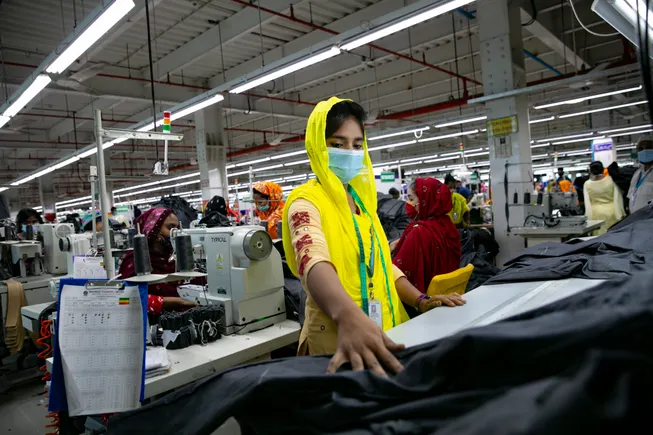
At the same time, factories in global manufacturing hubs such as Bangladesh, Sri Lanka, Pakistan, Cambodia, and Ethiopia also shut their doors—because large retailers and brands canceled billions of dollars in orders as their own businesses faced deep uncertainty.
These two types of closures were interconnected, but the eventual outcomes were starkly different and highly unequal.
Most U.S. retailers and brands recovered from the financial impact of store closures within a year. Meanwhile, many smaller factories closed permanently, and workers were laid off, losing much-needed income. For many factory workers, especially in the historically low-paying apparel and footwear industries, the loss of wages was followed by debt, forced labor, and hunger.
The early pandemic exposed cracks in supply chains and revealed deep dynamics that existed before the crisis and persist in many ways today.
Despite much talk of "partnership" between buyers and suppliers, as subsequent research has shown, the COVID-19 crisis demonstrated just how fragile and contingent the relationships between powerful brands and their overseas suppliers and workers can be.
"It exposed the vulnerable position of workers in supply chains," Pamela Abbott, professor of education and director of the Centre for Global Development at the University of Aberdeen in Scotland, said in an interview.
"They were completely blindsided"
Walmart, Target, Aldi, Kohl's, Gap Inc., H&M, Inditex, VF Corporation, Carter's, J.C. Penney, Tesco—according to academic researchers, these are just some of the companies that canceled supplier orders in the early days of the pandemic crisis.
Mark Anner, professor of labor studies and director of the Center for Global Workers' Rights at Penn State University, used a database released at the time by the Bangladesh Garment Manufacturers and Exporters Association to find that by late April 2020, large brands had canceled $3.8 billion worth of apparel orders in Bangladesh alone. And that was just one country.

The financial losses from some order cancellations were particularly severe. In many cases, suppliers had already invested in raw materials or had already produced goods—some orders were even on ships bound for buyers.
"They were completely blindsided," Anner told Supply Chain Dive. "(Suppliers) were heavily in debt, operating on credit, and getting paid later and later... When you cancel orders, when they owe banks and others, the ripple effects are very severe."
Force majeure—previously just a standard clause in contracts and legal documents—took on a new, ominous meaning for suppliers. The term literally means "superior force," and buyers began invoking it to cancel orders on a massive scale. Many suppliers were completely caught off guard. "'Where is this clause?'" Anner said, describing the confusion of suppliers at the time.
"When you cancel orders, when they owe banks and others, the ripple effects are very severe."

Mark Anner
Director and Professor, Center for Global Workers' Rights, Penn State University
If orders had already been produced, suppliers were often left to dispose of the goods themselves. For example, garment factories in Bangladesh had to sell at much lower prices in local markets because clothing made for Western markets is vastly different from what locals wear daily, noted Mohammad Azizul Islam, chair professor of accountancy and professor of sustainable accounting and transparency at the University of Aberdeen, in an interview.
Order cancellations were not the only disruptive behavior by buyers. Brands also reduced new orders, delayed payments, and began extending payment cycles to minimize their own risk. Researchers and activists say that, in effect, they shifted financial and operational risks onto suppliers.
According to a paper published in January by Abbott, Islam, and other University of Aberdeen researchers, in a survey of Bangladeshi garment producers, about half of factories reported that retailers had implemented at least one practice deemed unfair, whether canceling orders, reducing prices, refusing to pay for shipped goods, or delaying payments. Large brands and retailers were more likely to engage in these practices than their smaller counterparts.
Debt, Hunger, and Instability
Suppliers did not absorb all the financial pain alone. As research has found, that pain traveled further down the supply chain to workers. Three years later, many are still bearing these consequences.
As store and factory doors closed, workers had their hours cut, or were temporarily suspended or laid off.
University of Aberdeen researchers, based on surveys of factory owners, found that at least 25% of factory workers in Bangladesh lost their jobs between March and April 2020. Proportions in other production regions globally were likely similar.
According to a report released in 2021 by researchers at the University of Sheffield and the Worker Rights Consortium, of garment workers whose contracts were terminated during the pandemic, nearly 80% did not receive full severance pay, and more than two-thirds received nothing at all. The survey covered more than 1,110 workers.
According to a joint report by Asia Floor Wage Alliance and Global Labor Justice-International Labor Rights Forum, wage claims involving Levi's, Nike, and VF Corporation across 467 factories in six countries totaled $24 million.
That figure covers only a small portion of the supply chain. But if the average of that survey—$1.1 million in wage claims per factory—is used as a benchmark, then in the fashion industry alone, unpaid wages owed to workers from the COVID-19 crisis would accumulate to tens of billions of dollars across global supply chains.
The sharp drop in workers' income brought multiple consequences. A research team working with the Worker Rights Consortium, examining workers in Ethiopia, Honduras, India, and Myanmar, found that living conditions for workers in apparel supply chains deteriorated; the few with savings had to spend them to survive, while more took on new debt. Beyond the cost of borrowing, the nature of lending in many regions has made workers more vulnerable to forced labor and other abuses since 2020.
Workers also faced food insecurity and outright hunger. According to a separate study by the Worker Rights Consortium in November 2020, 88% of garment workers reported that their households had to reduce food consumption due to reduced income; 77% said they or their family members had experienced hunger. At the time, 20% of workers reported being hungry every day.
"Workers were not doing well before COVID-19. COVID-19 just exacerbated what was already there."
Pamela Abbott
Director and Professor, Centre for Global Development, University of Aberdeen
When Western economies reopened and workers returned to factories, it did not resolve their plight. Islam said employers pushed new contracts on those who had been laid off, and workers, out of desperation, were willing to sign even at lower wages.
"Whatever the employer offers, you have to accept," Islam said.
When sales rebounded in wealthy countries and brands rushed to restock, production schedules became frantic, and many workers reported unpaid overtime.
Accelerated production schedules put greater pressure on workers who retained jobs after the initial crisis. Many have since reported unpaid overtime. These overtime wages are crucial because many workers in poor countries depend on them to make ends meet.
"Intensified production targets and the various hours and wage violations well known in the apparel industry have escalated over the past few years due to supply chain instability and suppliers trying to make up profits by squeezing workers," said Sahiba Gill, senior staff attorney at Global Labor Justice-International Labor Rights Forum.
For workers, these ills were not new before the pandemic. Buyers' below-cost purchasing, tight deadlines, and last-minute order changes have long put pressure on factories and their employees.
"Workers were not doing well before COVID-19," Abbott said. "COVID-19 just exacerbated what was already there."
A 'Character Moment' for Buyers
After the initial crisis, many brands began paying for canceled orders. Anner noted that this was partly the result of public pressure, as brands' behavior was exposed publicly.
Workers and suppliers began cooperating on advocacy efforts, including through the movement known as #PayUp, which aimed to pressure buyers to pay for canceled orders during the crisis.
As Anner wrote in a 2022 paper, the cooperation between workers and factory owners on advocacy occurred because "suppliers realized they needed the moral legitimacy of activists and worker rights advocates, and because worker rights advocates understood that if suppliers went under, millions of workers would lose their jobs."
As the initial crisis passed, much of the visibility of the issue faded. And cases of brands paying severance to workers remain extremely rare. One of the few examples is Victoria's Secret, which reached a historic settlement with Thai workers in early 2022 over lost wages resulting from a factory closure in 2021.
But again, this remains the exception. As of the end of 2022, 90% of factories studied by Asia Floor Wage Alliance had not resolved workers' wage claims since 2020, and more than half had not paid back overtime wages also dating to 2020.
And this comes after years of pressure by activists on the brands involved in the study. One of those brands, Nike, was recently the subject of a complaint to the Organisation for Economic Co-operation and Development by unions and advocacy groups over the treatment of workers in the sportswear giant's supply chain, much of which dates to early 2020.
"We sincerely hope they can find a way to pay back workers and their supply chains, and that they can change the way they do business in the future."
Sahiba Gill
Senior Staff Attorney, Global Labor Justice-International Labor Rights Forum
For Anner and others who study buyer-supplier relationships in fashion and other markets, the 2020 crisis highlighted how unequal such partnerships can be, and how workers in poor countries ultimately bear the brunt of buyer behavior.
"Buyers squeezed suppliers on price, order volume, and payment terms, with devastating consequences for suppliers and especially workers," Anner concluded in his 2022 paper. "Millions of workers lost wages, jobs, and severance."
The lasting impact is both material and relational. "Partnership and trust have been severely damaged—both between buyers and suppliers, and between factory owners and workers," Anner said in an interview. "It needs to be rebuilt."
It remains unclear what has changed in the relationships between large buyers and overseas suppliers. According to the University of Aberdeen researchers' survey, among large brands, 72% were purchasing below production cost at the end of 2021, and 68% sourced from factories that struggled to pay workers the local minimum wage.
Some say the plight of workers in supply chains is as precarious now as it was then, or even worse, and that buyer behavior remains problematic.
"Based on what we're hearing, I think many buyers haven't improved relationships; in fact, they've doubled down on some practices," said one researcher who studies labor issues in supply chains.
For Abbott and Islam, these problems are systemic. As they explain, countries compete to become manufacturing hubs to attract foreign investment. Factories in these and other countries compete for contracts. Buyers face pressure from investors to be profitable, squeezing supplier prices as low as possible. Extremely low prices and pressure on factories can lead to various violations of workers' rights. And everyone in the system is racing to supply consumers who seek status and try to keep up with cultural trends.
Although the global supply chain crisis of 2021 showed how deeply buyers depend on suppliers, the following year, once sales began to decline, buyers again scaled back and canceled orders—though not as disruptively as in early 2020. But researchers interviewed by Supply Chain Dive said workers again felt the pain of buyers' defensive behavior.
"This is a real bellwether character moment for the industry, and they can still make the right choice," Gill said. "We sincerely hope they can find a way to pay back workers and their supply chains, and that they can change the way they do business in the future."