
Delivery speed continues to improve, but limited room for further optimization
Delivery speed continues to improve, but further acceleration faces challenges. project44 data shows that the average delivery time in April 2023 dropped to 4 days, significantly shorter than the 5.6 days in the same period in 2022. However, cost pressures, difficulty in demand forecasting, and higher consumer expectations for accuracy may make it difficult for delivery speed to continue improving significantly.
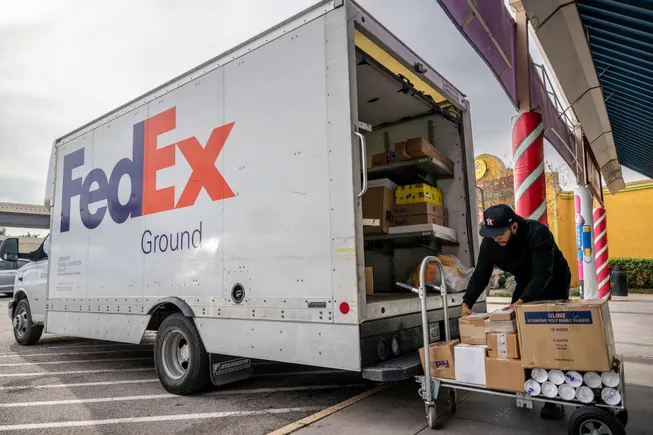
Delivery times are still improving, but against the backdrop of shifting consumer preferences and shipper cost control, further reducing delivery times is becoming more difficult.
According to project44's "State of the Last Mile Report" released last month, in April 2023, the average time from customer order to final delivery dropped to 4 days, compared to 5.6 days in April 2022. The company's supply chain visibility platform tracks shipping data for over 1 billion packages annually.
Delivery speeds continue to improve
The report states: "Looking at longer historical delivery times, 2023 is experiencing the fastest delivery speeds in the last-mile market in years."
Carson Krieg, project44's Head of Industry Growth and Last-Mile Solutions, told Supply Chain Dive that the "healthy average" for end-to-end fulfillment is between 4 and 6 days. This raises the question: how much more can delivery times be compressed?
Krieg said: "I think delivery times will tend toward some kind of normalcy."
What is driving faster delivery?
Krieg believes the reasons for faster delivery are multifaceted.
On the transportation side, parcel carriers are no longer facing the capacity constraints seen in the early pandemic, allowing service levels to recover. Shippers are diversifying their carrier portfolios, leveraging the speed advantages of new delivery providers on certain routes.
Krieg cited an example: "UPS might take two days from Southern California to Northern California, while OnTrac might take just one day."
On the fulfillment side, companies are moving inventory closer to end consumers, most notably Amazon with its shift to a regional network model. Martin Dresner, professor and chair of the Department of Logistics, Business, and Public Policy at the University of Maryland, noted that retailers have been trying for years to catch up with the delivery speed advantages brought by Amazon's vast warehousing network. The pandemic accelerated these efforts, especially ship-from-store programs.
Other major retailers are also increasing fulfillment investments. Walmart's store-fulfillment delivery sales nearly tripled in two years, with monthly sales in that category exceeding $1 billion. Meanwhile, Target announced earlier this year a $100 million investment to support next-day delivery using its store network, further strengthening its "store-as-hub" strategy.

It's not just giants like Amazon and Walmart speeding up. American Eagle and Nordstrom also reported faster customer delivery times in recent earnings calls.
Nordstrom CEO Erik Nordstrom said last week: "We are serving customers better with faster delivery, with overall delivery speed up 9% compared to last year."
Cost control and consumer demand may slow delivery
A range of factors could limit further improvements in delivery speed, or even slow it down.
In recent months, with inflation eroding profits, retailers have been cautious about adopting high-cost express services. As a result, demand for air freight network express services has weakened, with many shippers instead requesting more economical ground transportation.
Laura Ritchey, COO of e-commerce fulfillment provider Radial, said: "We can achieve 3 to 5-day click-to-delivery times, but anything faster becomes very expensive."
Companies that shift to a regional fulfillment model like Amazon may reduce transit times and costs. But for companies lacking Amazon's robust infrastructure and forecasting capabilities, this carries risks. Vijay Ramachandran, Vice President of Marketing and Experience at Pitney Bowes, pointed out that if demand shifts, inventory could become stranded in areas that are not economically or time-efficient.
Ramachandran said: "The more dispersed the inventory, the more you need precise demand planning and a clear understanding of how demand will be distributed geographically."
Inaccurate forecasts can make on-time delivery more difficult, and even with relatively short transit times, this can lead to consumer dissatisfaction. Pitney Bowes BOXpoll market survey data shows that 62% of consumers consider an accurate estimated delivery date more important than fast shipping.
However, many retailers have not slowed their delivery promises to improve accuracy. project44 data shows that the on-time delivery rate in April fell year-over-year from 83.9% to 80.4%, which the company attributed in its May report to "aggressive delivery timeframes promised by some companies."
Experts say retailers need to balance cost control with meeting consumer expectations to improve delivery services in the long term.
Ramachandran said: "We are in the post-pandemic era, but the environment is different from pre-pandemic. This change requires us to make new assumptions about consumers' core needs."