
Why Some UPS Shippers Are Still Not Diverting Volume Amid Potential Strike Shadow
The contract between UPS and the Teamsters union expires at the end of this month, and if no agreement is reached, the union plans to strike on August 1. However, some shippers have not diverted volume as a result. Experts point out that company size, carrier mix, contract terms, and confidence in negotiation outcomes collectively influence this decision. Meanwhile, other companies have activated contingency plans, mitigating potential impact through diversified carrier arrangements.
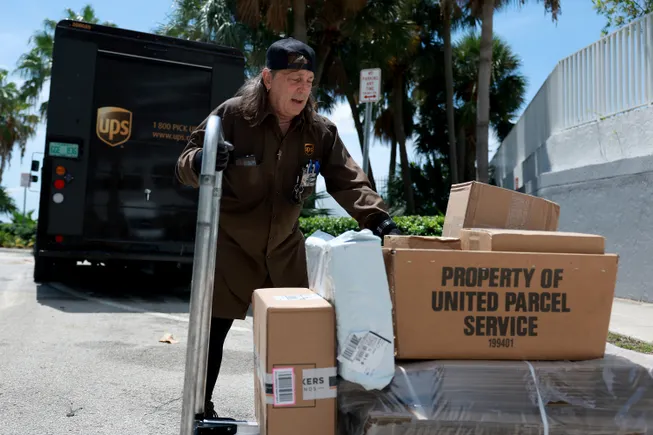
Despite the looming threat of a UPS strike, many businesses have not yet shifted some of their parcel volume to other carriers.
The delivery giant's national contract agreement with the International Brotherhood of Teamsters, which represents about 330,000 UPS employees, expires at the end of this month. If a tentative agreement on a new contract is not reached, the union plans to strike on August 1, which would paralyze the company's network and cause supply chain disruptions.
However, according to parcel delivery experts, even in the face of these risks, anddespite the growing trend of carrier diversification, some shippers still maintain their current volume levels with UPS. Company size, current carrier mix, confidence in the negotiating parties reaching a deal, and the nuances of their specific transportation contracts all play a role in the decision-making process.
This does not mean that all shippers are indifferent to the strike threat. As the contract deadline approaches, some companies are still racing against time to deploy alternative carrier solutions.
"The tone I've observed has shifted over the past month or so," Stephen Beard, vice president of transportation at e-commerce fulfillment provider PFS, told Supply Chain Dive. "We're now seeing a large number of customers coming to us asking how to move volume away from UPS."
The following analysis looks at why some UPS shippers are holding steady, while others are stepping up their mitigation planning.
Benefits of sticking with UPS
Third-party logistics company AFS Logistics has not seen signs of a large-scale shift of client volume away from UPS. Micheal McDonagh, president of the company's parcel division, says a combination of factors is at play.
Some shippers firmly believe that the company and the union will reach an agreement before a strike occurs. Additionally, large clients may worry about losing volume-based shipping discounts—which could be substantial even if volume is diverted for just a week or two—while adjusting their carrier mix also involves complex operations.
"That means testing systems, testing routes, testing pickup times, and training employees for changes that may never happen," McDonagh said.
Furthermore, strict contract terms can also dampen shippers' willingness to divert packages to other carriers.
PFS's Beard has found that some shippers have agreements containing hefty financial penalties, requiring substantial compensation if they fail to provide the carrier with the agreed-upon annual volume. Such arrangements have become more common since the surge in delivery demand and capacity constraints during the COVID-19 pandemic.
"Over the past three years, the market was 'whatever the price, as long as you pick it up,'" Beard said. "During that time, carriers leveraged that bargaining power to include clauses in contracts that had never been there before. I think that's one of the reasons for the current volume stickiness."

Experts point out that small and medium-sized businesses are particularly vulnerable to strike-related disruptions because they lack the volume or purchasing power to easily secure capacity from alternative carriers. Many of these businesses still rely solely on national carriers like UPS.
Against the backdrop of cooling delivery demand, UPS has also been actively retaining business,assigning executives to engage with its major customersto persuade them to keep their packages within its network. This strategy appears to be paying off, as competitor FedExdid not gain substantial benefits from the contract negotiations。
in its most recent reported quarter. These factors mean that if a strike does occur, a group of companies will face exposure to risk.
Williams-Sonoma and headphone company Koss Corporation have already listed the pending contract negotiations as operational risks in their securities filings this year. Nicokick, a seller of smokeless nicotine products that uses multiple UPS delivery services,warns on its websitethat customers should consider placing orders as soon as possible to avoid potential delays.
"Orders placed before July 31 will most likely not be affected," Nicokick said.
Other shippers develop contingency plans
Other companies, meanwhile, have already positioned themselves ahead of time to mitigate the potential impact of a UPS strike.
In emails to Supply Chain Dive, UPS's major customers Amazon (which hasbuilt its own delivery fleet) and Macy's both expressed confidence in minimizing any potential disruption from a strike.
"At Macy's, our experienced team has successfully navigated supply chain disruptions in the past and is confident in its ability to adapt flexibly as needed," a spokesperson for the retailer said. "Should a strike occur, we have contingency plans in place to mitigate the impact on our customers."
Experts say a key part of contingency planning issecuring capacity with alternative carriers. Since the capacity constraints of 2020 and 2021, shippers have gradually expanded their carrier mix beyond traditional giants like UPS.
For example, Adam Bryant, chief operating officer of urban last-mile delivery provider AxleHire, says existing customers have already shifted volume originally destined for UPS to the company to mitigate potential disruptions. AxleHire does not expect additional volume transfers from these customers and plans to use its gig-worker network to serve new customers on a first-come, first-served basis.
"One of our advantages is our asset-light model," Bryant said. "By leveraging the gig economy and some of our partners, we can scale up flexibly."
Beard says using a diversified mix of delivery companies is a key part of PFS's plan to mitigate the impact of a strike on its clients, many of whom are shippers of lightweight goods such as luxury items and cosmetics.
For items weighing more than four pounds, the fulfillment provider will rely on FedEx. Products below that threshold are typically handled by workshare partners of the U.S. Postal Service. These partners, such as OSM, inject volume into postal network nodes closer to the delivery destination, bypassing potential bottlenecks in large postal sorting facilities.
"This offers more flexibility than the integrated carrier network," Beard said.