
2024 Supply Shortage Risk Outlook: Pharmaceuticals, Food, Battery Minerals, and Climate-Geopolitical Challenges Coexist
After years of supply chain disruptions, the risk of supply shortages persists in 2024. Based on analyses from industry experts and institutions, this article outlines potential shortage points across five major areas: pharmaceuticals and medical supplies, food, battery minerals, and climate- and geopolitically-driven factors, and notes that companies are shifting from a cost-first approach to a strategy that also prioritizes resilience.
Although companies are currently more concerned about inventory gluts than product scarcity, the era of port congestion, empty shelves, and toilet paper shortages is not far behind. Risks beyond the pandemic—political, economic, environmental, financial, and more—continue to emerge one after another.
"If 2023 was the year of 'what'—what the problem or challenge is—then in 2024 we will start to move into the 'how' and actually implement it," said Simon Geale, executive vice president of procurement services company Proxima. "I think early in 2024, we will see quite a bit of progress in localization, reshoring, and resilience building."
The scars of the pandemic remain, but the sharp swing from high demand and product scarcity to inventory gluts and weak consumption has revived companies' long-standing priorities on cost and profit margins. "Currently, companies are highly focused on cost management and cost isolation to protect profitability," noted Philipp Oemler, managing director at FTI Consulting. "Most companies are trying to avoid wholesale changes to their supply chains."
Meanwhile, Oemler believes that attitudes within organizations have shifted since the pandemic caused widespread supply chain disruptions. "In my view, this is a mindset shift," Oemler said. "After the pandemic, people concluded that the supply chain is one of their strategic strengths and must be secured. The pendulum is swinging more toward cost, but the resilience mindset is still there."
There are good reasons to maintain a resilience mindset. Various conditions and systemic challenges continue to pressure the supply of some key commodities, while other unpredictable risks could cause shortages that no one can precisely foresee today. Here is an overview of areas where shortages may occur in 2024:
Pharmaceuticals and Medical Supplies

Throughout 2023, shortages of certain drugs continued to plague hospitals and healthcare providers, and many underlying dynamics remain unresolved. The U.S. Food and Drug Administration (FDA) still lists cancer treatments such as carboplatin and cisplatin on its shortage list—drugs that have triggered astronomical price spikes. In addition, dozens of other medications are in short supply.
Inventories of some medical devices are also under pressure. According to a 2023 survey by the patient safety nonprofit ECRI and the Institute for Safe Medication Practices, supply disruptions of equipment and treatment supplies have led to surgeries being rescheduled, delayed, or canceled.
In the medical device sector, many supply chain issues lie upstream of manufacturers. "When I work with medical device companies, nine times out of ten the question is: 'How do we improve the stability of supplier supply?' In the medical device field, you cannot easily or quickly switch suppliers," said Rick van der Vegte, senior managing director in FTI's life sciences business.
van der Vegte noted that long lead times in pharmaceutical and device manufacturing supply chains can exacerbate disruptions, and mitigating these risks also takes time. He added that finding and qualifying another supplier takes at least a year. Given the time required to bring in a new supplier, assessing and addressing risks early could prevent disruptions in advance. van der Vegte mentioned that he worked with a European medical device company to conduct a comprehensive risk assessment of its supply. "We found that most risks could be eliminated by changing contracts or identifying alternative suppliers," he said.
Food

War and weather have put the broader food system on high alert, and this state may persist for the foreseeable future. "I don't think it's possible to enter any year now without putting food supply at the top of the risk register," Geale said.
Analytics firm Everstream lists agricultural product shortages as one of the top supply chain risks for 2024, partly due to production disruptions of 2023 crops during a turbulent year. Last year, cocoa and sugar prices soared, with the latter prompting a federal oversight agency to push for policy reforms. Heat and drought in Europe caused olive oil shortages, driving up global prices.
Entering 2023, concerns about potential shortages intensified as the war between Ukraine and Russia, two major grain producers, continued. Ukrainian exports fell in 2023, and its farmers have abandoned millions of acres of land. However, the worst-case scenario has not materialized so far. The Famine Early Warning Systems Network said in an October analysis: "While declining Ukrainian agricultural exports continue to make global markets tighter and more volatile, as supply chains and global markets have largely adapted, the importance of Ukrainian export trends to overall expectations for global commodity markets is increasingly diminishing." The organization added: "The bigger concern lies in the impact of potential future shocks," pointing to the possibility of war in the Middle East.
Battery Minerals

As countries and companies race to adjust their energy usage, businesses are scrambling to secure key materials used in electric vehicle batteries and other green technologies. According to a market review by the International Energy Agency, global lithium demand tripled between 2017 and 2022, cobalt demand jumped 70%, and nickel demand rose 40%. Meanwhile, prices "remain well above historical averages."
Concerns persist over whether supply of these and other minerals can keep pace with demand growth. Geographic concentration in mining and refining has exacerbated tensions in battery materials. In response, the Biden administration has invested money and effort in developing domestic supply chains for minerals such as lithium.
Large private companies have also invested in mining and refining. Just this year, fossil fuel giant ExxonMobil said it is seeking to enter the lithium supply market for EV batteries, starting with a drilling site and processing plant in southwestern Arkansas. Meanwhile, manufacturers are racing to secure their own supplies. Ford has signed multiple long-term lithium contracts. Fellow automaker General Motors has invested in a lithium producer and plans to invest another $650 million with a Canadian lithium mining specialist to develop a lithium mine in Nevada. The list goes on, and so does it for other minerals.
Climate-Driven Shortages

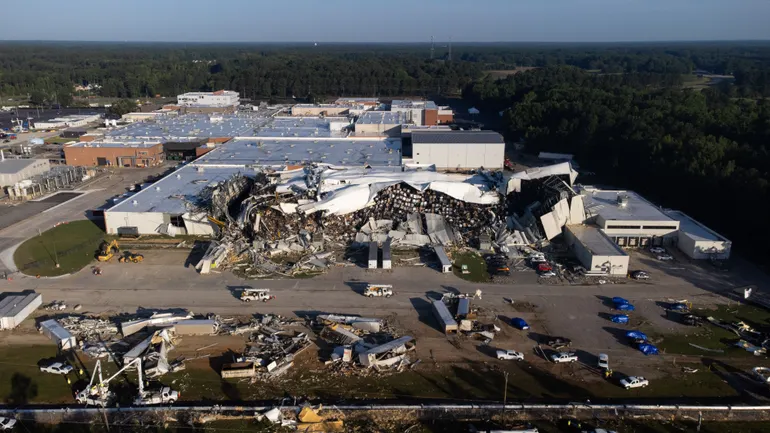
The climate is changing, and extreme weather events are becoming more frequent and intense. Over time, the situation will only worsen, especially if humans fail to rapidly reduce carbon emissions, and its impact on supply chains will grow accordingly. Any extreme weather event can slow or even disrupt the production or transportation of supplies. For example, last summer, a tornado damaged a Pfizer pharmaceutical plant in North Carolina, forcing its temporary closure and raising concerns about supply shortages. It took months for the plant to return to full production.
Elsewhere in the world, prolonged droughts have slowed traffic on major shipping routes, including the Panama Canal and the Mississippi River. Drought and heatwaves have also hit Spain's olive oil production and cocoa harvests. Extreme weather in India led to shortages and sharp price spikes for the country's staple tomato. Everstream listed extreme weather disruptions as the top supply chain risk for 2023, citing shipping delays caused by last year's Canadian wildfires and heavy rainfall and flooding in the Southwest.
"As we saw in India last year, a single failed harvest or climate disruption can throw a significant portion of the world's food supply out of balance," Geale said. These are just previews of future challenges. At a Senate hearing in October, experts pointed to the potential impact of climate disruptions on ports and commodity supplies such as semiconductors—many of which are produced in Taiwan, where typhoons could have an increasing impact on local manufacturing.
Geopolitically Driven Shortages

Procurement and supply chain teams are also closely watching political developments as they plan for 2024 and beyond. Since the Trump administration first imposed tariffs on China, imports from China have fallen significantly, and companies have sought to diversify their sourcing. Republican candidates have expressed support for revoking China's permanent normal trade relations status, which would lead to further sharp increases in import tariff rates. The National Retail Federation took such proposals seriously enough to commission an impact study, which found that such policy moves would result in an additional $31 billion in costs borne by consumers.
Recent wars have also raised concerns about shortages: Russia's invasion of Ukraine drove up fuel costs and food prices, while the Middle East war has slowed maritime shipping and fueled tensions over fertilizer supplies. Oemler also pointed out that a potential conflict around Taiwan—another major supply chain risk highlighted by Everstream this year—could have significant impacts on global trade and production. Companies are already considering potential conflicts when making sourcing decisions. "They are increasing investment in supplier base diversification and long-term agreements," he said.