
FedEx Air Network Faces Major Adjustments After USPS Split
FedEx's air cargo network may face major adjustments in October, as its express division loses the United States Postal Service, its largest customer. Analysts expect FedEx may cut 50% of its daytime flight capacity, saving $1.5 billion in costs. The company has been actively reducing costs through its DRIVE program and has grounded 37 aircraft. Pilot union representatives also anticipate a significant reduction in daytime flights.
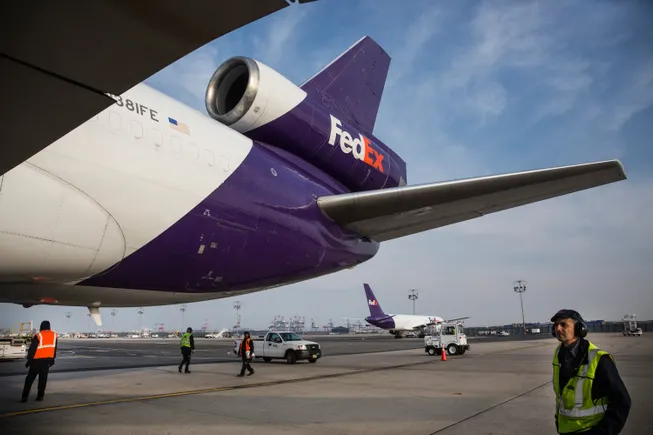
As the contract between the United States Postal Service (USPS) and FedEx approaches expiration, FedEx's air cargo network is expected to undergo significant changes in October. Its Express division will lose the Postal Service as its largest customer and will have to make deep adjustments to its existing network structure.
Competitor UPS has confirmed it will take over the Postal Service's main air cargo contract starting September 30, while the Postal Service's airport-to-airport transportation agreement with FedEx expires on September 29. FedEx stated in a statement that it will adjust its network after the contract ends, including cutting fixed costs set up to support Postal Service volume.
Analysts believe that daytime flights are one of the key targets for FedEx's adjustments, as the Postal Service frequently uses these flights. Barclays analysts noted in a February research report that if FedEx loses the Postal contract, it could cut 50% of its daytime flight capacity and save $1.5 billion in costs.
The extent to which this goal is achieved depends on how much capacity FedEx is willing to reduce. Several experts told Supply Chain Dive that, given the company's aggressive cost-cutting initiatives in recent quarters, FedEx will implement adjustments quickly after the contract ends.
"I think FedEx has long anticipated losing the USPS business, and they have a clear idea of how to restructure and downsize their air operations," said Dean Maciuba, managing partner for the U.S. at Crossroads Parcel Consulting. "They can implement these changes very, very quickly."
FedEx's massive air network continues to evolve
FedEx holds a dominant position in the air cargo industry. Barclays analysts point out that its fleet size, daily flight numbers, and capacity all exceed UPS, and its global air cargo revenue is also higher than UPS. The Postal Service contract is a key part of this success—as of May 31, 2023, the Postal Service was the largest customer of FedEx's Express division.
However, FedEx's air operations also have significantly higher maintenance and operating costs than its competitors. According to Barclays analysts, the U.S. domestic daytime flight operations, primarily driven by Postal business, cost FedEx about $3 billion annually. Meanwhile, declining Postal volume in recent quarters, coupled with the Postal Service's greater reliance on ground transportation, has continued to pressure FedEx's revenue.
"This business is much smaller than it used to be, and much smaller than the supporting capacity FedEx may have built years ago," said Scott Ruffin, founder and CEO of Pandion. Ruffin previously founded and led Amazon Air.
Key data at a glance
- 499: FedEx Express's daily U.S. domestic flights, 93 more than UPS (Barclays research data)
- 90-100: Estimated number of daytime flights FedEx Express operates to serve the Postal contract
- About 50%: Proportion of FedEx's daytime network capacity historically estimated to be used by USPS
- $3 billion: Barclays' estimate of FedEx's annual cost for daytime flight operations
- $1.6 billion: Postal Service spending on FedEx in fiscal 2023, down from $1.9 billion the previous year (provided by David Hendel, partner at Culhane Meadows, to Supply Chain Dive)
FedEx has not hesitated in recent quarters to improve profitability, especially in cutting costs from its expensive air transportation network. Through its extensive DRIVE program, FedEx is reducing routes and deploying crew and other resources more efficiently.
In the quarter ending February 29, FedEx achieved $110 million in air network cost savings through the DRIVE program. The company also grounded 37 jet aircraft, up from 20 in the previous quarter.
"My top priority is to continue making the necessary adjustments to adapt our air network to the changing demand environment and unlock its full profit potential," said President and CEO Raj Subramaniam on a March earnings call.
Daytime flights and pilot staffing seen as adjustment targets
Barclays analysts note that the largest part of the Postal contract involves FedEx operating a daytime hub-and-spoke sorting network through its Memphis, Tennessee hub to transport the Postal Service's Priority Mail.
Therefore, industry experts believe that daytime flights will be the primary target for cuts after the contract loss. Even during negotiations for a new contract between FedEx and the Postal Service, the company has been pushing for an agreement involving service to fewer markets.
"Many things will affect the future lives of pilots."
—Marty Harrington, chairman of the scheduling committee for FedEx's pilots union, on the impact of losing the USPS contract
Derek Lossing, a former Amazon logistics executive and now founder and principal consultant at Cirrus Global Advisors, said non-Postal volume affected by daytime flight cuts could be transported by ground to another air cargo hub.
"The last thing they want to do is go to big retailers and say: 'We want to reduce our overnight (air) volume,'" Lossing said. "They'll say: 'Your overnight shipments to us in New Jersey will first go by ground for three hours to Philadelphia, then fly to Minneapolis.' It's just a slightly different network connection."
Marty Harrington, chairman of the scheduling committee for FedEx's pilots union, also sees daytime flight capacity as a cut target. In a union podcast earlier this month, he said he expects daytime flights "to be significantly reduced starting in October."
Harrington added that after the contract expires, FedEx's "overstaffed" pilot workforce could also be streamlined, but the specific impact won't be clear until the post-contract flight schedule and related staffing needs are determined.
"I know it's difficult, but we have to be patient," Harrington said. "Many things will affect the future lives of pilots."
