
The De Minimis Rule: A Boost or a Barrier for U.S. Manufacturing?
The de minimis rule allows imported goods valued under $800 to enter duty-free. While this policy benefits Chinese e-commerce platforms like Temu and Shein, as well as the logistics industry, its impact on U.S. manufacturing varies by sector. Complex manufacturers such as auto parts are largely unaffected, but low-cost manufacturers like the textile industry view the rule as a serious competitive threat. As multiple reform bills are proposed, the positions of supporters and opponents are becoming clearer. Based on Federal Reserve data, industry organization statements, and legislative progress, this article analyzes the rule's actual impact on U.S. manufacturing.
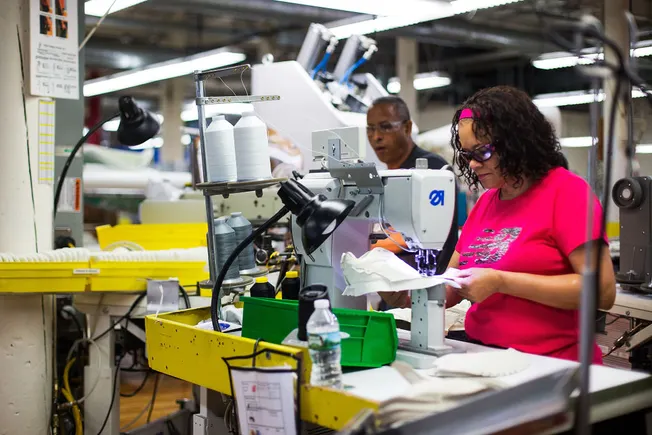
The de minimis exemption policy has been a boon for Chinese e-commerce giants like Temu and Shein, and has also benefited the air cargo and parcel delivery markets. However, what impact has this policy actually had on U.S. manufacturing? The answer varies by industry.
Auto parts manufacturers and other makers of complex products are largely unaffected by the exemption, as they typically ship goods valued well above the $800 duty-free threshold.
However, for low-cost manufacturers such as those in the textile industry, the current threshold poses a competitive threat—foreign manufacturers can use it to bring cheaper goods into the U.S. market while avoiding customs duty obligations.
Over the past two years, multiple legislative proposals aimed at adjusting or restricting the use of the de minimis exemption have been introduced, making the positions of both sides in this debate more pronounced than ever.
Reform, not repeal
Although federal data does not show a strong correlation between the current $800 threshold and overall manufacturing output, groups such as the National Association of Manufacturers (NAM) firmly defend the benefits of the exemption. These groups specifically point out that the exemption helps reduce additional costs and administrative burdens when sourcing raw materials and exporting products.
According to data from the Federal Reserve Bank of St. Louis, total U.S. domestic industrial output has largely recovered to pre-pandemic levels over the past two years. However, the latest Purchasing Managers' Index (PMI) from the Institute for Supply Management (ISM) shows that manufacturing production hit a four-year low in August, continuing the weakness seen throughout the year.
The de minimis threshold was raised to $800 in February 2016. At that time, industrial output was in a slight decline, but it recovered before the end of the year. Apart from the sharp drop during the pandemic, industrial output has remained relatively stable overall since the threshold was raised.
Some sectors support manufacturing activity
Certain sub-sectors have provided support for manufacturing activity. For example, aside from pandemic-related slowdowns, industrial output for motor vehicles and parts has continued the upward trend that began after the Great Recession.
In a March letter to White House officials, NAM and several other groups supported protecting and improving the current de minimis threshold. One of the core arguments of these groups is maintaining U.S. export competitiveness.
"Restricting the use of U.S. de minimis treatment is likely to prompt corresponding adjustments by the other 88 countries that have de minimis policies, thereby increasing costs for U.S. exporters," the letter stated.
Although these groups oppose eliminating the de minimis threshold, they encourage improving its enforcement, calling on U.S. Customs and Border Protection (CBP) to use its "clear statutory authority to require (shippers) to provide additional information to inform enforcement decisions."
Textile industry sees de minimis as a 'disaster'
Other manufacturers are calling for more aggressive measures against the current exemption policy.
In March, the American Manufacturing Alliance, in cooperation with the United Steelworkers, the AFL-CIO, the National Council of Textile Organizations (NCTO), New Balance, and others, launched the "Coalition to Close the De Minimis Loophole."
Coalition members expressed support for the Import Security and Fairness Act, introduced in both the Senate and House in June 2023, which would prohibit de minimis treatment for goods from China and Russia.
Since then, legislative pressure has continued to mount. In April 2024, the End Chinese De Minimis Abuse Act was introduced; in August, the Combating Counterfeit Goods, Helping Trusted Importers, and Benefiting America Act (the "Fight for America Act") was also proposed.
Both bills target goods subject to Sections 201, 232, and 301 tariffs, but the Fight for America Act goes further by restricting specific goods such as textiles, apparel, and leather products from being shipped under the de minimis exemption.
In addition to legislative action, NCTO and its partners are calling for increased federal intervention, particularly from the Secretary of the Treasury.
"The Secretary of the Treasury has the authority to limit this loophole, or even eliminate it. Therefore, we ask the (Biden) administration to consider using its authority to the fullest extent," said Kim Glas, President and CEO of NCTO.
Textile manufacturers are especially eager to eliminate the de minimis exemption. According to Federal Reserve data, U.S. textile industry output has been in continuous decline since the early 2000s. NCTO says the rise of e-commerce after the pandemic and the increasing reliance on the de minimis exemption by companies like Temu and Shein have only made things worse.
Data and industry testimony
"The pandemic accelerated our need and willingness to shop online, and due to convenience factors, this trend will continue. There is truly a lack of accountability in the de minimis environment, which not only disrupts the way we shop but also harms U.S. manufacturing," Glas said.
According to U.S. Customs and Border Protection estimates, the total volume of de minimis shipments in 2023 was approximately 1 billion packages, up from 685.4 million in 2022 and 150 million in 2016. As of the third quarter of 2024, total shipments had already reached 1 billion.
In testimony before the House Ways and Means Committee last December, Andy Warlick, Chairman and CEO of yarn manufacturer Parkdale Mills, said that about half of de minimis shipments are textile and apparel packages. Additionally, according to Glas, the U.S. textile industry has closed 18 manufacturing plants over the past year, primarily due to the influx of de minimis imports.
"I just want to say that de minimis has been a disaster for the U.S. textile industry," Glas told Supply Chain Dive.
Given that apparel shipments are typically low in value, Glas believes that merely lowering the de minimis threshold or making other similar reforms would do little to solve the problem.
"This rule is being exploited in ways never envisioned when it was created in the 1930s. If someone asks me if I have a perfect solution, my answer is: eliminate de minimis treatment for all e-commerce," Glas said, noting that his organization supports the Fight for America Act introduced in August.
"We won't let perfect be the enemy of good," Glas added. "We want to see action as bold as possible. We support these lawmakers standing up and saying 'enough is enough.' We must act now."