
Why E-commerce Packaging Favors Square Shapes: From Robot Adaptation to Sustainability Considerations
With the increasing demands for automation and sustainability in e-commerce logistics, square rigid packaging (such as cartons) highlights advantages in transportation, warehousing, and robotic picking. Brands are shifting from flexible packaging to square designs, while needing to balance consumer perceptions of packaging changes. This article synthesizes expert opinions and industry reports to explore the driving factors, challenges, and future directions of the 'square-ization' trend.
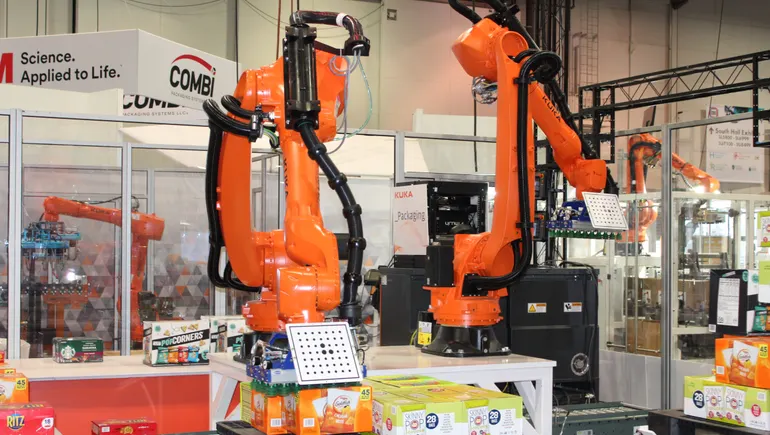
During the recent holiday shipping peak, ordinary consumers may have overlooked a key detail in e-commerce: the shape of packages. However, in the supply chain that efficiently moves goods through e-commerce channels, square designs (such as corrugated boxes) dominate. Some argue that this form is also beneficial for marketing and reducing shipping emissions.
In some cases, brands are shifting from flexible packaging to rigid square or rectangular packaging; sometimes, after using other packaging forms for a period, they return to corrugated boxes. Performance, efficiency, and sustainability factors play a role in the "squaring" choice; compared to boxes, flexible packaging is more prone to being crushed or shifting during transit.
But one key reason box-shaped packaging currently dominates e-commerce is: robots.
"E-commerce is becoming more and more automated," Leon Nicholas, vice president of retail insights and solutions at Smurfit Westrock, told Packaging Dive. "Robots generally perform better when handling square and precisely sized items."
Robots used in e-commerce fulfillment typically pick up objects with suction cups, and they often cannot grasp flexible packaging the way they can grasp boxes.
"Automating with poly mailers or any flexible packaging material is very difficult. Automation works best when objects are rigid and square or rectangular," said Greg Walls, vice president of revenue at Paccurate, a box optimization software company.
"Squaring" is not just a design consideration for secondary packaging. As more products ship in their own packaging (SIOC), some brands are turning to rigid square or rectangular packaging. Consumer goods traditionally using flexible packaging (such as snacks or pet food) are in some cases adopting boxes, which is well-suited for SIOC. Similarly, certain products primarily sold in bottles or cans (such as wine and laundry detergent) show a similar trend.

Additionally, for primary packaging, "we're seeing an interesting shift toward square packaging in the vitamin and mineral category, especially with newer brands like Olly and Natrol, particularly in the gummy segment," said Ron Sasine, advisor at Kearney's Product Excellence & Renewal lab and former senior director of packaging for Walmart's private brands.
Square shapes are also favored for omnichannel packaging, i.e., "packaging that performs equally well on a shelf, on a pallet, in a locker, or when picked by a robot," Nicholas said. This packaging's value grows as more retailers pick items from store backrooms rather than separate distribution centers to fulfill e-commerce orders.
"This ultimately will enable large retailers to get products to consumers in the shortest time and with the fastest distribution speed," Sasine said, noting that Walmart, Kroger, and Whole Foods retail stores have adopted this model.
Data indicates e-commerce continues to thrive: RaboResearch's quarterly report released in December showed that adjusted e-commerce sales in North America accounted for 16.2% of total retail sales, calling e-commerce "the most important driver of containerboard demand."
That same month, market research firm Smithers predicted that corrugated packaging will see the highest growth rate in e-commerce packaging, with a projected compound annual growth rate of9.5%by 2029. Smithers previously reported in 2023 that corrugated packaging is the most common type in e-commerce packaging, accounting for80% market share。
Additionally, large retailers and e-commerce companies are increasingly automating their operations. Sources say these factors will increase reliance on square packaging (rather than round, irregularly shaped, or flexible packaging) in the coming years.
"Automation inherently prefers rectangular prisms," Sasine said. "Geometries that are favorable to automation will become more important in the future. It will be a major driver in primary and secondary packaging design."

Is density key?
Although some companies prefer square packaging, "you don't want a square full of air," Nicholas said. The industry is pushing for densification in packaging and shipping, which Nicholas calls "a war against air," to improve shipping sustainability, efficiency, and cost-effectiveness.
Dimensioning (calculating a package's weight and dimensional volume) is an important factor in supply chain planning, optimization, and cost.
"FedEx and UPS penalize you for having too much air in a package... That's the intent of what they call 'dimensional weight,'" said Walls of Paccurate. "If you ship less air, you waste less money and less material."
Square packaging often allows for higher shipping density—as long as it fits the product snugly. This is where rightsizing becomes important.
While manual packing stations in distribution centers typically have only a limited variety of box sizes, rightsizing equipment forms a minimal-size box around the product. This concept also reduces or eliminates the need for void fill.
"Rightsized packaging is absolutely a trend we're seeing... Shipping costs and fuel costs continue to rise, so these types of packaging initiatives are getting more attention," said David Gray, senior vice president of sales at Sparck Technologies, an automated packaging systems supplier. "Cost savings is the primary driver for customers adopting our solutions, but sustainability is also very important."
Rightsizing "is definitely more efficient during shipping because you're not shipping as much air—you can fit more boxes in a truck. That reduces carbon emissions more," said Xinnan Li, packaging and logistics analyst at RaboResearch.
Rightsizing can also reduce the amount of packaging material used, aligning with the sustainability goals of many brands and e-commerce providers. For example, Amazon has repeatedly emphasized its ongoing efforts inlightweighting and packaging reduction.
But not all box rightsizing efforts fully achieve their intended benefits. Li explained that in some cases, automated packaging machines fold rather than cut off and recycle excess box material during the rightsizing process. The folded double-wall still results in a smaller box, improving shipping density, but it doesn't fully support material reduction. Therefore, rightsizing's "impact on corrugated usage is not as large as people previously thought," Li said.
However, flexible packaging is not being pushed out of the market. Automation technology is advancing, making robotic pickers faster and more precise, including for grasping flexible or round objects. Many companies are also turning to flexible packaging (plastic or fiber) to reduce overall packaging material usage.
Sources say these secondary packaging solutions are still used for only a portion of e-commerce shipments—such as poly mailers for clothing or small items—while boxes remain dominant.
"I definitely think plastic bags are going away. We're seeing people consider moving to paper mailers," Walls said.

Marketing adjustments
Shifting from round to square primary packaging can also offer marketing advantages. At a basic level, flat panels can display more information than round packaging. Consumers also react differently to different packaging shapes.
Sasine said packaging research he was previously involved in concluded that changing industry-standard tall, narrow boxes to shorter, wider boxes would be more efficient and sustainable. However, consumers "viewed tall as a value driver and short as a low-value product," he said.

Sometimes, consumers interpret shape changes as a sign of shrinkflation, Sasine said, citing the backlash to Tropicana's new juice bottle shape introduced in 2024, which is more rectangular than the previous iconic curved version. While the standard bottle's capacity did decrease from 52 ounces to 46 ounces, Tropicana said it correspondinglylowered the manufacturer's suggested retail price。
"Getting consumers to understand what a format change means and why it's beneficial is ultimately a key component," he said. "If you don't have consumers willing to accept innovation, you end up seeing brand owners revert to formats that consumers accept and understand."
Because higher density leads to smaller package sizes, "in some design switches, you're dealing with a smaller 'billboard' for branding and marketing messages," said Nicholas of Smurfit Westrock.
"That's where some of the tension lies," he said. "Testing is needed to ensure shoppers remain engaged."
Nevertheless, expert predictions overwhelmingly indicate that square shapes are not going away in e-commerce packaging.
"Will we see more square formats? Absolutely," Sasine said. "There's a lot to be said for three-dimensional squaring."