
Convenience store executives take tariff impact in stride, but experts say risks should not be underestimated
President Trump's sweeping import tariffs have faced legal setbacks, but an appellate court has allowed them to continue. In the convenience store industry, CEOs of companies such as Murphy USA and Arko Corp. stated during earnings calls that they would not adjust their financial guidance, believing they are well positioned; former EG America CEO John Carey also said tariffs would not pose a challenge. However, industry experts point out that tariffs on Canadian crude oil could push up gasoline prices, while tariffs on cement and steel for construction will raise store-building costs, ultimately passing them on to consumers. Smaller retailers, due to their smaller procurement scale, may face a greater impact. Experts advise retailers to strengthen communication with suppliers and draw on supply chain management experience from the pandemic period.
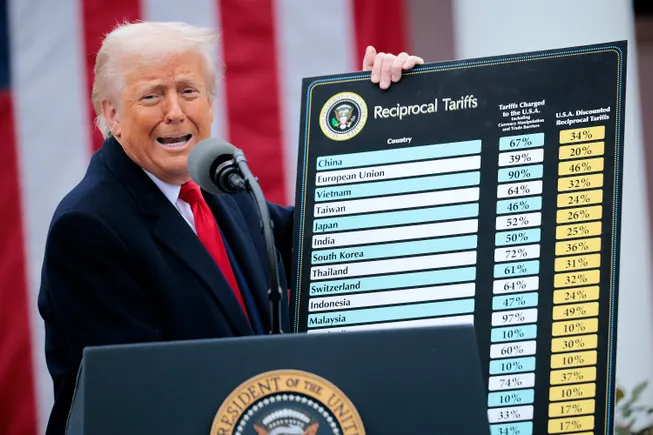
President Donald Trump's sweeping tariffs on imported goods hit a legal roadblock last week when the U.S. Court of International Trade halted the controversial agenda. However, a federal appeals court subsequently allowed the president to continue imposing tariffs during the appeal. These repeated rulings have heightened the confusion and concern that have plagued business leaders and consumers since Trump implemented tariffs earlier this year.
But in the convenience store industry, top executives are not overly concerned about the potential impact of Trump's tariffs.
During earnings calls last month, Murphy USA CEO Andrew Clyde and Arko Corp. CEO Arie Kotler both stated that despite tariff uncertainty, neither company would adjust its financial guidance and both were well prepared to handle the situation. Meanwhile, Global Partners COO Mark Romaine said that aside from some "very brief" fluctuations, the Massachusetts-based retailer does not expect tariffs to have any impact on supply, margins, or optimization.
Just days before stepping down as CEO of EG America, John Carey told C-Store Dive in an interview that he does not believe Trump's tariffs will pose a challenge to the 1,500-store retailer.
"Prices on the products we carry have always fluctuated," Carey said. "That's why we have a procurement department, and that's why we have a marketing department."
 Experts say tariffs on oil, especially those on Canada, could push gasoline prices higher.
Source: Joe Raedle via Getty Images
Even smaller retailers with far fewer resources than their larger competitors do not seem worried.
"I think there will be some ups and downs, but honestly, I don't think it will have a drastic impact on the convenience store industry," said Michael Frisbie, CEO of Noble Markets, a chain with 13 stores.
But industry experts disagree, emphasizing that tariffs could significantly drive up costs in multiple areas of the business, leading to higher operating costs that will likely be passed on to consumers.
Convenience store consultant Kevin Farley said the wait-and-see attitude brought on by tariffs is creating an "uneasy atmosphere" across the industry.
"At least in my lifetime, we've never seen anything like this, so I don't think we fully know what to do," he said.
Crude Oil and Canada
In February, Trump signed an executive order imposing a 10% tariff on oil and energy imported into the U.S. from Canada. If the tariff stands, it would significantly impact oil prices, as Canada is by far the largest source of U.S. crude oil imports—crude being a key component of gasoline. In 2023, the U.S. imported approximately $97 billion worth of crude oil from Canada, nearly $77 billion more than from Mexico, the second-largest source.
Industry consultant Julie Jackson noted that because many leading convenience store retailers and fuel suppliers are headquartered in Canada, convenience store operators must consider the impact that oil tariffs on Canada could have on their businesses. Jackson previously served as president of G&M Oil, COO of Jaco Oil, and executive vice president of H&S Energy.
"At least in my lifetime, we've never seen anything like this, so I don't think we fully know what to do."
—Kevin Farley, convenience store consultant
"We haven't been very friendly toward Canada, and that could have some ripple effects," Jackson said. "We need to pay more attention to this, or learn more about the plans."
Tom Kloza, former global head of energy analysis at the Oil Price Information Service, a price reporting agency, is more optimistic. He said that while tariffs could push gasoline prices higher—the national average price at the pump has already risen more than 10 cents since Trump implemented the tariffs—he believes they will not last given how dependent the U.S. is on Canadian oil.
"Deep down, I still believe we won't see any lasting tariffs on Canadian oil or Canadian refined products," he said.
Rising Construction Costs
The U.S.-Canada trade war is also expected to significantly impact the cost and flow of construction materials. In 2024, Canada was the largest supplier of cement and steel to the U.S., both of which are crucial for convenience store construction and renovation—one of the industry's biggest trends in recent years. Trump has also raised steel import tariffs to 50%.
If cement and steel prices rise, so will the costs of building and renovating stores. For ongoing new construction or renovation projects, tariffs could lead to additional costs as well as delays in shipping and opening. Once open, maintenance costs for new or renovated stores could also rise.
Jackson said the potential impact of tariffs on the construction sector is her biggest concern.
"I'm really worried about the facilities side, because that's the area that gives me the biggest headache," Jackson said. "You build the entire project, and then you're waiting for some specific component, and it could take a year. You can't start the site. If the equipment or parts you need aren't available, it could cause a lot of lost revenue."
 If cement and steel costs rise, so will the costs of building and renovating stores.
Source: Kent Companies
Frisbie of Noble Markets acknowledged that construction and renovation could present new challenges if the tariffs stand.
"We need to be smarter about buying real estate and building stores, because some of these tariffs will affect construction costs, material costs, and so on," Frisbie said.
Jackson advises convenience store retailers to look back at the lessons learned during the early days of the COVID-19 pandemic when supply chains were disrupted. When the crisis hit, retailers tightened their inventories and stockpiled items they deemed critical to their businesses. The pandemic also forced retailers to maintain good communication with suppliers to stay informed about supply availability.
Farley also believes the uncertainty caused by tariffs should prompt convenience store retailers to communicate regularly with their suppliers.
"If you're planning to open 20 stores in the next 12 months, communicating with your key suppliers and discussing all these issues... this really is a good time to strengthen collaboration."
Impact on Consumers
Although convenience store retailers are not overly concerned about the direct impact of tariffs on their own operations, they are keenly aware of the price shock tariffs could deliver to consumers.
If retailers' costs for building materials or in-store products rise, they will have to raise everyday prices to ease the pressure.
"The only thing we think about in terms of how tariffs might affect us is that when they start to affect consumers, it could have some impact on our store sales, but that remains to be seen," Romaine of Global Partners said on the company's recent earnings call. "If it's going to affect us, that's where it will show up."
Frisbie said that if the tariffs stand, higher prices for consumers are almost inevitable due to rising operating costs.
"If our costs go up, the consumer's costs go up too," he emphasized.
Jackson said that if retailers pass costs on to customers, store traffic could decline, ultimately hurting sales. But if operators are transparent with their most loyal customers about the challenges they face, their recovery could be faster than expected.
"Customers can forgive a lot of things," Jackson said.
Several experts said that declining traffic and falling sales could hurt smaller retailers more than larger companies. The same could hold true for any upcoming supply chain issues.
"If our costs go up, the consumer's costs go up too."
—Michael Frisbie, CEO of Noble Markets
Jackson said that amid tariff uncertainty, "suppliers will prioritize their big customers" and may establish an order of who gets what and when. Smaller retailers could be at a disadvantage because, in many cases, they order less frequently and in smaller volumes than their larger competitors.
"I think maturity and purchasing power will give larger organizations the advantage," Jackson said.
For now, the industry can only wait for the courts to make a final ruling on Trump's sweeping tariff agenda. Farley advises retailers to avoid overreacting, but also to prepare for what might happen.
"It looks like people will have less disposable money, and that's generally not good for our entire industry."