
Switch 2 Launches Amid Tariff Storm: Smooth Start, Daunting Challenges Ahead
Nintendo released the Switch 2 on schedule on June 5, and despite fluctuations in U.S. tariff policies, sales exceeded 3.5 million units in the first four days. However, as the summer stocking season approaches and the tariff suspension period nears its end, the company must formulate long-term strategies amid uncertainty to address supply chain restructuring and cost pressures.
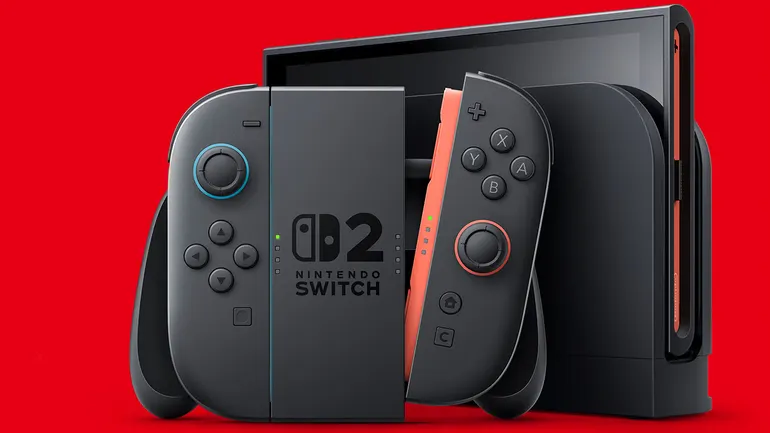
On April 2, Nintendo unveiled the highly anticipated details of the Switch 2 console, but that day coincided with a turning point in global trade—US President Donald Trump announced comprehensive reciprocal tariffs. This policy cast a shadow over the Switch 2's June 5 launch, and Nintendo proceeded with the release amid the tariff storm. Although the initial launch went smoothly, the challenges ahead are just beginning.
Launch Under Tariff Impact
According to Daniel Ahmad, Research Director at Niko Partners, Nintendo's products sold in the US are currently mainly produced in Vietnam, with some manufactured in China. Under Trump's initially announced reciprocal tariffs, Vietnamese imports faced a 46% rate, among the highest tiers. Since then, the US has suspended some tariffs and provided exemptions for specific categories, and even reached a 90-day truce with China, but Chinese imports still face tariffs of at least 145%. Despite a recent framework agreement between the two countries, Trump stated that Chinese imports would still face a 55% tariff.
Facing policy volatility, Nintendo postponed pre-orders in early April but resumed them on April 24. Joseph Fitzgerald, Managing Director and Partner at Boston Consulting Group, noted: "Pausing pre-orders without taking other measures just buys you time to observe." Nintendo did not respond to requests for comment, but Sally Peng, Senior Managing Director at FTI Consulting, speculated that the company may have accumulated some inventory before the launch to meet initial demand.
Long-Term Strategy: The Complexity of Supply Chain Restructuring
For consumer electronics manufacturers, there is no quick fix for tariff impacts. Fitzgerald stated that relocating production to other regions takes approximately 9 to 12 months, and companies typically want new factories to operate stably for 5 to 10 years to meet the quality and demand standards of devices like the Switch 2. Currently, North American consumer electronics manufacturers are investing significant effort in supply chain rebalancing, focusing on Latin America, Eastern Europe, and Southeast Asia (excluding China).
Moving production to the US is another option, but it faces discussions about supply chain mirroring and cost differences. Fitzgerald emphasized: "The coordination of second- and third-tier suppliers is the most threatened part when policies fluctuate." Peng added that assessing the total landed cost, including procurement, logistics, and labor costs, is key for companies making decisions in uncertain times. She noted that the apparel and footwear industries have precedents in supply chain restructuring, having incorporated tariff costs into total cost considerations years ago.
The Real Challenge: Holiday Stocking and Tariff Pause Periods
Despite the successful initial launch of the Switch 2, the real test lies in the coming months. The holiday season is the peak sales period for the gaming industry, with Nintendo's fourth fiscal quarter (ending December 31) accounting for 37% of global sales in 2024. Former Nintendo of America President Reggie Fils-Aimé once stated that about 60% of the company's US revenue comes from year-end sales.
Nintendo expects to sell 15 million units globally over the next eight months, but must contend with the risk of tariff pause periods ending. Tariff pauses on Chinese imports are in effect until mid-August, while specific tariffs on other countries are paused until early July. Although the pause periods have stimulated shipments, the National Retail Federation expects imports to decline 6.2% year-over-year in June and 8.1% in July. Peng pointed out that even with reduced shipments, companies have already invested significant costs in preparing materials and cannot save on expenses.
Nintendo's Unique Advantages
Despite tariff pressures, Nintendo maintains confidence through its unique product strategy. Since the success of the Wii in 2006, the company has deviated from the hardware race with Microsoft and Sony, focusing on unique mechanics such as motion controls and portability to attract family users. This strategy provides inherent demand protection, even if tariffs push prices higher. Nintendo insists on pricing the Switch 2 at $449, but accessory prices will adjust based on market changes.
Fitzgerald noted: "Video game platforms are unique, and Nintendo is in a class of its own." Its first-party games are exclusive, and its console release cycle is not synchronized with Xbox and PlayStation, making it stand out among the three major players. Therefore, despite tariff uncertainties, Nintendo is still expected to remain competitive during the holiday season.
This article is a collaborative report with Game Developer, and Bryant Francis, Senior Editor at Game Developer, also contributed to this article.

