
As demand for COVID testing cools, small testing companies accelerate transformation to survive
As the U.S. COVID public health emergency nears its end and large-scale testing programs shrink, demand for COVID testing continues to cool. Beyond major brands like Abbott and Becton Dickinson, small and medium-sized testing companies are adjusting their businesses by pivoting to home self-testing, expanding into testing for other diseases, and seeking full FDA approval, in order to survive in a changing market.
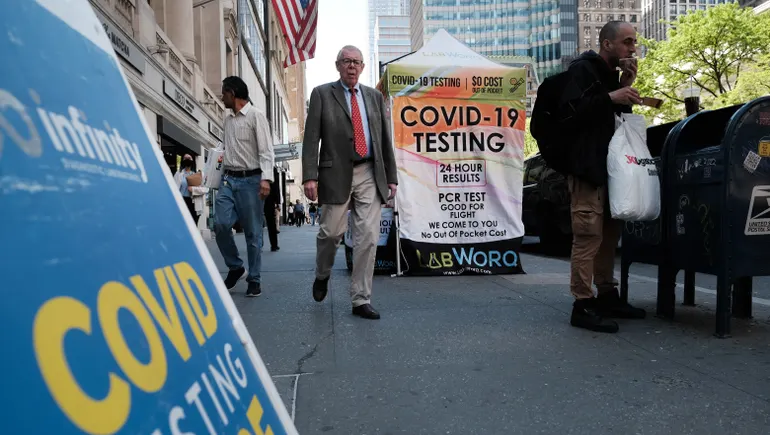
Beyond well-known brands such as Abbott Laboratories and Becton Dickinson, a number of lesser-known companies are selling COVID-19 testing products to schools, hospitals, and businesses. The pandemic brought these small companies and startups a windfall of testing revenue that multiplied, but as large institutions gradually scaled back mass testing programs, many of these companies have had to quickly adjust their business models to survive.
Public health experts point out that demand for over-the-counter antigen tests is unlikely to significantly subside in the short term, so some companies are partnering with pharmacy chains and distributors to target individual consumers; others are beginning to focus on diagnosing other diseases. At the same time, all companies are considering how the U.S. Food and Drug Administration (FDA) will terminate the Emergency Use Authorizations (EUAs) granted to most testing products once the public health emergency ends.
Testing responsibility shifts to home settings
"The testing model has now most clearly shifted to home settings," said Bala Raja, CEO of testing company Clip Health. The company, founded in 2014, has received funding from Y Combinator and the National Institutes of Health (NIH). Raja added, "Demand across all segments is slowing—not disappearing entirely, but over the past few months, demand in traditional medical settings or for tests requiring queues, drive-through sample collection, and waiting for results has been gradually weakening."
The Silicon Valley-based company's testing products are used in doctors' offices, urgent care facilities, and some pharmacies, and are also provided to businesses qualified to offer testing for events and employers. Now, seeing testing demand shift to homes, Clip Health plans to seek authorization for its home antigen test with a reusable reader. Raja said, "Despite the shift, we still believe COVID-19 testing will be an important part of our business for at least the next two years."
Testing responsibility shifts to homes
Nate Hafer, assistant professor of molecular medicine at UMass Chan Medical School, said that at least in Massachusetts, most employee testing programs conducted by schools and employers have ended. He said, "Over-the-counter tests are now quite widely available, and I think people are shifting (testing responsibility) to individuals." He added that classic market forces seem to play a dominant role in people's testing choices. "Tests that people can get for free are obviously very attractive." But when free tests are unavailable, "the test with the best price in a supermarket or pharmacy... is often the one people will take."
Companies also face reduced U.S. government funding used to expand testing capacity. Previously, Congress failed to reach an agreement on COVID-19 funding last month. The Biden administration said it would redirect about $10 billion from testing to purchase more COVID-19 vaccines and treatments. As a result, White House COVID-19 response coordinator Ashish Jha said at a June press briefing, domestic testing companies are laying off workers, shutting down production lines, and may even sell equipment.
Small companies face particular challenges because many large government and corporate testing contracts have already been signed. Tinglong Dai, professor of operations management and business analytics at Johns Hopkins Carey Business School, noted that since the rapid spread of rapid tests in February, small companies need to offer some kind of niche product or differentiate themselves.
Time to pivot?
"They can pivot to other tests—like flu tests—and many other types of tests," Dai said. "The idea that people can test for diseases at home is amazing. Before the pandemic, this was almost unimaginable."
London-based startup LumiraDx, founded in 2014, manufactures its tests in the U.S. and UK, and its COVID-19 antigen test customers include pharmacies and U.S. health systems. Chief Product Officer Pooja Pathak said that while demand for event and travel screening is decreasing, orders from healthcare customers remain stable. The company says its largest customer is CVS, which does not sell over-the-counter tests but offers rapid tests administered by pharmacists. Pathak said, "As COVID-19 testing demand fluctuates, we are also affected by fluctuations in case rates, but perhaps less than (other companies)." She added that partnerships with health systems and pharmacies provide stability.
LumiraDx is also developing a home testing system, but it has not yet received FDA authorization. The company disclosed in its June prospectus that it is also addressing changes in EU diagnostic regulations, but it does not break down sales by country.
Balancing demand and costs
Some smaller testing companies saw a surge in demand for home tests during earlier waves of the pandemic and seized the opportunity to go public. San Diego-based Cue Health, which makes home molecular tests, went public in September 2021. South Korea's SD Biosensor, which makes home antigen tests, began trading on the Korean exchange last July and recently reached an agreement to acquire diagnostics company Meridian Bioscience for $1.53 billion.
Cue Health's revenue soared from $23 million in 2020 to $618 million in 2021, but recently laid off 170 employees, citing economic challenges and reduced U.S. government funding for COVID-19 testing. The company received a $480.9 million contract from the U.S. Department of Defense in 2020 but had to request an extension to produce enough test cartridges and readers. Now, most of its business has shifted to private sector customers. In the first quarter of 2022, Cue reported revenue of $179.4 million, with less than 1% coming from the public sector. The company expects slower growth in the second quarter, forecasting sales of $50 million to $55 million. Under an agreement with grocery chain Albertsons, Cue CEO and co-founder Ayub Khattak said on a May earnings call that the company has placed COVID-19 tests in over 1,000 Albertsons pharmacies.
Cue Health's molecular test is the only product of its kind on the market, priced significantly higher than antigen tests. When purchased separately, its test reader costs $249, and a three-pack of test cartridges costs $195. Cue and other home molecular test manufacturers say the higher accuracy of molecular tests justifies the higher price.
Seeking full FDA approval
Most COVID-19 tests currently on the market have only Emergency Use Authorization, meaning they can no longer be sold once the public health emergency ends. This process is not immediate—the FDA has said it plans to provide 180 days' notice before terminating EUAs—but the agency has recently encouraged companies to proactively seek regulatory approval for their tests.
"At some point, the switch will flip, and that will become the expectation," said Hafer of UMass. New tests will go through the de novo approval pathway, which includes controls to ensure device safety and effectiveness. If a similar FDA-approved test already exists, diagnostics companies can use the 510(k) pathway, which only requires demonstrating "substantial equivalence" to an approved device. BioFire Diagnostics' PCR test received de novo approval earlier this year, but no rapid antigen test has yet gone through full FDA review.
Cue submitted a de novo approval application for its home molecular test in May. Other testing companies are taking a wait-and-see approach. Clip Health's Raja said the company is waiting for FDA guidance on requirements for 510(k) submissions and when the 180-day countdown will begin. The FDA said at a meeting earlier this year that companies with EUAs for COVID-19 tests should submit transition plans to continue selling their products while seeking approval.
The future of multiplex testing
Public health experts point out that one advantage for startups is that consumers do not seem to care much about brand when purchasing tests in stores. "I think it largely depends on accessibility. Most people don't differentiate between brands," said Amesh Adalja, senior scholar at the Johns Hopkins Bloomberg School of Public Health's Center for Health Security. "I would just grab whatever is on the shelf."
Looking ahead, Adalja expects demand for home antigen tests to remain stable. He and Hafer of UMass both believe the future for test manufacturers may lie in developing home test kits that can detect multiple respiratory viruses, i.e., multiplex testing. Cue is developing a combined flu and COVID-19 test. Another startup with a home molecular test, Lucira Health, has begun producing a combined flu and COVID-19 test. CEO Erik Engelson said the company plans to first apply for an EUA and begin distribution this fall.
"Before COVID, you could only test for HIV at home, and that approval took 10 years," Adalja said. "This is the next phase—taking the momentum of home testing and applying it to a broader range of problems and a broader range of pathogens."