
Louis DeJoy Drives Postal Service Transformation: Can USPS Compete with FedEx and UPS?
Postmaster General Louis DeJoy is implementing a series of reforms aimed at achieving financial stability and enhancing competitiveness. The reforms include facility consolidation, adjustments to service standards, and strengthening the package business, but experts point out that directly competing with FedEx and UPS still faces numerous challenges.
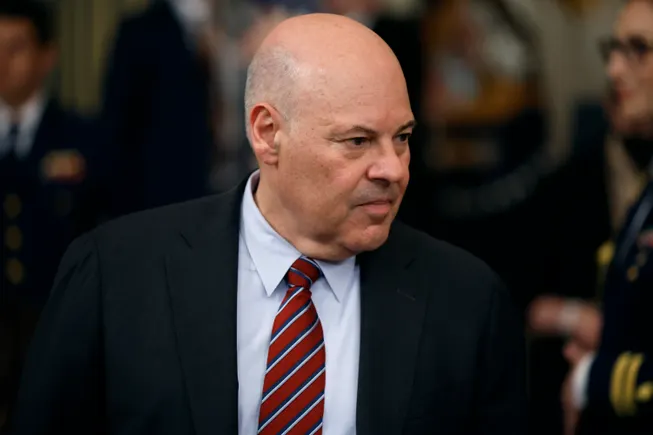
Postmaster General Louis DeJoy is working not only to stabilize the finances of the U.S. Postal Service but also to transform the agency so it can compete with major private carriers like FedEx and UPS.
DeJoy said in an interview with Supply Chain Dive earlier this month that he is not trying to "conquer" the competitive parcel delivery market, but he does want the struggling agency to become a leader in the field rather than merely reacting to market trends.
"Our goal is to ultimately achieve cost efficiency while working to get out of crisis," DeJoy said. "I think through highly reliable and affordable service, we have the potential to become the nation's preferred delivery service provider. That is our goal."
DeJoy has been deeply involved in a broad range of reforms at the agency to advance this goal. The Postal Service has begun consolidating its network of facilities and launched a local delivery service to remain competitive with other carriers.
Expanding the Postal Service's share of the delivery market would provide the agency with a much-needed financial boost. Data shows that from fiscal year 2007 to fiscal year 2020, the agency accumulated losses of $87 billion. But experts say that even for someone like DeJoy, who is not afraid of bold reforms, this is a formidable task.
Carriers that have traditionally relied on the Postal Service for part of their deliveries are increasingly bringing delivery operations in-house. To keep pace with FedEx and UPS, the Postal Service must market its network to shippers more effectively while maintaining service levels above the 2020 trough.
No longer your grandmother's Postal Service
As part of its growth plan, the U.S. Postal Service is adjusting its operations and business approach to accommodate the surge in parcel demand and the decline in mail volume. The intensified focus on parcel delivery puts the agency in direct competition with UPS, FedEx, and other parcel carriers.
"I think we are still in the early stages, but it is clear they are trying to position themselves as an effective competitor to private carriers," said Michael Plunkett, president and CEO of the Association for Postal Commerce.
Edmund Carley, national president of the United Postmasters and Managers of America, said that in his 23 years at the agency, the Postal Service's business has changed dramatically. The internet has reduced the need for mail communication, and the days when the agency primarily relied on "grandma sending you a birthday card" for profitability are over.
"We used to prioritize mail because it was our main source of revenue," Carley said. "Now, parcels are the focus. That is part of DeJoy's vision. To survive in the future, we must change our approach."
Although shippers' interest in diversifying their carrier mix is growing as parcel rates climb, the Postal Service still faces difficulties in directly competing with the two delivery giants, noted Nate Skiver, founder of LPF Spend Management. Compared with FedEx and UPS, the list of parcel shippers contracting directly with the Postal Service is "relatively short."
"I think the biggest challenge will be effectively reaching parcel shippers directly, providing services and signing contracts with them, rather than over-relying on third parties as in the past," Skiver said.
DeJoy understands the need to attract more commercial shippers. He said he is pushing the Postal Service's sales team to position the agency as a "more comprehensive solution provider," adding that the overhaul of its facility network will help showcase the strengths of its regional delivery service.

"We truly have a dominant regional delivery system," DeJoy said. "It's not just the last mile; it's the last 200 miles."
Nevertheless, for the agency to market its services more effectively "rather than just assuming retailers will automatically come knocking," a significant cultural shift is still needed, Skiver said.
Accelerating the pace of change before peak season
DeJoy, a logistics executive turned Postmaster General, has driven major changes at the agency at a speed rarely seen in government institutions. A 10-year transformation plan for the Postal Service includes adjusting service standards and consolidating thousands of delivery units nationwide into larger facilities.
"I feel like I'm not moving fast enough, and this is not an organization or environment accustomed to moving quickly," DeJoy said. He previously served as CEO of New Breed Logistics, which was acquired by XPO Logistics in 2014.
Since 2021, the agency has deployed 249 new parcel processing machines, converted 100,000 part-time employees to full-time, and signed multiple multi-year facility leases to enhance its peak-season processing capacity, according to a press release.
Although the Postal Service had deployed plans to improve operational efficiency before DeJoy, the pace of implementation has been much faster than under previous leadership, Carley said.
"He approaches the job with a more commercial mindset," Carley said of DeJoy. "His mantra is: 'If you were building the Postal Service from scratch today, it would never look like the network we have now.'"

Not all of DeJoy's reforms have been welcomed by stakeholders. In 2020, an initiative to reduce late and extra truck trips from sorting facilities to delivery stations raised concerns that it could limit the ability to vote by mail.
DeJoy said the move was intended to reduce schedule deviations and improve decision-making about extra trips. A report by the U.S. Postal Service Office of Inspector General found that the initiative and other operational changes hurt the speed and reliability of mail delivery.
Despite early problems, the agency hopes that its fast-tracked reforms will help it handle the surge in demand during the holiday delivery peak, after being caught off guard in 2020. The Postal Service said its daily parcel processing capacity during peak season will reach 60 million items, up from 53 million in 2021.
Parcel delivery demand cooled in 2022, but the agency said in an August report that it expects parcel volumes to remain above pre-pandemic levels. In the quarter ending June 30, the agency reported that revenue and volume in its shipping and parcels category fell 1.1% and 5%, respectively, year over year.
FedEx and UPS face the same market dynamics, but they have adjusted their strategies to shift toward more profitable customer segments and used their pricing power to cushion the impact of declining volumes.
However, overall industry trends may favor the Postal Service's peak-season performance, as easing demand gives carriers more processing capacity to better handle demand surges.
DeJoy said that when leading the Postal Service, he often felt like he was in an antique shop, with every part of the agency bearing a sign reading "Do not touch, fragile." But opposition to change and other resistance have not stopped him from working to turn his vision into reality.
"I don't agree with DeJoy on everything. But regardless, he has a plan," Carley said. "He can see a path forward for the Postal Service, and by golly, he is going to implement it, and we are going to help him do that."
Editor's note: This article first appeared in our weekly logistics newsletter. Sign up here.