
GE Appliances Deepens Partnership with Texas Instruments to Enhance Supply Chain Resilience
GE Appliances announced it will deepen its partnership with Texas Instruments, planning to source one-third of the chips used in its Kentucky plant from the latter, a move that will nearly double the transaction volume between the two companies. Texas Instruments' plants in Utah and Texas will supply GE Appliances' Kentucky facility, which is scheduled to begin production in 2027. GE Appliances also unveiled plans to invest $3 billion in U.S. production by 2029, emphasizing its "zero-distance" supply chain strategy.
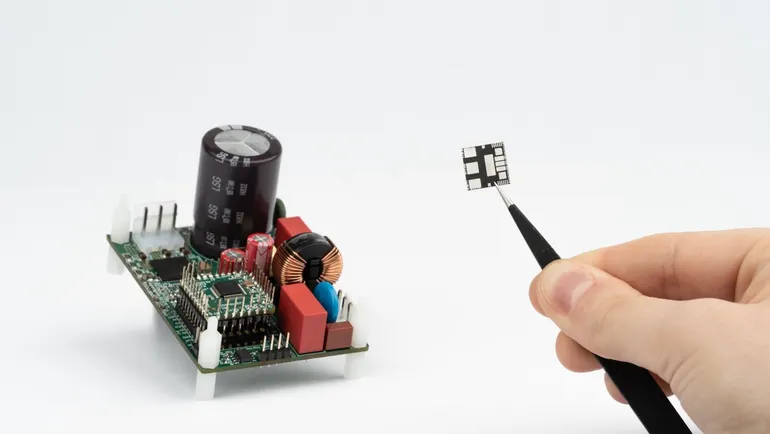
GE Appliances plans to source one-third of the chips used in its dryers and washing machines factory in Louisville, Kentucky from Texas Instruments, a move that advances the appliance maker's goals of domestic sourcing and supply chain resilience.
According to a press release issued on August 4, this collaboration will nearly double the transaction volume between GE Appliances and Texas Instruments. Texas Instruments' manufacturing facilities, including plants in Lehi, Utah, and Richardson and Sherman, Texas, will supply GE Appliances' Kentucky factory, which is expected to begin production in 2027.
Texas Instruments announced plans in June 2025 to invest more than $60 billion in seven semiconductor wafer fabs in Texas and Utah. GE Appliances stated that these facilities make Texas Instruments one of the few suppliers capable of providing large-scale U.S.-based semiconductor manufacturing.
GE Appliances plans to invest $3 billion in U.S. production by 2029, building on the $3.5 billion investment it committed a decade ago. These expenditures are part of its "zero-distance" supply chain strategy, aimed at bringing products closer to customers while shortening lead times and responding more quickly to demand changes.
"The more you can shorten the average length of the supply chain, the faster you can respond to consumer demand," Joshua Higdon, senior director of control systems sourcing at GE Appliances, told Supply Chain Dive.
Higdon said the company had 6,500 U.S.-based suppliers in 2024, with spending of $4.6 billion, compared to $2 billion and 1,700 suppliers in 2018. Despite this, the company still cannot meet all its chip needs entirely from U.S.-based facilities.
"We source chips from multiple different locations globally, and the strategy of diversifying the supply chain to withstand weather or geopolitical events is part of the overall strategy, so that we can ensure continuity of supply," Higdon said.
According to the press release, GE Appliances plans to use Texas Instruments' microcontrollers, Wi-Fi connectivity chips, and analog components in its next-generation laundry products. The two companies' domestic R&D teams will also collaborate to accelerate new product designs.