
Under the Shadow of Strikes, Cargo Diversion Becomes a Key Strategy in the 2022 Supply Chain Response Playbook
Against the backdrop of unresolved labor negotiations at West Coast ports and the threat of railroad strikes, cargo diversion became an important strategy in supply chain management in 2022. The comparison of throughput between the Port of Los Angeles and the Port of New York-New Jersey, import data from FourKites, and cases of rail freight diversion reveal the scale and impact of the diversion behavior. However, diversion also brings new challenges such as longer transit times, higher costs, and port congestion.
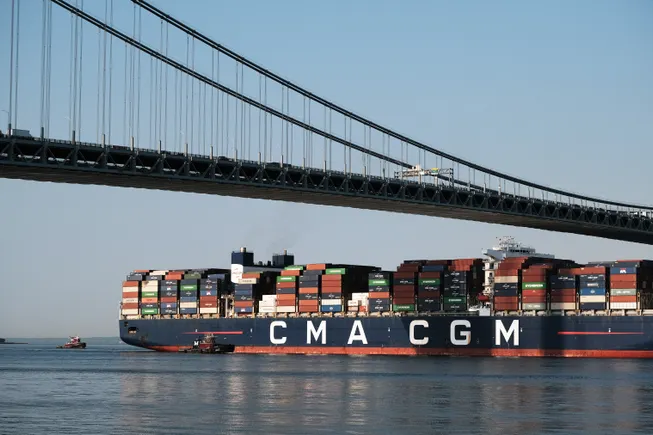
On the U.S. West Coast, the Port of Los Angeles is trying to attract more shippers as cargo volumes fall from record highs; on the East Coast, leadership at the Port of New York and New Jersey claims it has been the nation's busiest container port for two consecutive months.
"We've held the No. 1 position in the nation for 22 consecutive years. One or two months of data doesn't constitute a trend," said Gene Seroka, executive director of the Port of Los Angeles, at a media briefing on Tuesday (Nov. 8). Nevertheless, he revealed that the port has launched a months-long customer visit campaign to win back some cargo.
Although not the only factor, experts and port leaders agree that the shadow of negotiations between the International Longshore and Warehouse Union (ILWU) and the Pacific Maritime Association (PMA) has prompted more U.S.-bound cargo to shift from the West Coast to the East Coast. Companies also adopted similar strategies with rail freight in the third quarter to hedge against a potential freight rail shutdown, a risk that still persists.
"Although both parties—PMA and ILWU—have issued two joint media statements saying there will be no strikes or lockouts, the market still has doubts," Seroka said.
The threat of a strike has been enough to prompt shippers to act and has changed the pattern of cargo flows across the country. However, in the process, shippers have discovered that cargo diversion—like other supply chain contingency plans—can bring trade-offs such as longer delivery times and increased logistics complexity.
East Coast ports take import share from West Coast
The diversion activity has become more pronounced in the past few months, after the ILWU and PMA failed to reach a labor agreement by the July 1 deadline, noted Glenn Koepke, general manager of network collaboration at FourKites.
According to the company's tracking data, in October, 62% of import cargo arriving at U.S. ports from FourKites customers went to the East Coast and 38% to the West Coast. That is the highest share for the East Coast this year and exceeds the 57% share in October 2021.
Koepke said the dramatic volatility in the ocean shipping market triggered by the COVID-19 pandemic—including sharp changes in freight rates and congestion levels—has prompted companies to renegotiate contract rates and capacity more frequently. This has given shippers greater flexibility in deciding where cargo arrives.
"If you compare cargo diversion now with four years ago, essentially, the process by which you procure ocean freight can now achieve more efficient diversion because it used to be annual contracts," Koepke said. "Now there are quarterly contracts."
East Coast ports surpass West Coast in imports during labor negotiations
At the Port of Savannah, Cliff Pyron, chief commercial officer of the Georgia Ports Authority, said it is unclear how much of the recent import growth is directly attributable to diverted cargo. But in the quarter ending in September, 166 importers were either entirely new customers or saw their trade volume through Savannah grow by 20% or more.
"Since fiscal year 2001, every time there has been labor action on the West Coast, the Port of Savannah has gained cargo growth in both the short and long term," Pyron said in an email response to Supply Chain Dive. "We have already heard port customers say they are moving cargo to the East Coast to hedge against potential strike risks."
Some shippers shifted from rail to truck in the third quarter
As cargo moves inland, concerns over labor-related disruptions have not dissipated. With negotiations between rail companies and unions still ongoing, companies have adjusted their supply chains to hedge against potential strikes or lockouts.
Carriers mentioned this shift in recent quarterly earnings calls. Schneider experienced a decline in intermodal volumes in September as customers turned to trucking to avoid rail uncertainty, which particularly affected short-haul operations.
Norfolk Southern executives said the company adopted a "no-surprise strategy" in the third quarter, communicating with customers on how to keep cargo moving. The company estimates that this strategy accounted for about 40% to 50% of the volume decline in the quarter, mainly impacting its intermodal market.

Rail companies reached tentative agreements with three unions on September 15 to avoid a freight shutdown, which eased shipper concerns to some extent. So far, there has been no massive shift of cargo from rail to truck—Chris Caplice, chief scientist at DAT, said in email comments on November 7 that he had not noticed any trend changes in trucking due to a potential rail strike.
But the threat of disruption remains this year, with the deadline to avoid a rail strike or shutdown now pushed back to December 4.
A rail shutdown would require a larger supply chain adjustment than simply shifting all volumes to truck. The Association of American Railroads estimates that about 467,000 additional long-haul trucks would be needed each day to move all rail freight. However, the association also noted that barges could potentially absorb some capacity in areas with navigable rivers.
Cargo diversion brings new trade-offs
Although cargo diversion strategies can mitigate the impact of labor-related disruptions, they also introduce other potential supply chain drawbacks.
In rail transportation, shifting cargo to truck can work for automotive companies that rely on rail for outbound shipments, said Julie Gerdeman, CEO of Everstream Analytics. However, customers in the chemical or food processing industries cannot easily make this shift based on the nature of the products they ship, and shippers must also consider pricing and contract factors.
As for ocean shipping, rerouting cargo from Asia through the Panama Canal to avoid West Coast risks extends delivery times. While retailers with excess inventory may be less concerned about the added transit days, it could be a bigger issue for other industries. Additionally, inflationary pressures that various businesses are seeking to alleviate compound the challenge.
Therefore, cargo diversion may only be a temporary measure, said Dawn Tiura, president and CEO of the procurement industry group: "You will return to the lowest total cost option."
The rapid surge in import activity could also strain port operations, raising concerns about congestion for cargo whose delivery times have already been extended by diversion.
When other retailers rushed to divert cargo from the West Coast, The Children's Place's inbound supply chain encountered East Coast port congestion in the second quarter, which led to higher inventory levels at the company.
Nevertheless, as the risk of port or rail strikes prompts companies to strengthen contingency plans, FourKites' Koepke expects cargo diversion to become a more routine strategy for shippers in the future.
"What we often hear is that shippers are incorporating it into their planning models, so when they look at future operations based on different global events or socioeconomic events, they consider routing cargo to specific locations," Koepke said.
Sarah Zimmerman contributed to this article.
Editor's note: This article first appeared in our Logistics Weekly newsletter. Click here to subscribe.