
After the Inventory Tide Recedes: Retailers' Next Move
After experiencing supply shortages in 2020-2021, the retail industry fell into an inventory glut in 2022. Although the inventory peak has passed, levels remain elevated. Improved supply chains accelerated the arrival of goods but exacerbated on-book inventory pressure. Retailers are shifting toward leaner inventory strategies, prioritizing cost and margin protection.
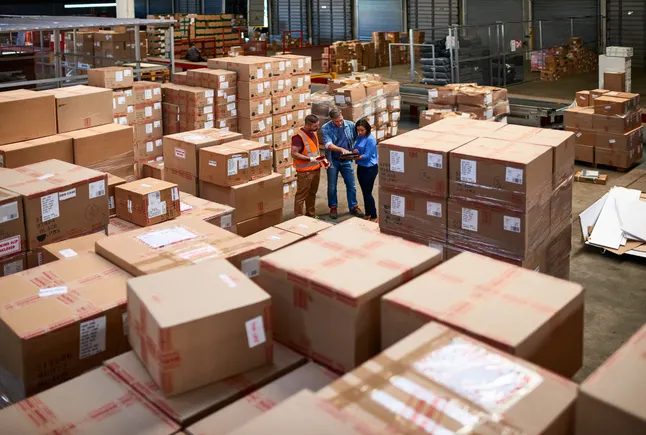
For retail inventory planners, not a single day in the past three years has been easy. After supply shortages in 2020 and 2021, the industry spent the past year working through a backlog of goods as consumers cut spending amid high inflation.
Although inventory levels have fallen from their peak, they remain elevated relative to current sales in many categories.
"I've worked with several apparel retailers recently that had more inventory than I've ever seen," said Matt Garfield, managing director at FTI Consulting. "It looked like walking into a distribution center during peak season, and it was February or mid-March."
Although the era of empty shelves is not far behind, many companies are learning to adapt to leaner inventories and plan to replenish flexibly based on demand in 2023 and beyond.
In the process, retailers are prioritizing cost control and margin protection over the risk of lost sales.
"A little scarcity isn't a bad thing," said Joe Feldman, senior managing director at Telsey Advisory Group.
Inventory peak has passed, but it remains bloated
Last June, Target issueda mid-quarter warningthat its quarterly profit would take asignificant hitas the retailer worked to "right-size its inventory for the remainder of the year" in a "rapidly changing environment." The retailer blamed the immense pressure of inflation on essentials like food and gasoline on consumer spending.
Target moved first, but with few exceptions, retailers in discretionary categories spent the rest of last year trying to clear inventory. Analysts at Telsey Advisory Group found in a survey of major industry retailers that inventory grew an average of 46% across segments in the second quarter of last year. In apparel and e-commerce, the numbers were much higher, with both industries reaching 65.6%.
"Coming out of 2021, inventory was really lean, below where it should have been, because you couldn't get goods, and everyone was chasing them," Feldman said. "I think the miscalculation was on the demand level."
Retail inventories peaked in October of last year, up 18% from the same period in 2021. Since then, inventories have fallen significantly but remain well above levels from three years ago or even one year ago.

Improvements in the supply chain at least amplified the problem on paper. According to DHL data, as of February, overall schedule reliability for ocean shipping rose 7.7 percentage points month over month and a "staggering" 26 percentage points year over year.
For consumer goods companies, this meant goods shipped faster and arrived earlier than a year ago, which is directly reflected in inventory levels. Apparel sellers like Under Armour and PVH have mentioned this in their earnings reports. At PVH, which owns Calvin Klein and Tommy Hilfiger brands,inventory at the end of the fourth quarter was up 34% year over year。
"We saw capacity steadily return to pre-pandemic levels throughout 2022, with significant improvements in lead times," PVH CFO Zac Coughlin told analysts in March."And in the fourth quarter of this year, as supply chain and logistics disruptions eased, we received inventory earlier than expected."Excess inventory comes at a high cost across the supply chain
Inventory problems do not affect retailers and their suppliers equally. When retailers cut inventory, wholesalers are often forced to bear the burden of excess stock.
"Wholesalers have really been hit hard," Garfield said.
For example, according to Telsey Advisory Group analysis, apparel sellers GIII Apparel Group and VF Corp both saw inventory growth rates exceed 100% last year. Nike, one of the largest apparel brands globally, saw
inventory grow 44%in the fiscal quarter ending August 31.。
"If retailers have too much inventory, they stop buying, slow down purchasing, or delay orders to suppliers," said Joel Wolitzer, senior vice president and business development officer at Rosenthal & Rosenthal, which provides factoring and other financing services. "We've seen that slowdown at multiple levels."
For merchandise suppliers, the situation is made more difficult because many retailers do not place firm purchase orders, leaving suppliers to make speculative stocking decisions based on retailer forecasts. Even placed orders can be changed or delayed.
Suppliers producing private-label goods for retailers can find themselves in a particularly vulnerable position if buyers decide to cut orders.
"Those goods can only be sold to that retailer. The supplier can't sell them elsewhere," Wolitzer said. "So they're kind of stuck."
For larger wholesale brands, they may end up holding more inventory than retail partners, but if they have their own sales channels, this is not necessarily the worst-case scenario.
"For Nike or Adidas, controlling the clearance of excess inventory themselves might be better," Feldman said. He added that the alternative is "putting goods on the market and letting retailers decide what to do with them, then having to discount, which could damage the brand."
For all market participants, excess inventory is costly. Additional warehousing costs are significant. As Wolitzer pointed out, if companies need to borrow to pay for warehousing, there are also financing costs like interest.
Garfield noted that once warehouse space is occupied to a certain degree, operational efficiency and capacity also decline.
"This has a huge impact on your overall profitability—cost per pick, cost per unit, these core distribution profitability metrics we focus on," he said.
Have retailers learned their lesson? And which one?
The past two years have raised fundamental questions about how to source and plan inventory, potentially leading to contradictory answers. The biggest question: Is it worse to have too little inventory during a boom, or too much during a downturn?
"Two years ago, you just needed to have inventory. If you had goods, you had buyers," said Oliver Timsit, founder of apparel brand Oliver Logan. "We've accepted the fact that we can't satisfy everyone."
As supply chain issues ease, many tensions that existed before the pandemic are resurfacing. Stockouts can mean the opportunity cost of lost sales, while excess inventory brings the financial costs of warehousing and financing.
Excess inventory also incurs opportunity costs by tying up working capital, and most importantly, means less space for new items.
"Even though we all thought retailers had learned their lesson—better to order less, chase moderately, and keep clean, profitable sales, meaning fewer markdowns—they all fell into that trap: 'Oh, if we just have more goods, we'll sell them,'" Feldman said. "Then they got stuck."
Feldman believes that if demand recovers, retailers will find it easier to replenish than in 2021, given the normalization of supply chains.
"Those bottlenecks are gone," Feldman said. "So if manufacturing ramps up more normally, getting goods shipped shouldn't be too difficult, at least in the short term. I hope these companies will be smarter."
Nevertheless, retailers are unlikely to significantly increase purchase orders in the near term—even if demand returns strongly.
"I think it will take a while for merchants and executives to really commit to betting on large volumes of inventory again," Garfield said. "Those conversations last year were brutal. Earnings calls weren't pleasant, and I don't think anyone wants to go back to that period."