
UPS Continues to Streamline Workforce: Driven by Weak Demand and Strategic Adjustments
United Parcel Service (UPS) announced 12,000 layoffs in early 2024, but prior to that, the company had been steadily reducing its workforce through various means. By the end of 2023, UPS's total employee count had dropped nearly 8% from its pandemic peak. CEO Carol Tomé stated that management has effectively controlled operational staffing to match business volumes. Industry experts believe that weak demand, cost pressures from new union contracts, and the company's strategy of transitioning toward automation and higher-margin businesses have jointly driven this round of workforce reduction.
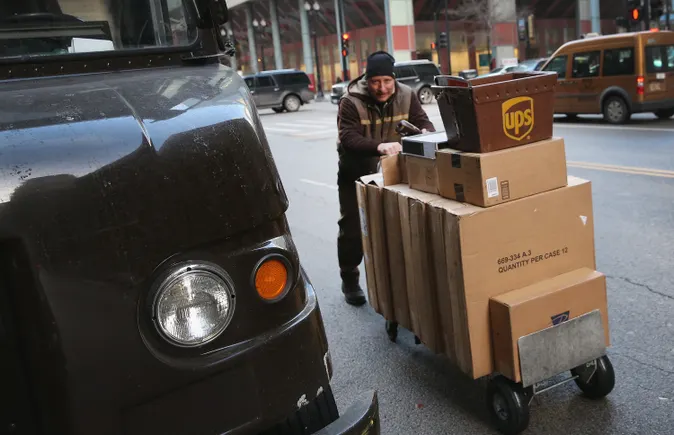
Before United Parcel Service (UPS) announced in early January that it would cut 12,000 jobs, the delivery giant's efforts to reduce its workforce had already quietly begun.
At the end of 2020, driven by a surge in home delivery demand due to the COVID-19 pandemic, delivery companies expanded hiring, and UPS's total workforce reached 543,000. However, the business boom brought by the pandemic did not last long, and package volumes declined in recent quarters. Facing softening demand, UPS reduced staff at both the frontline operations and management levels. By the end of 2023, the company's total workforce stood at 500,000, down nearly 8% from the pandemic peak.
Dual adjustments at management and operational levels
CEO Carol Tomé said during the January earnings call that two of the company's executives—Executive Vice President and President of U.S. Operations Nando Cesarone, and Executive Vice President overseeing International, Healthcare, and Supply Chain Solutions Kate Gutmann—"have done a phenomenal job of matching operational labor to the volume in the business." Their measures included closing some sortation shifts and reducing block hours in its air cargo network.
Additionally, UPS has used artificial intelligence and machine learning to shift volume from labor-intensive package sorting facilities to automated hubs. During contract negotiations with the International Brotherhood of Teamsters last year, as customers shifted more to other carriers, UPS reduced labor hours by nearly 10% through these methods.
Now, more layoffs are already planned. Management said the 2024 workforce reductions will be concentrated mainly in management and contract positions, with 75% of the cuts completed in the first half of the year. UPS expects to achieve $1 billion in cost savings this year from these reductions.
"What we're seeing at the macro level is that demand across the industry is declining," said Abe Eshkenazi, CEO of the Association for Supply Chain Management. "I think they are reacting to demand signals in the current market."
UPS's unique challenges
In a weak demand environment, UPS is not the only delivery company cutting jobs. Rival FedEx reduced its U.S. workforce by about 29,000 employees in fiscal 2023, CEO Raj Subramaniam said in June. Months earlier, FedEx announced it would cut more than 10% of its management and director-level staff.
Still, industry experts told Supply Chain Dive that UPS faces some unique challenges that may have further driven its aggressive workforce reduction plans.
Jeremy Tancredi, a partner in West Monroe's operations excellence practice and a former UPS industrial engineer, noted that UPS has historically controlled costs through management layoffs after signing new union contracts. The latest round of layoffs came after the ratification of a new contract in August that raised wages for union-represented U.S. employees.
Tancredi cited as an example that after the 1997 Teamsters strike, UPS laid off staff in its industrial engineering department, but a few years later tried to rehire many of the affected employees. "They've always felt it's easier to lay off and then add back later," Tancredi said of UPS's approach.
Alan Amling, a practice assistant professor at the University of Tennessee and former vice president of corporate strategy at UPS, has a different view. He believes UPS's layoff plans stem more from leadership decisions made during unprecedented times—when demand surged and capacity was tight during the pandemic, driving up delivery rates and boosting UPS's profits. During that multi-year period, UPS, through Tomé's "better, not bigger" framework, prioritized higher-margin business while downplaying low-margin residential delivery orders such as e-commerce. Amling added that the company also significantly increased shareholder dividend payments and has continued to do so, despite revenue falling more than 9% in 2023.
"This can be explained by the 'Three Little Pigs' analogy," Amling said. "You had a brick house, and you said, 'We can build a stick house, outsource the construction, and it will work just as well,' and then when the big bad wolf blows your house down, you blame it."
How to adjust going forward?
Industry observers are divided on which areas of UPS the upcoming workforce reductions will affect.
Since the cuts are concentrated in management, the company may restructure or consolidate operating regions as it has in the past to drive the process, Tancredi believes. Affected employees may seek jobs at competitors like FedEx, which is building an integrated air and ground network similar to what UPS already has. "They will get talent that understands how integrated networks work, so you will lose talent to your biggest competitor," Tancredi said.
Dean Maciuba, managing partner for the U.S. at Crossroads Parcel Consulting, said automating pricing processes for small and medium-sized business customers could help UPS reduce sales staff. On the earnings call, Tomé highlighted how the company's new Deal Manager tool, which relies on AI and machine learning for pricing quotes, enables faster sales deals and helps the company win more market share. "We're getting very high acceptance and win rates, with a 79% win rate on the tool," Tomé said.
Regardless of how UPS cuts staff, experts agree that despite shrinking demand and other challenges, UPS will maintain a strong focus on improving profitability. In a weak parcel market, the path to profit growth is vastly different from a booming market and often requires fewer employees. "I think they are really determined to align pricing with costs, and I don't think they mind how many people they cut to achieve that," Maciuba said.