
Five Years After the Pandemic: Transformation and Reinvention of U.S. Manufacturing
Five years after the outbreak of the COVID-19 pandemic, U.S. manufacturing has undergone a journey from collapse to recovery, spurring fundamental changes in supply chain management, technology adoption, and workforce strategies. This article, based on multi-source data and corporate interviews, outlines the lasting impacts of the pandemic.
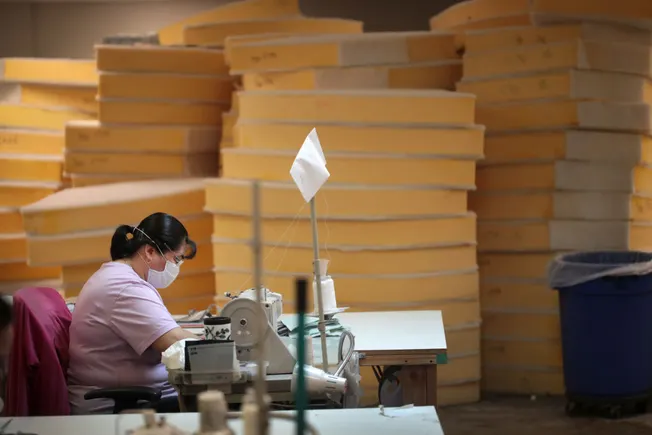
Five years have passed since the COVID-19 pandemic disrupted markets, pressured supply chains, and reshaped the manufacturing landscape. In the early days of the pandemic, U.S. manufacturing output and working hoursplummeted to levels unseen since World War II, with factories closing or operating at reduced capacity.
As government restrictions eased, output rebounded strongly in the second half of 2020, with the motor vehicle industry serving as a major driver, as shown by U.S. labor data. Since then, the recovery has continued to strengthen, fueled by vaccine rollouts and rising economic demand.
Although social distancing and mask mandates are now a thing of the past, the chaos of the pandemic provided manufacturers with valuable lessons on maintaining agility and drove lasting operational changes. Companies accelerated investments in supply chain resilience to avoid or mitigate future disruptions; the deployment of AI and automation tools increased to boost efficiency and decision-making quality; and manufacturers are redesigning hard-to-fill roles to make them more attractive to a new generation of workers.
The following reviews how the pandemic transformed manufacturing.
Supplier relationships were strengthened
During the pandemic, different manufacturing sectors experienced supply shocks at different times. Chip McElroy, president and CEO of McElroy Manufacturing, an Oklahoma-based company that makes machinery for welding underground natural gas and water pipelines, said product orders saw an "astronomical" plunge from mid-March to May 2020. Meanwhile, existing orders with suppliers of raw materials and intermediate goods continued throughout the year, temporarily curbing potential problems.
"For the rest of 2020, I hardly encountered any supply disruptions worth mentioning," McElroy told Manufacturing Dive. "But the real problems erupted when the economy recovered and we needed to reorder."
At that time, inflation rose, surging from 2% in 2021to nearly 8%, and McElroy began facing longer lead times, partly due to rising prices and delays in key materials. He also realized how heavily the company relied on overseas factory components, including seals, insulating foam, and paint.
To mitigate the challenges, McElroy said the company worked to strengthen relationships with suppliers and has maintained that collaboration. "We have closer relationships with our supplier partners," he said. "The more open we are with suppliers, the more willing they are to support us to a degree far beyond what our transaction volume would warrant."
COVID-19 hit the U.S. manufacturing workforce
The skill level of manufacturing jobs increased
After lockdowns were implemented, the U.S. lost approximately 1.3 million manufacturing jobs due to layoffs and business closureslost approximately 1.3 million manufacturing jobs, according to the Bureau of Labor Statistics. Although hiring rebounded in the following months, with employment surpassing pre-pandemic levels at 12.8 million in the summer of 2022, the industry has recently still facedlabor constraints, with companies struggling to recruit and retain workers.
"It's harder now to find people willing to take on the roles necessary in manufacturing," Tim Gaus, U.S. smart manufacturing leader at Deloitte, told Manufacturing Dive. To fill the labor gap, more companies are leveraging automation and robotics, and investing in upskilling and creating a work environment suitable for the next generation, according to an April 2024Deloitte report。
Gaus noted that the declining appeal of manufacturing partly stems from today's workforce seeking different work experiences than previous generations, including hybrid work and cutting-edge technology options. To make jobs more attractive, employers are putting more technological tools into the hands of shop-floor workers to create a more modern experience. According to the World Economic Forum's 2023Future of Jobs Report, 40% of existing skill requirements in advanced manufacturing will evolve over the next five years, with the importance of leadership, digital, and soft skills rising.
On the other hand, manufacturers are investing in software-defined manufacturing, such as predictive maintenance and other AI tools, to drive operations more agilely, said Kelsey Carvell, Deloitte's supply chain and manufacturing operations leader. "This way, perhaps you can achieve the same output without investing the same labor hours," Carvell told Manufacturing Dive.
During the pandemic, despite large-scale layoffs across industries, many companies still worked to retain employees. McElroy said that in past economic downturns, the company would lay off workers accordingly, but in 2020, he and management anticipated a relatively quick market recovery and were unwilling to risk losing employees. "Because we retained talent, we were able to respond quickly to the market rebound, and the pressure to rehire afterward was much smaller," McElroy said. He revealed that the company laid off about 15 people in total, "just a small blip." The company now has about 480 employees, the vast majority in North America.
Supply chain management became a focus
Pandemic disruptions forced companies to rethink supply chain strategies and accelerate the adoption of technologies that enhance network visibility. Before 2020, Gaus said industrial manufacturers largely used lean just-in-time production, keeping inventory as low as possible. The pandemic exposed the flaws in this model.
"We've seen many companies begin to rethink this mindset," Gaus said, with many weighing whether to add redundancy or inventory buffers and adjusting processes across the end-to-end supply chain. For example, McElroy Manufacturing increased inventory levels after the pandemic and pushed for nearshoring of procurement to limit potential issues. "One lesson from just-in-time production is that you might go too far, and once a disruption occurs, you can't meet customer demand," he said.
Beyond stockpiling, manufacturers also advanced supply chain technology after the pandemic peak. According to Deloitte's2022 Manufacturing Outlook Report, a survey of hundreds of U.S. executives and senior leaders found that 53% of respondents expected to strengthen data integration to improve supply-demand visibility and planning capabilities.
Amid the acceleration of digitalization and automation, Alex Iuorio, senior vice president of supplier development at AvNet, a semiconductor and electronic component distributor, told Manufacturing Dive that the biggest change he observed was the public's increased awareness of supply chains. "Laypeople understand impulse buying," Iuorio said. "I have to stock up because I can't get what I need immediately—these thoughts are starting to emerge. The same is happening in our business."
Beyond electronic distribution, AvNet also offerssupply chain solutions, aimed at reducing costs and improving management processes. During the pandemic, Iuorio said customers initially asked about parts, but then the conversation shifted to "I want to discuss supply chain solutions to ensure this doesn't happen again."