
Supply chain pressures persist, forcing small and medium-sized U.S. candy makers to restructure their operations
Small and medium-sized candy manufacturers in the U.S. are facing multiple challenges, including labor shortages, rising logistics costs, and unstable raw material supplies. To cope with these difficulties, companies are forced to adjust their recruitment strategies, procure raw materials in advance, and re-evaluate their business models to survive in a volatile market environment.
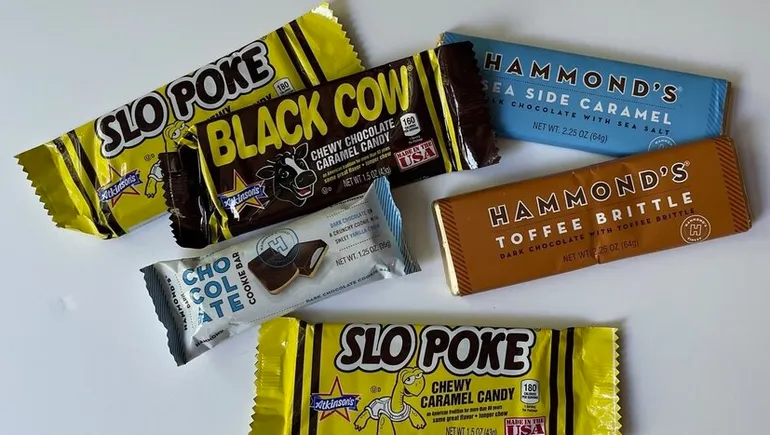
For the maker of Chick-O-Stick, Slo Poke, and Mary Jane candies, it's a boom time for the candy industry — provided it can find enough people to make its products.
Atkinson Candy Co. has seen sales quintuple since 2019, but the 90-year-old business has cut its workforce in half over the same period. Some machinists have been lured away from the family-owned company by higher pay in industries like oil and gas. The company's 68-year-old CEO, Eric Atkinson, told Food Dive that employees who make the handcrafted candies are especially hard to keep because they are drawn to generous government assistance programs.
Because of the labor shortage, Atkinson now can take up to three months to deliver orders to retailers and wholesale distributors — compared with two weeks before the COVID-19 pandemic — if it can fill them at all. The labor shortage was so severe in 2021, its CEO said, that the company lost millions of dollars in sales simply because it didn't have enough workers.
"It's like hearing fingernails on a chalkboard," Atkinson said of the stress from lost sales.
Rethinking how they do business
Atkinson is hardly alone. Executives at small and midsize candy companies say they are being buffeted by a host of challenges, including higher transportation costs, labor shortages, and commodities that frequently don't arrive in the quantities promised.
"We're in a time where we have to rethink how we do business," Joe Colyn, a partner at JPG Resources, told Food Dive, where he helps bakery and confectionery clients source ingredients.
The problems affecting candy makers' businesses, profits, and even survival are not new. They have weathered wars, recessions, depressions, and supply disruptions.
But the CEOs interviewed said the degree to which so many problems are hitting at once is forcing them to rethink how they operate and overhaul key parts of their businesses that have largely gone unchanged for decades. That spans everything from how they recruit and retain employees to how far in advance — and how much — they buy ingredients or packaging.

Small and midsize chocolate and candy companies make up a significant portion of the National Confectioners Association's 600 member companies, about half of which are manufacturers. They range from family businesses that have been around for decades to newer startups.
"There's no question that the challenges facing the industry as a whole — supply chain, inflation, labor shortages, broad pandemic impacts, etc. — are disproportionately impacting small and midsize companies more than their larger counterparts," Carly Schildhaus, a spokesperson for the trade group, said in an email to Food Dive.
Daniel McCarthy, an assistant professor of marketing at Emory University, suggested some of the smaller players in the category should take advantage of the opportunity to raise money from investors or take on manageable debt to play defense. These companies should also manage their balance sheets prudently, watch their spending closely, and raise prices like their larger consumer packaged goods rivals, he said.
"One advantage they have that the big guys don't is that [their products] are very inexpensive," McCarthy said, noting a 20% increase in candy is much easier for consumers to swallow than a 20% increase in something like a car. "In that sense, they're in a more defensive position."
Atkinson's candy business is being squeezed by higher costs for everything from sugar to peanuts — which are up more than 20% — and he has passed some of those higher costs on to consumers through price increases. The most recent one came last week.
"We're trying to maintain a thin margin, but most products are losing money or close to it," he said.
Despite the difficulties, chocolate and candy sales remain strong, helping to partially offset higher costs and labor challenges. Chocolate and candy sales rose 11% in 2021 over the prior year, according to NCA's State of Treating report, and Schildhaus noted the category is "performing well" again this year.
Back to the future
For many small candy makers, the current environment is forcing them to plan further ahead or find alternatives — some of which may not be ideal.
Boyer Candy Company in Pennsylvania, maker of Mallo Cup and Clark Bar, is thriving in the current environment. Its president and CEO, Anthony Forgione II, told Food Dive the company is ordering ingredients further in advance and leaning on the decades of experience of its top executives, many of whom have spent decades at the 86-year-old company.
"It takes more anticipation and forecasting," said Forgione, who noted sales are up 36% so far this year. "If you plan properly, it's not that bad."
Boyer used to order corn syrup two weeks in advance. Now, he said, the company locks in supply three months ahead based on historical forecasts. It has taken a similar approach to buying peanuts and sugar further in advance.
Colyn of JPG Partners said the firm is encouraging small businesses to connect with ingredient suppliers more frequently — as often as once a week — to maintain relationships and better communicate long-term needs in an environment where some materials are volatile and uncertain.
"There's no question that the challenges facing the industry as a whole — supply chain, inflation, labor shortages, broad pandemic impacts, etc. — are disproportionately impacting small and midsize companies more than their larger counterparts."

Carly Schildhaus
Spokesperson, National Confectioners Association
Atkinson said shortages caused by Russia's invasion of Ukraine have led his company to reduce its use of sunflower lecithin from that country — an ingredient used in its caramels, taffy, and peanut butter candies.
He hopes the company can get the ingredient from other regions, including India. If Atkinson can't, the company may have to switch back to soybean oil — which it stopped using because it's an allergen. Changing the recipe now would require new packaging that lists the ingredient — which Atkinson said would cost hundreds of thousands of dollars to reprint — and discarding unused wrappers.

To save costs, Atkinson has bought more ingredients that won't spoil as quickly. Its efforts extend to packaging, where the company has stockpiled wrappers, cartons, and plastic film. Still, he said, in many cases candy makers have no choice but to pay market prices for ingredients.
"You can't get hung up on ingredient costs in times like this," Atkinson said. "You have to buy it no matter what it costs because the alternative is shutting down, and that's not acceptable to us."
Stuart Selarnick, CEO of Philadelphia-based Frankford Candy, said suppliers occasionally failing to deliver promised quantities of commodities like milk chocolate has forced him to make new arrangements with other companies to fill the shortfall.
The milk chocolate shortage — driven by surging consumer demand and challenges facing its suppliers, including labor shortages and difficulty sourcing raw materials — is extremely rare. Selarnick said it's the first time since he joined the company in 1987 that he's had trouble getting the ingredient.
"You have to keep moving forward. You have to be resourceful and find other sources, other opportunities, other suppliers," Selarnick said. "That's what we're good at because we're nimble and we can move quickly."
Hard to find workers
Andrew Schuman, owner of Hammond's Candies in Colorado, has taken a similar approach to sourcing ingredients and packaging. So far, the 102-year-old maker of candy canes, lollipops, taffy, chocolates, and other sweets has "weathered the storm fairly well," he said.
But like countless businesses of all sizes across the country, Hammond's has faced plenty of challenges recently, especially when it comes to finding and keeping workers.
"The labor market is a buyer's market because they're buying you for a job," Schuman said. "They can go anywhere they want."
Hammond's has about 160 employees. While about 80 are core employees who have been with the company for more than 15 years, Hammond's has struggled over the past three years to keep the rest of its positions filled. Schuman estimates the other 80 workers — who do everything from wrapping candy to cooking marshmallow — have turned over two to three times a year since mid-2020.
In May, the company hired a full-time recruiter for the first time in its history and now averages 25 interviews a week to find prospective employees. The company could also turn to temp agencies, but Schuman said that would cost 35% more, and those workers often don't have the personal investment in the business to do the job well over the long haul.
To keep employees, Hammond's has given out unscheduled quarterly bonuses, provided surprise lunches and snacks, and offered flexible scheduling for workers who need to see a doctor or pick up their kids from school. "We've done everything we can to retain employees," he said.
A labor of love
Small candy and chocolate makers claim their ability to pivot quickly is a major advantage over deep-pocketed consumer packaged goods giants like Hershey or Mars Wrigley.
Boyer's Forgione credits the company's experienced executive team. Because so many have been at Boyer for years — including his mother and brother — they have a better handle on where the business is positioned and what products will be in demand in the coming months.
"We use our experience to stay ahead of the market," Forgione said.

Selarnick said Frankford's unique and ever-changing product portfolio has been key in helping it navigate the market turmoil. Its lineup includes more than 100 branded products, such as Dunkin' iced coffee-flavored jelly beans, a line of hot chocolate bombs, and Krabby Patties gummies. The products help Frankford stand out from competitors while giving it the flexibility to prioritize items with higher margins.
Unlike some competitors, Selarnick said Frankford's stable, unionized workforce has largely eliminated the threat of worker shortages. But he remains concerned about the next 12 months as he prepares for higher costs on everything from shipping to fuel.