
Under Supply Chain Pressure, FMCG Giants Accelerate Expansion Through M&A
Facing supply chain disruptions and labor shortages, an increasing number of FMCG companies are choosing to rapidly enhance manufacturing capabilities by acquiring existing plants rather than building new capacity. Cases such as Hershey's acquisition of Dot's Pretzels and its contract manufacturer, and Hormel's acquisition of Planters with its factories, demonstrate that controlling production is crucial for long-term brand growth.
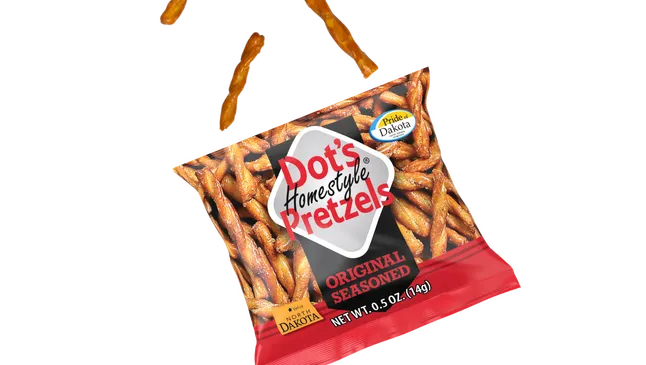
Last year, when chocolate and snack giant Hershey set out to acquire Dot's Homestyle Pretzels, the $1.2 billion deal was about more than just the brand—it was about the production capacity behind it.
Founded over a decade ago, Dot's has become the third-largest pretzel brand in the U.S. market thanks to bold flavors like Southwest and honey mustard. Its growth has relied mainly on word of mouth, with sales concentrated in the central and western United States. Hershey hoped to expand the brand's national reach as part of the company's broader push into savory snacks.
However, during due diligence, Hershey discovered that Dot's uses a proprietary process to apply its signature seasoning. Given the supply chain challenges facing the U.S. economy, Hershey wanted to control this process to drive brand growth. "Given the overall macro environment in manufacturing right now, labor shortages, and supply chain issues, integrating the brand with manufacturing capabilities was critical to this deal," said Jeff Lilla, Hershey's vice president of snacks and grocery. "If we want to achieve sustainable long-term growth, we have to be able to control end-to-end what we produce and what we bring to market."
So far, acquiring Dot's and its contract manufacturer has paid off for Hershey. CEO Michele Buck told Wall Street in July that retail sales had grown about 50% over the past three months, with market share up 3.7 percentage points over the same period.
"Sitting on a gold mine"
In dealing with demand fluctuations and supply chain uncertainty, companies such as Nestlé and J.M. Smucker have announced investments of hundreds of millions of dollars in new plants. But building new plants can take years, during which consumer packaged goods companies may miss opportunities to meet growing demand.
As a result, many food companies are instead turning to acquisitions of existing plants to quickly boost capacity or expand brand reach. Whether acquiring capacity on its own or, as in Hershey's case, along with a brand, buying manufacturing capability can bring other multiple benefits: protecting proprietary information, accelerating product innovation, improving margins, providing a safe outlet for capital, and reducing reliance on currently unreliable or overstretched supply chains.
"The challenge is that everyone (with a plant to sell) realizes they're sitting on a gold mine. If such an opportunity really existed, someone would have already snapped it up."
—Annemarie Vaupel, vice president of foodservice marketing at Hormel Foods
Minnesota-based Hormel Foods, which owns brands such as Skippy peanut butter, Planters nuts, and Jennie-O turkey, is looking for additional manufacturing capacity, said Annemarie Vaupel, the company's vice president of foodservice marketing—but the problem is other food producers are competing for it too.
"The challenge is that everyone (with a plant to sell) realizes they're sitting on a gold mine," Vaupel said on the sidelines of the National Restaurant Association show in Chicago in May. "If such an opportunity really existed, someone would have already snapped it up."
 Image source: Courtesy of Hormel Foods
When Hormel acquired Planters from Kraft Heinz last summer for $3.35 billion, it gained not only a portfolio of foods including the iconic nut products but also three valuable production facilities in California, Arkansas, and Virginia.
Vaupel noted that these plants are extremely valuable because Planters uses unique manufacturing processes and equipment to package nuts into plastic jars, tubes, and bags—equipment not used elsewhere in Hormel's portfolio. Without these assets, Hormel would have had to buy machinery or find contract manufacturers to produce and package the products.
"That would distract from post-acquisition efforts and prevent a quick start. It would take a long time to recoup the investment," Vaupel said. "These plant assets are a key part of the overall purpose of acquiring the brand and growing it."
Brian Choi, CEO of The Food Institute, a food industry media and market research firm, also believes that many "low-hanging fruit" in terms of plants has already been picked. But he said that for companies flush with cash and eager to meet surging demand, they may have to pay higher prices and accept sellers' asking prices.
"They have no choice but to acquire, because building a plant takes too long," Choi said. "Even if some people think there could be a short-term recession in the next six to 12 months, that would make these types of assets even more attractive."
Meeting future demand
Not long ago, consumer packaged goods companies were moving away from manufacturing. Many divested their plants and adopted an asset-light model, focusing on innovation and keeping existing products relevant. They didn't want to be distracted by plant operations such as equipment maintenance, overhead costs, or worker recruitment and training, said Henk Hartong III, chairman and CEO of Brynwood Partners, the private equity owner of SunnyD drinks, Buitoni pasta, and Juicy Juice.
Now, the situation has dramatically reversed, with several companies using M&A to add capacity for previously acquired brands.
Last year, Utz Brands acquired Festida Foods for $41 million, which was its largest manufacturer of tortilla chips for the On The Border brand. Utz said the acquisition would improve the supply chain for On The Border—a brand Utz had acquired six months earlier—and enhance the company's ability to expand geographic reach for that product and others in the Midwest.
In May, B&G Foods acquired the frozen vegetable manufacturing business of Growers Express, a manufacturer, producer, packager, and seller of frozen vegetable products primarily under the Green Giant brand.
 Image source: Courtesy of B&G Foods
"By increasing the variety and volume of Green Giant frozen vegetable products produced in our internal manufacturing facilities, we expect to reduce inefficiencies, lower costs, and decrease supply chain risk for certain Green Giant frozen products," B&G CEO Casey Keller said in a statement. "This acquisition will enhance our innovation efforts for the Green Giant brand and accelerate the speed to market for new products."
Erin Lash, director of consumer equity research at Morningstar, said acquiring existing assets rather than building from scratch is often advantageous for buyers, but it is not without risk. Acquirers need to carefully assess whether a plant is efficient, uses the latest technology, and whether significant investment will be needed for improvements after purchase. Buyers also need to ensure that demand for the products being made will persist in the future to justify the price.
"Adding capacity for certain brands or businesses makes sense if they have staying power," Lash said. "But if volumes are going to decline, will companies burden themselves with excess capacity?"
Only themselves to blame
For Brynwood Partners, owning manufacturing capability is central to its business strategy: acquiring underperforming assets from large consumer packaged goods companies and then boosting sales by changing product packaging, pricing, or marketing. CEO Hartong said achieving this is easier with in-house operations than relying on contract manufacturers, because contract manufacturers' responsiveness, willingness to invest in technology, quality of work, and ability to take on additional work are beyond one's control. If any of these falter, it can damage the brand image, slow the turnaround, and ultimately lead to retailer dissatisfaction.
"You can only make excuses for things you can't control," Hartong said. "But retailers don't care about excuses... If shelves are empty, they'll find other suppliers to replace you."
He recalled that when Brynwood acquired the Pillsbury brand from J.M. Smucker in 2018, its gluten-free cake mixes and brownies were produced by a third-party contract manufacturer that was "completely unreliable," forcing the company to constantly explain shipping delays to customers. Brynwood decided to build its own gluten-free product plant, and since then "service levels have been impeccable."
"Now, if there's a problem with product supply, we can only blame ourselves, not others," Hartong admitted. He estimated that 95% of the roughly $2 billion in sales of food and beverage products under his private equity firm is produced in-house.
 Image source: Courtesy of Eat Just
For Eat Just, unreliable contract manufacturers prompted the plant-based food company to bring production in-house. The proprietary process used to make the protein for its plant-based eggs is complex, and if done improperly, the product can turn mushy and turn off consumers. Initially, Eat Just used contract manufacturers but found results inconsistent, with subtle variations changing the final product.
CEO Josh Tetrick and his team quickly realized that to grow the brand and attract more consumers, they needed to control this step. The answer was right in front of them: In 2019, Eat Just acquired its contract manufacturer in Minnesota, a company it knew well along with its 45 workers and the small town where it was located. That fortunate acquisition has now paid off, with the company far less dependent on supply chain disruptions or uncertainty from partners being overstretched or understaffed, Tetrick said.
"Running a plant obviously has downsides—more to-dos, more things to worry about," Tetrick said. "But we absolutely cannot afford disruptions. We have to run at full speed and full capacity."
Three years later, Tetrick said Eat Just is unquestionably better off than it would have been without the acquisition. He said Eat Just's eggs likely taste better and have better texture. This not only allows the company to produce a more satisfying product, but also to produce enough to meet growth demand while lowering costs to be comparable in price to premium eggs. High prices across the plant-based food industry often deter consumers from switching from animal-based foods.
Today, Eat Just's products are in more than 2 million households, and the company says it holds a 99% share of the U.S. plant-based egg market.
"If we hadn't taken control of this process (through the plant acquisition), the quality would be worse... and the business would be much worse off because of it," Tetrick said.