
The McDonald's E. coli Incident: Supply Chain Risk Management and Crisis Response for Restaurant Chains and Suppliers
In late October 2024, McDonald's was forced to remove Quarter Pounder burgers from approximately 3,000 stores due to an E. coli outbreak, which sickened at least 90 people and resulted in one death. Regulators identified the source as onion slices from Taylor Farms. Drawing on insights from multiple industry experts, this article analyzes the mechanisms behind McDonald's rapid supply chain response, compliance and insurance strategies that suppliers and restaurants can adopt, and the strengths and weaknesses of the brand's crisis communication, providing a reference case for supply chain risk management in the food service industry.
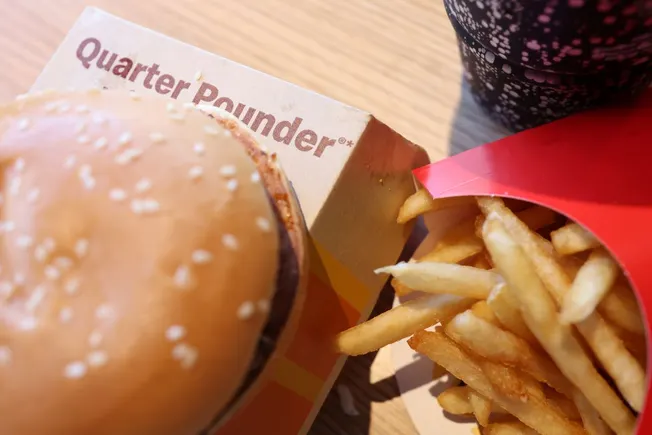
In late October 2024, McDonald's experienced a crisis unprecedented in over four decades. Due to an E. coli outbreak, the fast-food giant had to remove its Quarter Pounder burgers from the menu. According to the U.S. Centers for Disease Control and Prevention, the outbreak has sickened at least 90 people and resulted in one death. Regulators later confirmed that the source of contamination was onion slivers supplied by Taylor Farms. The outbreak has now been contained, and the Quarter Pounder has returned to the menus of approximately 3,000 restaurants.
However, weeks after the outbreak subsided, questions remain about how to prevent such incidents, how they will affect consumer confidence, and how suppliers and restaurants should protect themselves in similar situations.
Supply Chain Rapid Response Mechanisms: Long-Term Trust and Coordinated Action
Phil Kafarakis, President and CEO of the International Foodservice Manufacturers Association, praised McDonald's handling of the crisis. He said, "McDonald's clearly doesn't take these issues lightly, and they did an excellent job containing the situation." Kafarakis noted that McDonald's has built trusting, long-term relationships with its suppliers and does not frequently switch suppliers or simply outsource orders to the lowest bidder. While the company also checks supply chain redundancy and competitiveness, its suppliers are deeply integrated into McDonald's operations.
"When something like this happens, they have a contingency plan," Kafarakis said. "I think they executed it very well and quickly got the situation under control." He emphasized that McDonald's close cooperation with regulators was crucial, especially in an industry where some companies are reluctant to share information before the facts are established. Before the contamination source was identified, McDonald's had proactively removed the Quarter Pounder due to initial concerns about beef patties.
However, Bill Marler, a personal injury attorney who has represented victims of foodborne illness for over three decades, believes that despite McDonald's generally good safety record, the fast-food giant could have done more to ensure that food from its suppliers was free from contamination. "They are the ones buying the product," Marler said. "If they can make sure their restaurants cook burgers flawlessly, then they should apply the same rigorous standards to their supply chain management."

Although McDonald's may not bear direct legal responsibility, the reputational damage to one of its iconic products is evident. "No one will remember that this E. coli outbreak happened on some onion farm in Washington state; they won't even remember Taylor Farms," Marler asserted. "They will only remember McDonald's Quarter Pounder."
Compliance Lessons for Suppliers: Strengthening Protocols and Forward-Looking Strategies
This incident serves as a wake-up call for many food suppliers, especially given that regulators are strengthening oversight of food supply and safety. The Food Safety Modernization Act, signed into law in 2011, established additional operational guidelines, traceability requirements, and compliance standards for the food industry, with several compliance provisions for produce set to take effect next year.
Kafarakis believes that even brands with multiple suppliers must ensure that all parties clearly understand expected standards and receive uniform training on restaurant policies and procedures. The relationship between suppliers and restaurants should be integrated, interdependent, and subject to verification mechanisms. This is especially important when restaurants try new menu items or new ingredients. Brands should ensure that new suppliers, or existing suppliers introducing new ingredients, still pass quality assurance audits and adhere to the same operational standards.
\nThis incident should also prompt small and medium-sized suppliers to re-examine their own processes. Kafarakis cautioned, "If a large supplier can have issues in this way, then no business is immune." He stressed, "Everyone wants to exceed standards, and I think it's important for consumers to know that."
There is currently no definitive answer regarding where ultimate responsibility for this outbreak lies. The U.S. CDC is investigating Taylor Farms' processing center in Colorado, as well as an "onion grower of concern" in Washington state. Marler pointed out that due to the complexity of supplier contracts, primary responsibility will likely ultimately fall at the farm level. "Part of the problem is that once McDonald's contracts with Taylor Farms, they seem to wash their hands of Taylor Farms' food safety responsibilities; and when Taylor Farms contracts with its growers, they similarly wash their hands of farm-level food safety responsibilities."
Risk Isolation and Insurance Strategies: Building a Financial Safety Net
Although the root cause of the McDonald's outbreak is still under investigation, most E. coli cases linked to vegetables are associated with contaminated agricultural water, as seen in the massive romaine lettuce recall in 2018. Many large vegetable-growing regions are adjacent to livestock operations, increasing the risk of cross-contamination.
Given these inherent risks, suppliers and restaurants can protect themselves from financial losses in various ways, with one of the most critical being appropriate insurance coverage. Glenn Drees, Managing Director of the Food and Agriculture Practice at global insurance brokerage Gallagher, said, "First and foremost, no one wants to harm their customers." He believes restaurants must ensure their suppliers have robust contamination prevention measures, as E. coli can originate from groundwater, homemade manure used as fertilizer, or improperly cleaned harvesting equipment.
"Typically, large companies are more sophisticated in these areas," Drees said. "This doesn't mean smaller suppliers are more prone to problems; they're just less likely to have such specialized prevention systems." Large companies typically have more comprehensive pathogen monitoring systems, which smaller suppliers may lack. Additionally, suppliers can improve equipment design to make it easier to clean.
Drees suggests that restaurant brands can require suppliers to purchase product contamination liability insurance, potentially with coverage limits such as $50 million or $100 million, to cover the impact of foodborne illness. This way, if a restaurant needs to recall ingredients, clean and sanitize, or suffers business losses due to contamination, it can claim against the supplier to recover costs. If a supplier does not carry such insurance, the restaurant should assess whether the supplier has the financial capacity to bear such costs. "The key is to gather as much information as possible to understand how to be protected in the event of a loss," Drees said.
A restaurant's own general liability insurance typically includes product liability coverage, which can cover bodily injury or property damage caused by negligence. Product liability insurance can pay claims arising from customer illness, while product contamination liability insurance can cover business interruption, loss of business, recall-related expenses, and costs for hiring media consultants for brand repair. Drees also mentioned that restaurants could consider cooking more ingredients (such as onions) rather than serving them raw, as cooking at certain temperatures typically kills pathogens associated with foodborne illness. Additionally, large restaurants especially should include contractual clauses related to contaminated products in their supplier agreements to clearly define liability.
Reflections on Crisis Communication: Information Reach and Audience Prioritization
Although McDonald's responded quickly to the outbreak, some experts believe there is room for improvement in its customer communication. During an earnings call in October, McDonald's executives acknowledged that the outbreak led to a decline in customer traffic and that the company would work to regain consumer confidence.
Data from Issac Gerber, Global Director of Insights and Analytics at data analytics firm Captify, showed that in the day following the recall announcement, negative searches containing keywords such as "I got sick" or "tasted terrible" accounted for 8% of all McDonald's-related searches. Captify uses website search data to analyze user behavior, with over 3 million global partner websites and nearly 2 billion searches monitored daily.
Gerber analyzed that the initial negative searches were primarily driven by consumers, including college students and parents of teenagers and young children, who were concerned about meal safety. Negative searches peaked three days later (October 25), accounting for 15% of all McDonald's-related searches. At the same time, overall brand search volume also rose significantly, with total McDonald's searches approximately three times normal levels the day after the incident. Subsequently, the focus of negative searches shifted to business and investor audiences, who were more concerned about the overall impact of the outbreak on quarterly performance.
"Bad news travels much faster than good news, and that's really tricky," Gerber said. "I don't think McDonald's statements effectively reached the platforms where the most concerned people were." He observed that McDonald's communication seemed to focus on the financial community, but it was customers who initially expressed concern. "There should have been more consideration of platforms like TikTok and Instagram Reels... They should have started reaching out to customers there, and then addressed investors. They did a good job reaching the investor/business community, but I think they should have prioritized communicating with customers."
Looking ahead, Gerber suggests that McDonald's launch a dedicated food safety campaign, which could help attract customers back. "I think it would be a good idea for them to launch a campaign specifically focused on safety; such initiatives can help them get customers back into stores. This will be a challenge for them because safety has not historically been a focus of their advertising."
Recovering from similar incidents is not easy. Drees cited Chipotle as an example; the company experienced years of food safety issues, took a long time to repair its reputation, established food safety training programs for employees, and launched multiple advertising campaigns emphasizing fresh ingredients and safety elements. Kafarakis, on the other hand, does not expect McDonald's to sit idly by: "I believe they won't just wait for the storm to pass; they will release statements conveying a 'food safety' message."
Long-Term Impact of the Incident: Consumer Memory and Industry Change
According to Marler, McDonald's was involved in some of the earliest E. coli cases linked to undercooked burgers in the early 1980s. It wasn't until the mid-1990s that producers could still sell meat containing common strains of E. coli, as the bacteria could be inactivated during cooking. After the massive Jack in the Box outbreak (which sickened over 700 people and killed four children), the U.S. Congress passed legislation banning E. coli in meat. Marler, who represented victims in that case, said congressional hearings and emotional testimony from families who lost children kept the issue in the public eye.
However, Marler believes that without sustained media attention, the McDonald's outbreak is likely to be quickly forgotten in the fast-paced national news cycle. "Consumer memory is short, except for the few families who tragically lost loved ones or suffered permanent harm."